
What if the biggest financial risk in your business isn’t a system failure, but a single invoice that looks completely normal?
Every day, invoices flow in from carriers, vendors, and partners. They’re reviewed quickly, approved, and moved forward. Everything seems fine, until hidden discrepancies start slipping through.
A duplicate invoice with a small change. A mismatch in charges. A vendor detail that looks almost right.
This is where AI-powered fraud detection changes everything.
Individually, these issues seem minor. But at scale, they quietly lead to financial leakage, delays, and compliance risks, and the truth is, manual checks were never built for this level of complexity.
⚠️ The Growing Risk In CargoWise Financial Workflows
CargoWise handles large volumes of financial data tied directly to shipment operations. Every invoice is integrated with critical operational details, making accuracy essential.
But when validation is manual, gaps begin to appear.
Finance teams often rely on the following:
- Reviewing invoices visually
- Matching charges with shipment data manually
- Checking vendor details one by one
- Identifying duplicates using basic rules
At low volumes, this works. At scale, it breaks.
The result:
- Duplicate invoices slipping through
- Incorrect charges are going unnoticed
- Delays in approvals and reconciliation
- Limited visibility into financial risks
Most importantly, issues are discovered too late.
🤖 How AI Changes the Game in Fraud Detection?
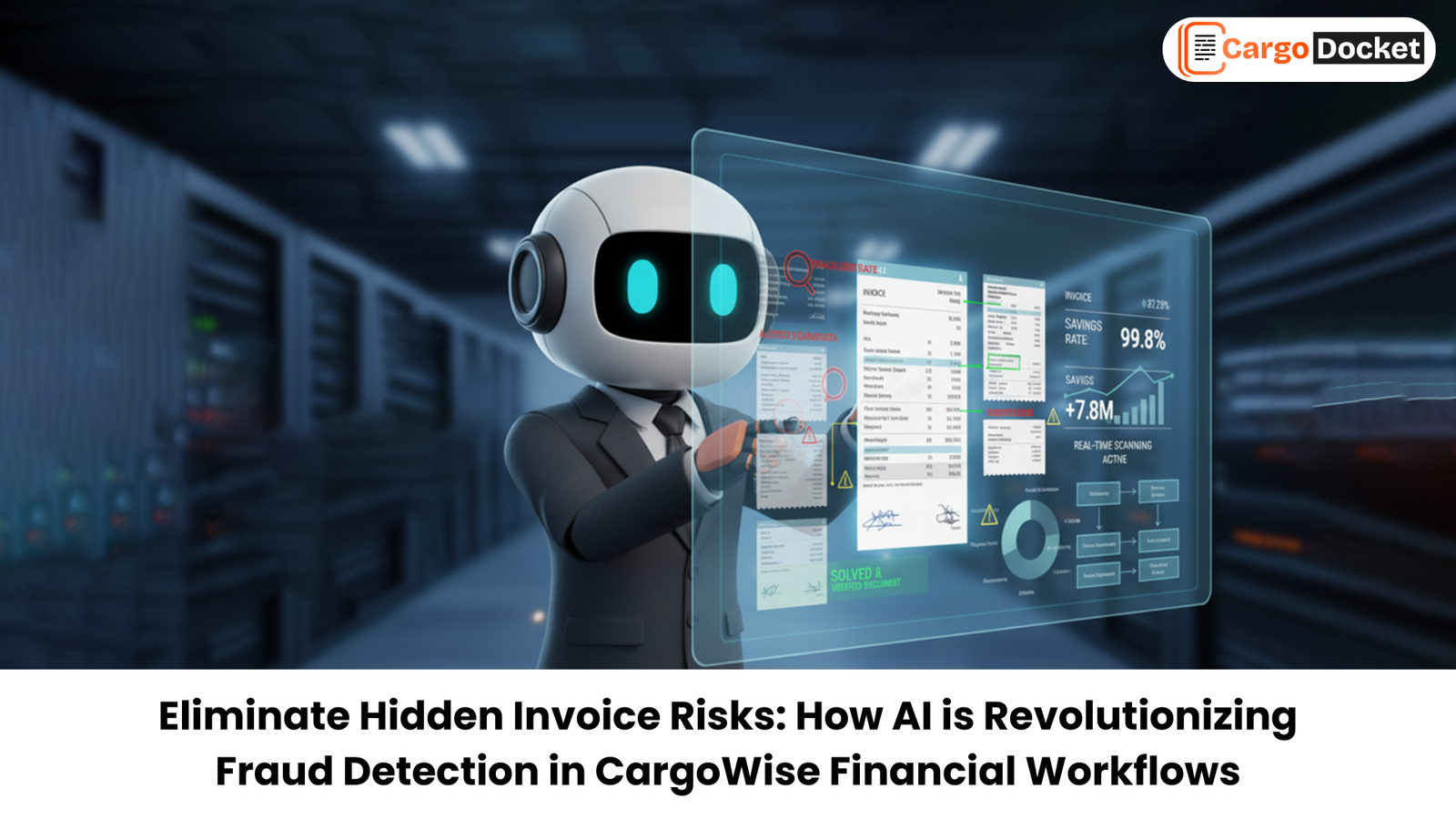
AI transforms financial workflows by introducing continuous, intelligent validation across every invoice. Instead of relying only on manual review, it analyzes and cross-checks data in real time.
AI evaluates:
- Shipment and operational records
- Historical transaction patterns
- Vendor and supplier data
- Pricing consistency and charge structures
This means hidden risks are detected instantly, before they impact the business.
🔍 From Manual Checks to Intelligent Monitoring
With AI, the process shifts from manual effort to smart monitoring. Teams no longer need to review every invoice, they focus only on flagged exceptions.
This enables organizations to:
- Detect issues earlier in the workflow
- Reduce time spent on repetitive checks manually
- Focus on high-risk transactions
- Improve overall financial accuracy
The system handles the volume, while teams focus on decisions.
📦 Aligning Financial Data with Operational Reality
In logistics, invoices must reflect what actually happened in the shipment, not just what’s written.
AI ensures this alignment by validating the following:
- Invoice values against shipment data
- Charges against agreed pricing
- Vendor consistency across transactions
- Financial and operational system data
This creates stronger accuracy and reduces mismatches across workflows.
⚙️ Real-Time Detection Instead of After-the-Fact Fixes
Traditionally, issues are caught during audits or reconciliation , when it’s already too late.
AI shifts this to proactive detection by:
- Flagging inconsistencies instantly
- Detecting duplicate or near-duplicate invoices
- Identifying unusual pricing patterns
- Highlighting missing or incorrect data
This proactive approach not only strengthens fraud detection but also reduces delays in financial workflows, making it clear why reducing invoice reconciliation time with AI is a must for logistics finance teams.
📈 The Real Business Impact After Using AI
AI doesn’t just improve fraud detection, it transforms financial operations.
Organizations benefit from:
- Faster invoice processing
- Reduced manual workload
- Improved compliance and audit readiness
- Stronger financial control
- Greater confidence in reporting
Finance teams move from reactive correction to proactive control.
Final Thoughts
As financial workflows grow more complex, the real challenge isn’t volume, it’s visibility. AI brings that visibility by continuously analyzing and validating every invoice, ensuring risks are caught early and handled efficiently. The next step is clear: adopt AI Document Automation to reduce risk, improve accuracy, and build smarter financial workflows.