
A shipment is ready, documents are in, and the deadline is tight, but one small mismatch in the invoice or a missing HS code brings everything to a halt. Teams scramble to fix the issue, emails begin to pile up, and what should have been a routine customs clearance quickly turns into a costly delay.
This is the reality for many logistics teams today. The problem isn’t the system itself, platforms like Magaya Corporation have significantly improved how customs operations are managed, but the manual effort required to feed it accurate, structured, and compliant data. Solving this challenge is not about working harder but about working smarter with an AI document Automation workflow.
What is Magaya Customs Clearance Software?
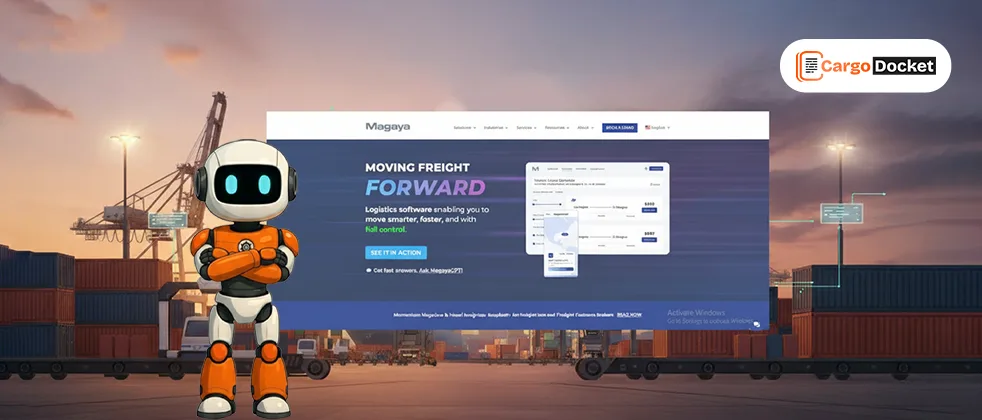
Magaya is a comprehensive, cloud-based platform designed to manage end-to-end logistics operations for freight forwarders, customs brokers, and supply chain teams. It acts as a centralized system where multiple operational processes come together, enabling better coordination, visibility, and control across shipments. This centralized approach helps reduce operational silos and ensures that every stage of the logistics process is connected and traceable.
It supports key functions such as:
- Warehouse management (WMS) and inventory control
- Freight forwarding and real-time shipment tracking
- Customs documentation and compliance processing
- Rate management, billing, and financial workflows
- Integration with logistics platforms and accounting systems
By bringing these capabilities into one system, Magaya simplifies complex logistics workflows and reduces operational fragmentation. However, its effectiveness still depends on how accurately and efficiently data is captured and entered into the system.
What is Magaya Customs Clearance Documentation?
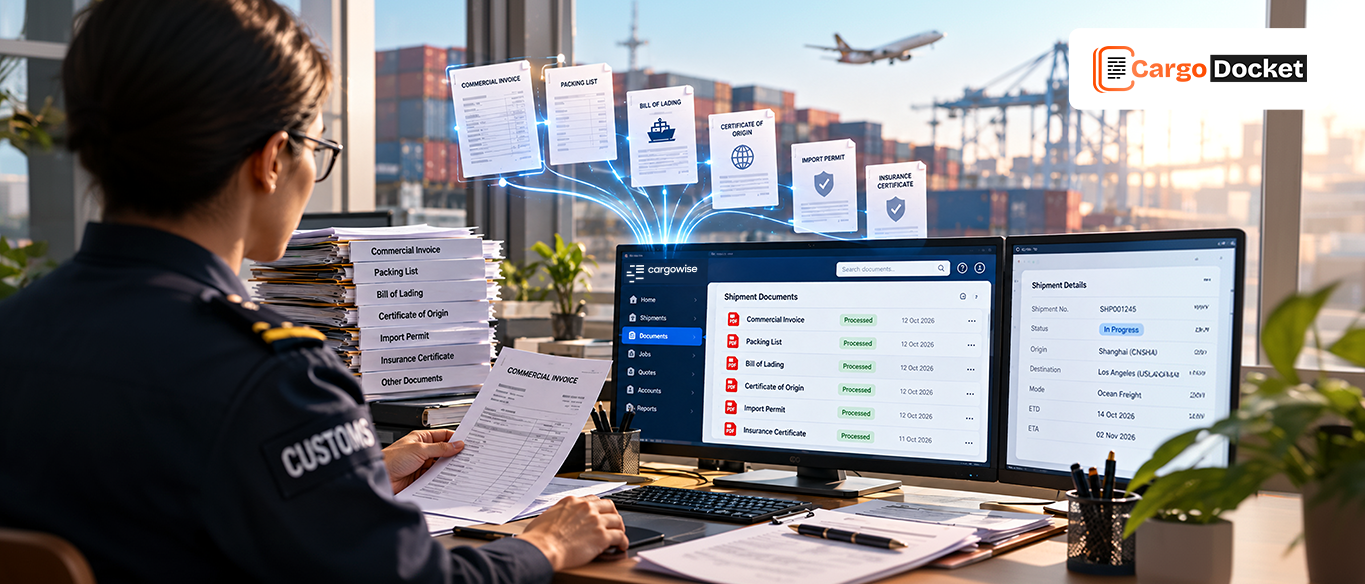
Magaya customs clearance documentation includes all the essential paperwork required to ensure goods move legally and efficiently across international borders. These documents are critical for compliance, duty calculation, and shipment validation. Each document plays a specific role in ensuring that shipments meet regulatory standards and avoid delays at customs checkpoints.
This typically includes:
- Commercial invoices with shipment values and product details
- Packing lists outlining quantities and packaging structure
- Bills of lading defining shipment ownership and transport details
- Customs declarations required for regulatory submission
- HS codes used for classification and duty calculation
- Duty, tax, and compliance-related information
Magaya is designed to organize and manage this information effectively. However, the challenge lies in how this data is received and processed.
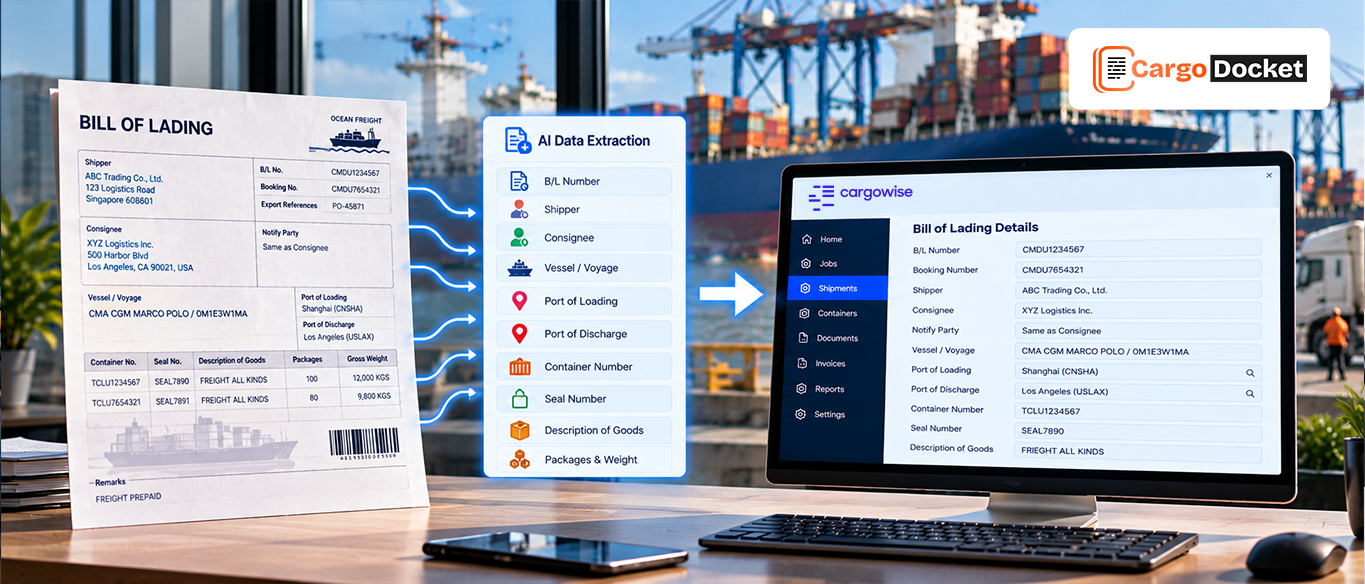
In real-world operations, documents arrive in unstructured formats such as PDFs, scanned files, spreadsheets, and email attachments. Each document may vary in format, structure, and completeness, requiring manual effort to extract and interpret the data before it can be used.
This creates a gap between document intake and system processing, a gap where delays, inconsistencies, and errors begin to build.
What are the Hidden Obstacles in Customs Documentation?
The biggest challenge in customs workflows is not compliance itself, but how data is handled across multiple documents and processes. This complexity increases as shipments involve more stakeholders, more documents, and tighter timelines.
As shipment volumes increase, manual processes become harder to manage. Teams must go through multiple documents, extract key data, cross-check information under time pressure, and repeatedly enter data into the system. Over time, this leads to slower processing, higher error rates, and increased dependency on manual effort.
Instead of proactively managing shipments, teams often find themselves reacting to issues, correcting errors, and handling delays.
What is AI Document Automation in the Context of Magaya?
AI document automation changes how logistics teams interact with documents by transforming them into structured, system-ready data from the moment they are received. It enables faster decision-making by reducing the time spent on manual document handling and interpretation.
Using technologies such as OCR and machine learning, AI can read documents, extract key information, understand context, and prepare data for integration into systems like Magaya. Instead of treating documents as static files, they become dynamic data inputs that can be processed automatically.
This improves consistency, reduces manual effort, and enables faster, more reliable customs documentation workflows.
Doesn’t Magaya Already Use AI for Data Extraction?
Magaya has already introduced AI capabilities through its Broker AI Assistant, which automates data extraction from commercial invoices and supports customs entry creation. It also recommends HTS classification codes, significantly reducing manual effort and improving compliance accuracy.
This speeds up customs filing, turning what once took minutes per line item into seconds.
However, extraction is only one part of the process. Documents still need to be collected, aligned, and validated before and after extraction, which means challenges still exist outside the system.
What is the Difference Between Magaya AI and Cargo Docket AI?
| Aspect | Magaya AI (Broker AI Assistant) | Cargo Docket AI |
| Focus Area | Speeds up customs entry creation inside the system | Automates the entire document workflow before system entry |
| Workflow Coverage | Works within Magaya during filing | Works across intake → processing → validation → integration |
| Document Handling | Primarily processes commercial invoices | Handles multiple documents (AP, Commercial Invoice, packing list, B/L) together |
| Data Preparation | Extracts data for entry | Prepares, structures, and aligns data across documents |
| Validation Approach | Validation happens during or after entry | Validates data before it enters the system |
| Operational Outcome | Faster filing with reduced manual entry | Fewer errors, less rework, and smoother end-to-end workflow |
Magaya AI makes customs entry faster, while Cargo Docket AI makes the entire document process smarter and error-free before it even reaches the system.
How Cargo Docket AI Enhances Magaya Workflows End-to-End?
Cargo Docket AI works alongside Magaya to improve how documents are handled across the entire workflow. It creates a smooth connection between document intake and system processing, eliminating gaps that typically cause delays.
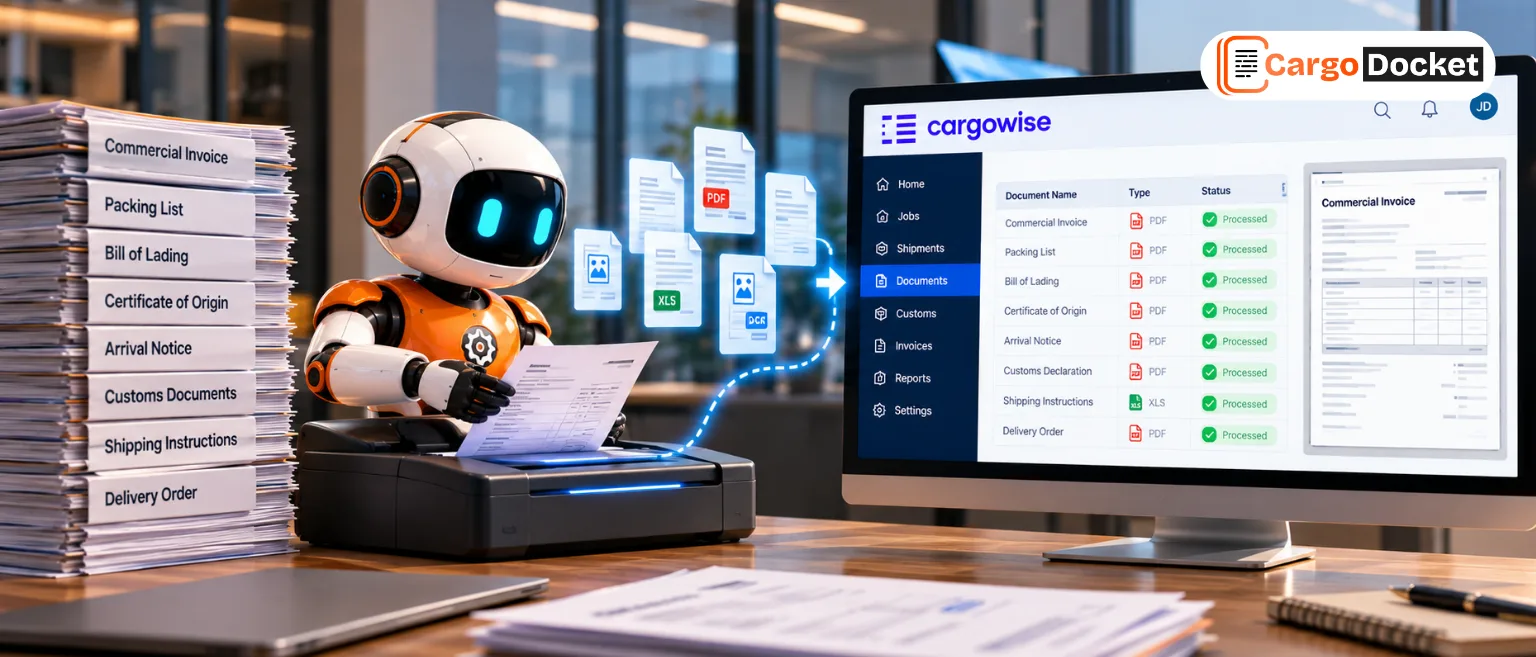
It captures documents automatically from emails and uploads, processes multiple documents together, and aligns data across them.
Before data enters Magaya, it is structured and validated to ensure accuracy and compliance. Once validated, it is integrated smoothly into the system, and only exceptions are flagged for review, allowing teams to focus on critical issues instead of processing every document manually.
What is the Business Impact of Automating Magaya Customs Documents?
Extending automation across the full document lifecycle has a direct impact on operations. It enables organizations to move from reactive processes to more controlled and predictable workflows.
Processing becomes faster as manual tasks are reduced, accuracy improves due to pre-validation, and teams can handle higher volumes without increasing workload.
Organizations often experience significant reductions in manual data entry and faster document processing times, leading to improved turnaround times and better customer satisfaction.
More importantly, operations become scalable and predictable, enabling long-term growth.
What is Required to Implement AI Document Automation with Magaya?
Implementing automation does not require replacing existing systems. Cargo Docket AI integrates with your current Magaya setup, enhancing workflows without disruption. This ensures that organizations can adopt automation without major operational changes.
The process involves system integration, document configuration, validation setup, and user onboarding. Once implemented, the system continues to improve over time as it adapts to new document formats and requirements.
What is the Key Takeaway for Logistics Teams?
If your customs documentation process still relies heavily on manual effort, it creates a limitation on scalability. Addressing this limitation requires a shift in how documents are handled across the workflow.
The real opportunity is to move from manual handling to intelligent workflows, from fragmented processes to connected systems, and from reactive corrections to proactive accuracy.
Cargo Docket AI enables this transformation by improving how documents are managed across the entire workflow.
Conclusion
AI has significantly improved customs processing inside Magaya Corporation by reducing manual effort and accelerating data entry. However, true efficiency depends on how well documents are managed before they reach the system. By extending automation across the entire document lifecycle, logistics teams can eliminate delays, improve accuracy, and build more scalable operations. Simplify your document workflows and enhance your Magaya operations with Cargo Docket AI. Contact us to see how it fits into your workflow.