
Even the best-planned cargo might be delayed by a little packing list error. What appears to be a basic paper frequently leads to confusion, adjustments, and missed deadlines.
Manual handling worsens the problem, with errors most commonly appearing during customs checks or delivery validation, when correcting them is expensive.
Cargo Docket AI can help in this situation. It generates packing lists directly from live shipment data, eliminating the need for manual intervention and ensuring that all details are correct from the outset.
So, What Exactly is a Packing List, and why does it Matter So Much?
At its core, a packing list is more than just a document, it’s the most accurate representation of your shipment.
It clearly defines what is being shipped, how it is packed, and how it should be handled across the journey. More importantly, it acts as a shared reference point for everyone involved in the process.
Different stakeholders rely on it in different ways:
- Warehouse teams use it to pick, pack, and verify goods
- Freight teams depend on it for shipment coordination
- Customs authorities review it for compliance validation
- Customers use it to confirm delivery accuracy
This is what makes it so powerful. It’s not just a document, it’s a single source of truth.
A complete packing list typically includes:
- Product descriptions and item details
- Quantity and unit breakdown
- Dimensions and weight information
- Packaging type (cartons, pallets, crates)
- Serial or batch numbers
- Shipping marks and labels
- HS codes for customs clearance
When this information is accurate, shipments move without friction. When it isn’t, even a small mismatch can disrupt the entire flow.
Why this “Simple” Document Carries So Much Responsibility?
The packing list plays a much bigger role than most teams realize. It doesn’t just support operations, it connects multiple systems, teams, and processes into one unified flow.
It acts as a bridge between:
- Order management and warehouse execution
- Inventory systems and physical shipments
- Commercial invoices and customs declarations
- Internal operations and external stakeholders
Because of this interconnected role, a small error doesn’t stay isolated.
- A mismatch in quantity can lead to delivery disputes.
- Incorrect weight can affect freight charges.
- Missing HS codes can delay customs clearance.
This is why the packing list has a direct impact on efficiency, cost, compliance, and customer trust.
The Real Problem: Why Manual Packing Lists Quietly Create Chaos
Manual processes rarely fail immediately. Instead, they create small inefficiencies that build over time.
At lower shipment volumes, teams can manage by double-checking and correcting errors. But as operations scale, pressure increases, and timelines shrink.
To keep up, teams often rely on shortcuts:
- Copying information from invoices
- Reusing outdated templates
- Manually updating last-minute changes
While these may seem harmless, they introduce risks at every step.
- Data inconsistencies begin to appear
- Updates don’t reflect across systems
- Important details get missed
The biggest challenge is that these errors don’t show up right away. They surface when the shipment is already in motion, during customs checks, audits, or final delivery.
At that point, resolving them becomes expensive and time-consuming.
Manual packing lists don’t just create errors, they create operational uncertainty.
Where do Packing List Errors Actually Come From?
It’s easy to assume errors are caused by people, but in reality, they are caused by inefficient processes.
Here are the most common sources:
- Re-entering the same data across multiple platforms
- Heavy reliance on copy-paste workflows
- Lack of standardized document formats
- Multiple versions of documents are circulating
- No validation checks before submission
Even a minor mistake, like a missing item or incorrect value, can lead to:
- Shipment delays
- Customs inspections
- Additional storage costs
- Urgent rework and corrections
In logistics, small errors rarely stay small, they escalate quickly.
The Hidden Friction: Challenges You Deal With Every Day
Packing list issues don’t always appear as major failures. Instead, they show up as daily inefficiencies that slow your operations.
Operational Friction
- Time spent on manual data entry and verification
- Rework caused by incomplete or incorrect fields
- Difficulty tracking document status
- Lack of synchronization between systems
Process of Obstacles
- Delays in approvals and document sharing
- Confusion due to multiple document versions
- Limited visibility for audits
- Communication gaps between teams
Over time, these challenges lead to slower shipment cycles, higher costs, and reduced productivity.
What a Reliable Packing List Should Actually Look Like?
A reliable packing list is not just detailed, it is consistent and standardized.
It should always include:
- Shipper and consignee information
- Order and invoice references
- Shipment date and origin
- Total packages and weight breakdown
- Item-level details
- Packaging structure and measurements
- Country of origin
- HS codes
Consistency ensures that every team works with the same understanding, reducing confusion and improving execution speed.
Why doesn’t Customs Give You a Second Chance?
Customs authorities rely heavily on documentation accuracy.
They compare your packing list with:
- Commercial invoices
- Shipping declarations
- Bills of lading
If discrepancies are found, shipments are flagged immediately.
This can result in:
- Clearance delays
- Additional inspections
- Penalties and fines
- Increased operational costs
Accurate packing lists help ensure faster clearance, reduced risk, and smoother cross-border movement.
Simply put, accuracy directly impacts speed.
How ERP Automation Changes the Game Completely?
Automation transforms how packing lists are created and managed.
By integrating packing list generation into your ERP system, you eliminate manual effort and reduce errors significantly. This is where solutions like Cargo Docket AI come into play, bringing intelligent document processing directly into your workflow.
Instead of relying on manual input, Cargo Docket AI captures, validates, and structures data from incoming documents, ensuring your packing lists are always accurate and ready for use.
1. Connected Data Sources
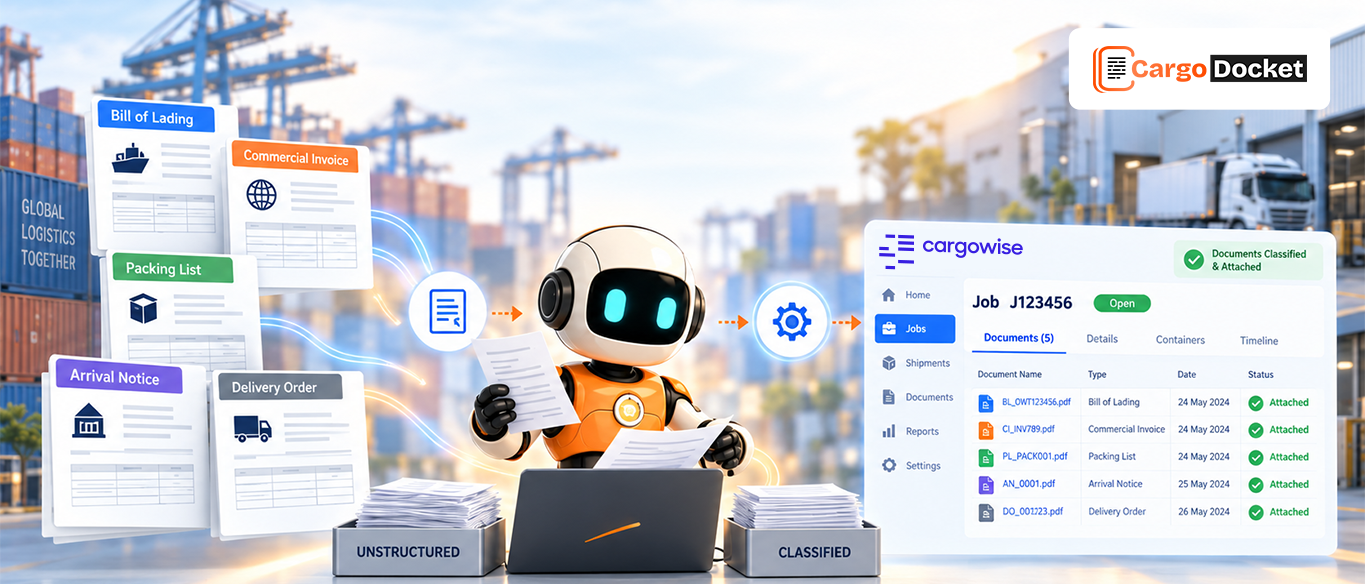
ERP systems pull data directly from orders, inventory, and invoices, creating a single, unified data flow. With Cargo Docket AI, even unstructured documents like PDFs or emails can be converted into structured data automatically, eliminating the need for manual data entry.
2. Automated Document Creation
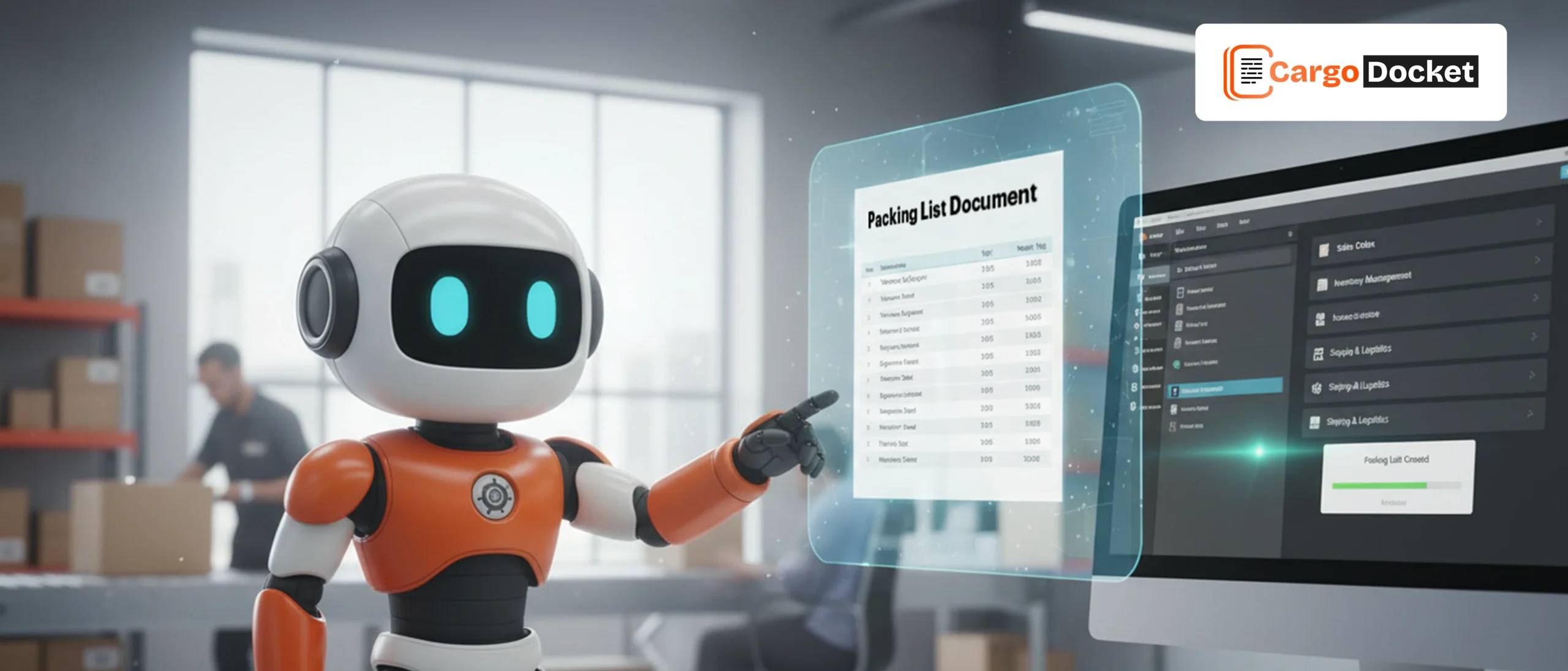
Packing lists are generated instantly with all required fields automatically populated. Cargo Docket AI ensures that the extracted data is mapped correctly into your ERP, enabling fast, standardized document creation without human intervention.
3. Intelligent Validation
Built-in validation checks automatically identify missing fields, incorrect values, or inconsistencies before the document is finalized. Cargo Docket AI enhances this by applying AI-driven validation rules, reducing the chances of errors slipping through.
4. Real-Time Synchronization
All systems stay aligned in real time, meaning any updates made in one system are immediately reflected across others. With Cargo Docket AI integrated, document data flows seamlessly between systems like CargoWise and your ERP without mismatches.
5. Workflow Automation
Approvals, document sharing, and updates are handled automatically through predefined workflows. Cargo Docket AI ensures documents are processed, verified, and routed without delays, reducing dependency on manual follow-ups.
Beyond Efficiency: What Automation Really Unlocks?
Automation doesn’t just improve speed, it transforms how your operations perform at scale. With ERP automation powered by Cargo Docket AI, you gain:
- Up to 80% reduction in manual work
- Faster shipment processing
- Minimal documentation errors
- Stronger compliance and audit readiness
- Better collaboration across teams
- Intelligent document handling across multiple formats
More importantly, your team shifts from manual data handling to AI exception-based management, focusing only on what truly needs attention.
Before vs After Automation
Let’s make this practical.
Before automation:
Teams rely on spreadsheets, emails, and manual updates. Data is copied across systems, errors are common, and time is spent fixing issues instead of preventing them.
After automation with Cargo Docket AI:
Documents are captured automatically, data is extracted and validated instantly, and packing lists are generated in real time within your ERP.
The entire process becomes faster, cleaner, and far more reliable. This shift moves your operations from reactive problem-solving to intelligent automation.
Why does this Matter for Freight Forwarders?
For freight forwarders, documentation isn’t just part of the process, it drives the entire operation. Every shipment depends on accuracy, timing, and coordination, and the packing list sits right at the center of it all.
As shipment volumes grow and operations become more complex, even small errors can create serious disruptions. That’s where solutions like Cargo Docket AI provide a competitive edge by ensuring document accuracy at scale.
Here’s why it matters:
- You manage high-volume complexity
AI Document Automation helps standardize and process documents across multiple shipments and clients effortlessly. - You’re responsible for compliance
AI-driven validation reduces documentation risks and ensures better compliance. - Your reputation is on the line
Accurate, automated documents improve reliability and customer trust. - Speed is critical
Automation reduces turnaround time and keeps shipments moving without delays. - Visibility is essential
Real-time data flow across systems gives you full operational control.
In short, combining ERP automation with Cargo Docket AI turns documentation from an obstacle into a strategic advantage.
Conclusion: Take Control of Your Packing Lists
Packing lists may seem small, but for freight forwarders, they directly impact speed, accuracy, and compliance. When managed manually, they introduce risks that slow down operations and affect customer trust.
With ERP automation powered by Cargo Docket, you can eliminate errors, improve visibility, and simplify your entire documentation process. Ready to simplify your packing list process?
Book a demo today to see how Cargo Docket AI can transform your operations and to learn how you can integrate it smoothly into your ERP and CargoWise environment.