
In global trade, Bills of Lading sit at the center of every shipment, every customs filing, and every financial transaction. Yet for many teams, BOL processing still depends on copy-paste work, repeated checks, and last-minute corrections.
Ocean carriers issue tens of millions of Bills of Lading every year, and across global trade, billions of documents are still handled manually. Each document introduces another chance for errors, compliance gaps, or shipment delays. As volumes grow and regulatory pressure increases, manual BOL handling can’t keep pace.
That is why BOL automation has evolved into a vital step for CargoWise-driven operations, not as a plus, but as a must for accuracy, speed, and control.
What is Bill of Lading Automation?
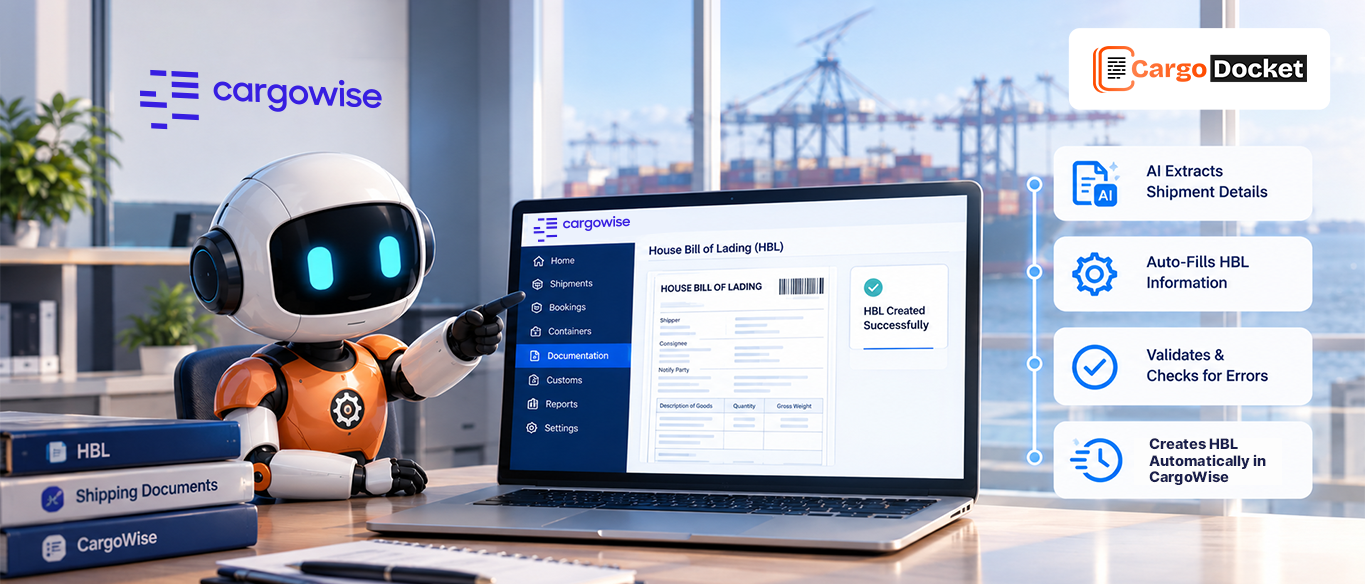
Bill of Lading automation is the use of AI-driven document processing to capture, validate, and manage BOL data without manual data entry. Instead of staff retyping shipper details, container numbers, HS codes, and freight terms, the system reads and understands the document automatically.
At its core, BOL automation ensures that every key data point flows cleanly into CargoWise, consistently and accurately, regardless of document format or carrier layout.
It focuses on:
- Extracting structured and unstructured BOL data
- Validating information against operational and compliance rules
- Eliminating repetitive document handling
- Creating a reliable digital audit trail
This shifts BOLs from being paperwork burdens into structured operational data.
Why Manual BOL Processing Breaks Down as Volumes Increase?
Manual BOL handling often works when volumes are low. The problem starts when shipments scale, formats vary, and deadlines tighten.
Small errors, such as a mistyped container number or a missing HS code, can trigger:
- Customs delays
- Incorrect job allocations
- Rebilling and disputes
- Compliance exposure
The real challenge isn’t effort, it’s inconsistency. Different staff members interpret documents differently, carriers use different layouts, and peak seasons push teams into reactive mode. Over time, this creates backlogs, rework, and operational stress.
Automation doesn’t remove human oversight, it removes unnecessary human repetition.
How Automated BOL Processing Works With CargoWise?
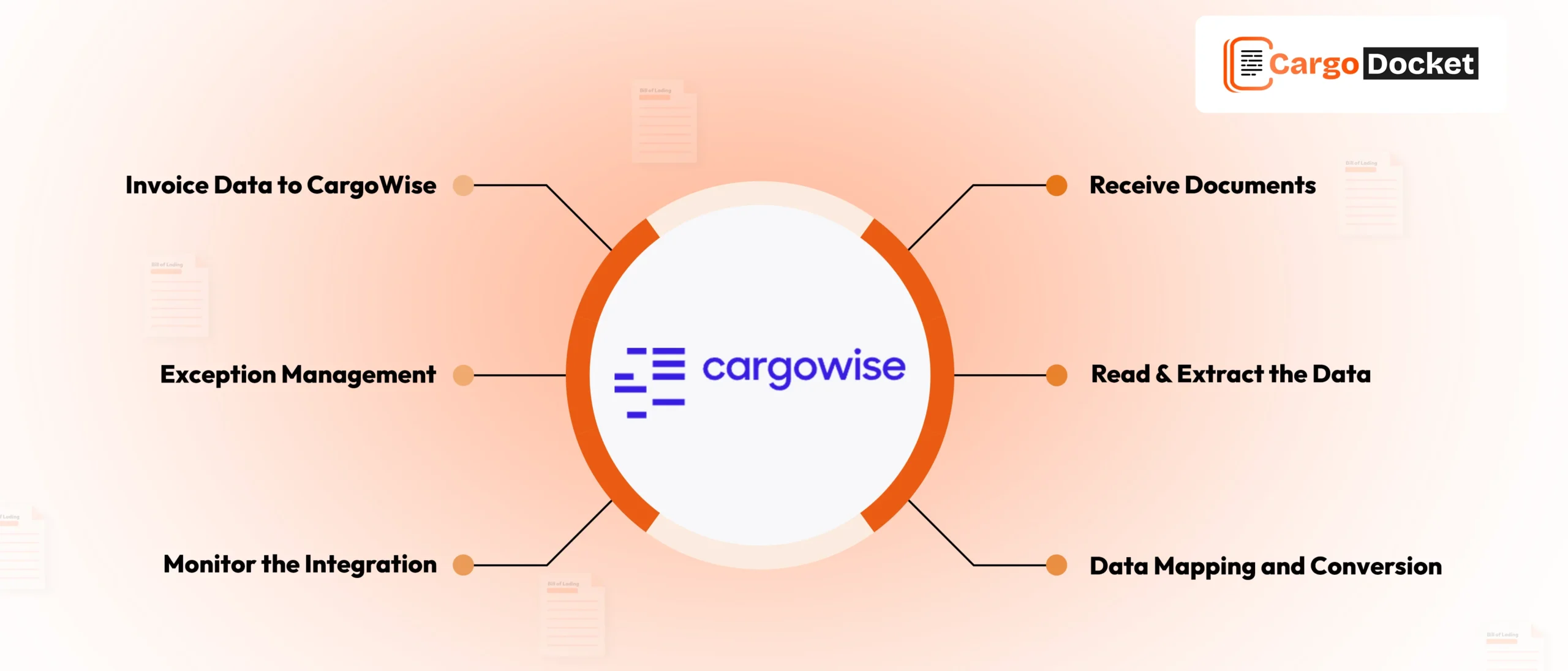
Automated BOL processing follows a structured flow that mirrors real freight operations, without disrupting existing CargoWise workflows.
First, documents are captured directly from emails, uploads, or shared folders. These can be scanned PDFs, digital BOLs, or carrier-issued documents in varying formats.
Next, AI-powered OCR reads the document and converts it into machine-readable data. This includes complex sections such as cargo descriptions, container tables, stamps, and handwritten notes.
Once extracted, the system classifies the document type as ocean BOL, air waybill, truck BOL, or multimodal, without relying on fixed templates.
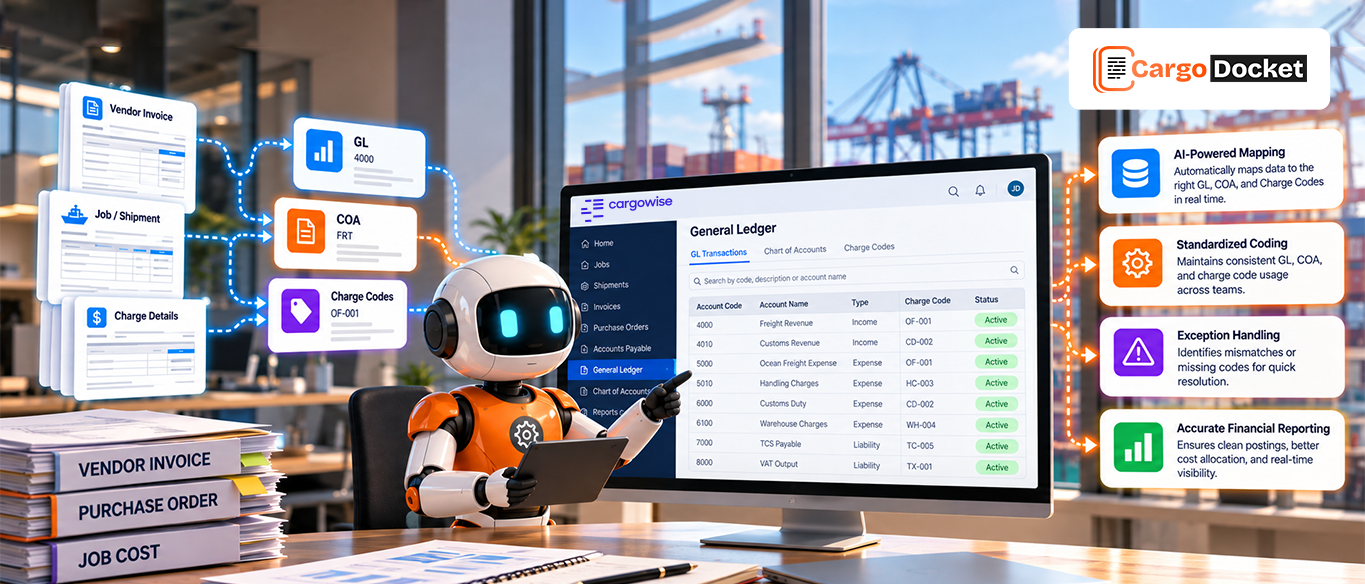
The extracted data is then validated against business rules:
- Container numbers checked against ISO formats
- Port codes verified using UN/LOCODE standards
- HS codes reviewed for completeness
- Freight terms aligned with job data
If anything doesn’t match, the system flags only the exception, not the entire document. Clean documents move forward automatically, while teams focus only on what needs attention.
Finally, validated data flows directly into CargoWise, ensuring job records, compliance data, and financial references stay aligned.
In daily operations, automation supports both import bills of lading automation and
export bills of lading automation in distinct ways. Import BOLs often arrive before jobs or references exist in CargoWise, causing delays. Automation continuously rechecks these documents and assigns them automatically as soon as matching data is available.
For exports, accuracy is the priority. Automation validates BOL data against bookings, shipper instructions, and customs requirements upfront, reducing amendments, carrier rejections, and last-minute corrections.
Manual BOL Entry vs Automated Bill of Lading Processing in CargoWise
The difference between manual and automated processing becomes obvious when you compare outcomes side by side:
| Aspect | Manual BOL Processing | Automated BOL Processing (with CargoWise integration) |
| Processing time | 30–60 minutes per document; high volumes can take 2–3 days | Less than 2 minutes per document; same-day clearance |
| Data entry errors | ~23% of shipments contain errors | ~0.5% error rate with automated validation |
| Accuracy | 75–80% on first pass | 95–99% accuracy with continuous AI learning |
| Labor cost per BOL | $20–$50 per document | Less than $2 per document |
| Scalability | Requires more staff as volumes grow | Handles spikes without extra headcount |
| Compliance risk | High risk of missing or incorrect data | Minimal risk with built-in rule enforcement |
This isn’t just about efficiency, it’s about operational reliability.
What are the Benefits of Automating Freight Documentation?
When BOL processing is automated and connected to CargoWise, the impact shows up across operations, finance, and compliance.
Key benefits include:
- Faster document turnaround without bottlenecks
- Significantly lower error rates in shipment data
- Reduced rework and manual corrections
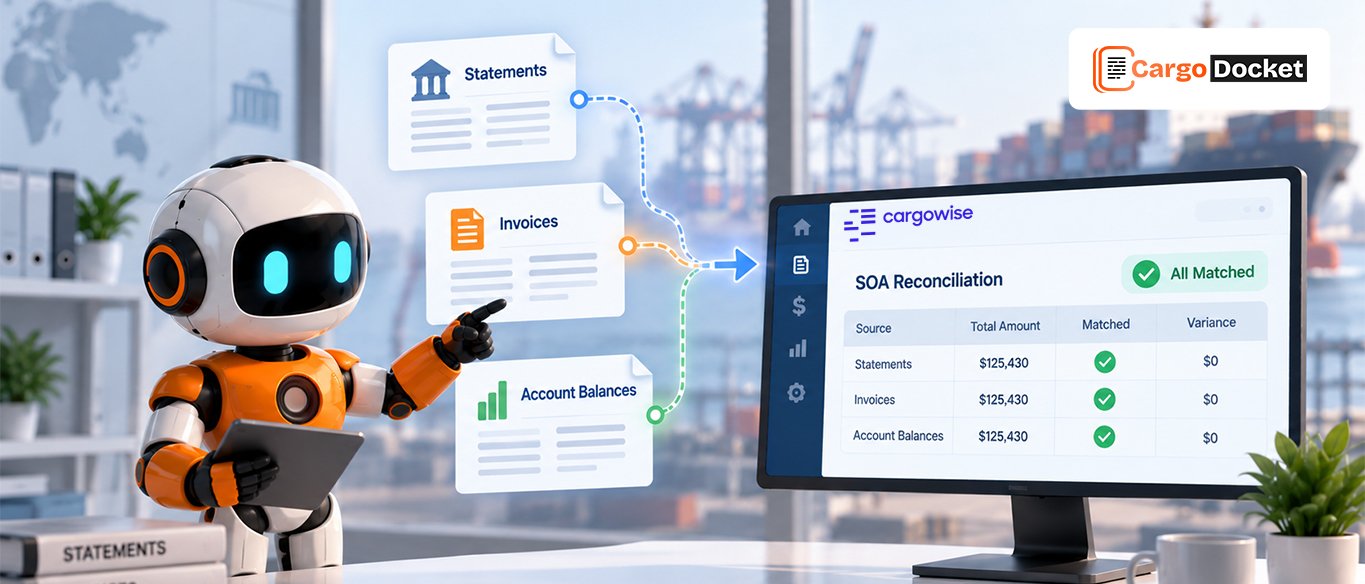
- Stronger alignment between operations and finance
- Improved audit readiness with full traceability
- Ability to scale shipment volumes without adding staff
For leadership teams, this translates into cleaner data, predictable workflows, and fewer surprises during month-end or audits.
Why Data Accuracy Becomes the Foundation of CargoWise Performance?
Inaccurate BOL data doesn’t stay isolated, it spreads. A wrong container number affects customs filings. A missing HS code delays clearance. An incorrect freight term impacts billing and accruals.
Automation improves accuracy not just by reading data faster but by validating it consistently. With automated checks in place, error rates drop from double digits to well under one percent. That level of precision creates confidence across departments, operations trust the data, finance relies on it, and compliance teams sleep better.
Accuracy becomes a system outcome, not a manual effort.
Turning Document Overload Into Controlled Workflows
BOL automation doesn’t replace teams, it supports them. Staff moves from typing and checking to reviewing and approving. Exceptions are clear, actionable, and limited.
Instead of chasing documents, teams manage workflows. Instead of reacting to errors, they prevent them. That shift reduces operational fatigue and improves overall job satisfaction.
How Automation Fits Without Disrupting Existing CargoWise Processes?
A common misconception is that automation requires reengineering workflows. In reality, it integrates alongside CargoWise without changing how teams work.
Implementation typically happens in phases:
- Connect document intake sources
- Configure validation and mapping rules
- Allow the system to learn document formats over time
Human oversight remains essential. Teams review flagged exceptions, confirm unusual cases, and maintain control. Automation handles volume and repetition; people handle judgment and decision-making.
Conclusion
Bills of Lading are not just documents, they are operational triggers, financial references, and compliance records. Handling them manually introduces unnecessary risk and cost.
By automating BOL processing within CargoWise, organizations gain speed, accuracy, and scalability without disrupting their existing workflows. Documentation becomes reliable, audits become easier, and teams focus on moving freight, not managing paperwork.
If your operations are growing and documentation pressure is increasing, BOL automation is no longer optional. It’s how modern CargoWise-driven freight operations stay accurate, compliant, and competitive. Ready to see how automated BOL processing fits into your CargoWise workflows?
Book a demo and experience the difference firsthand.