
Every import shipment begins the same way an email lands in the inbox. A pre-alert arrives from an overseas agent. Then the Bills of Lading start coming in, first the Master Bill, followed by multiple House Bills, often split across different messages, formats, and timelines.
What should be a quick setup quickly turns into a manual puzzle. Operators open documents, copy shipment details, cross-check references, attach files, and double-check that nothing has been missed. By the time the import job is finally created in CargoWise, valuable time is already gone.
This is exactly where AI document automation changes the game, and why many teams now rely on CargoDocket to keep import workflows fast, accurate, and under control.
Why Import Job Creation Still Slows CargoWise Teams Down?
CargoWise is capable of handling intricate freight, while the generation of new jobs, in the case of importing, is highly dependent on the input data. This data is mostly in the form of emails, which contain attachments with unstructured format data.
What should be automated still requires manual entry via an email-to-CargoWise process, emails opened, attachments downloaded, and shipping data entered into the system. Teams manually combine MBLs and HBLs, verify information, and upload documents. AI automates the extraction, validation, and posting of cargo data and documents straight into CargoWise to email.
When doing the job remotely with foreign agents, branch offices, or when using a foreign system, the time involved multiplies. Even experienced staff can take 30 minutes or more to create an import job.
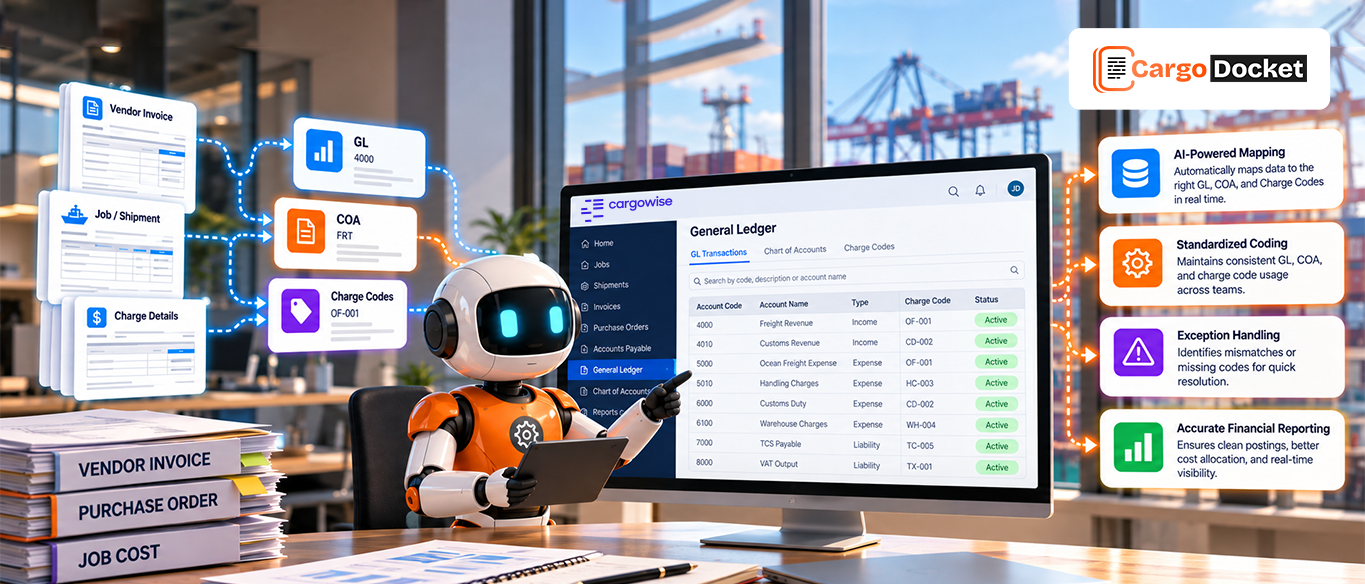
These issues in early data do not remain in the operational functions. These issues emerge in the form of delayed billing functions and inaccuracies in accruals in the financial functions later on, and create obstacles in the company right from the start.
CargoDocket reduces this friction by using AI document automation at the source and earliest intersection of data, namely via email, to Prepare the information for CargoWise input.
The Real Cost of Manual Import Job Creation
Beyond operational frustration, the business impact of manual import job creation is significant:
- Import jobs can take 30 minutes or more to create
- MBL and HBL data must be validated manually
- Consolidations and containers are linked by hand
- Documents require repeated downloading and uploading
- Small errors create downstream delays in customs and billing
Over time, these inefficiencies slow teams down, increase rework, and limit how much shipment volume operations teams can realistically handle.
What Import Job Automation Looks Like in Practice?
With automation in place, import job creation no longer starts with manual data entry. It starts with document intelligence.
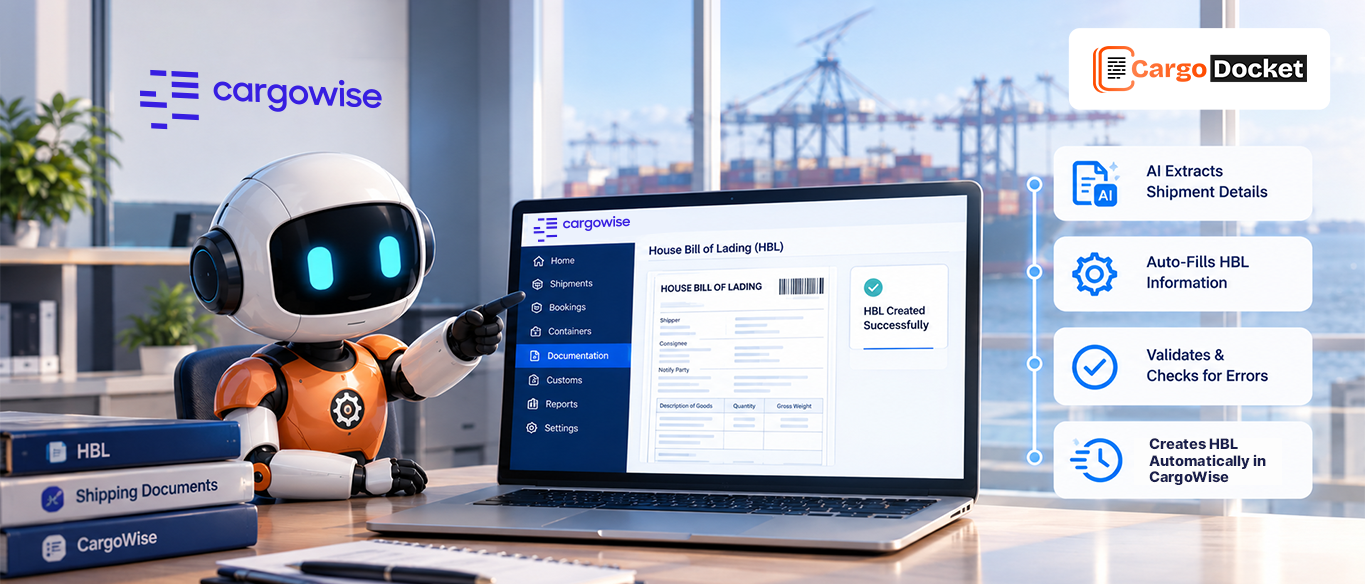
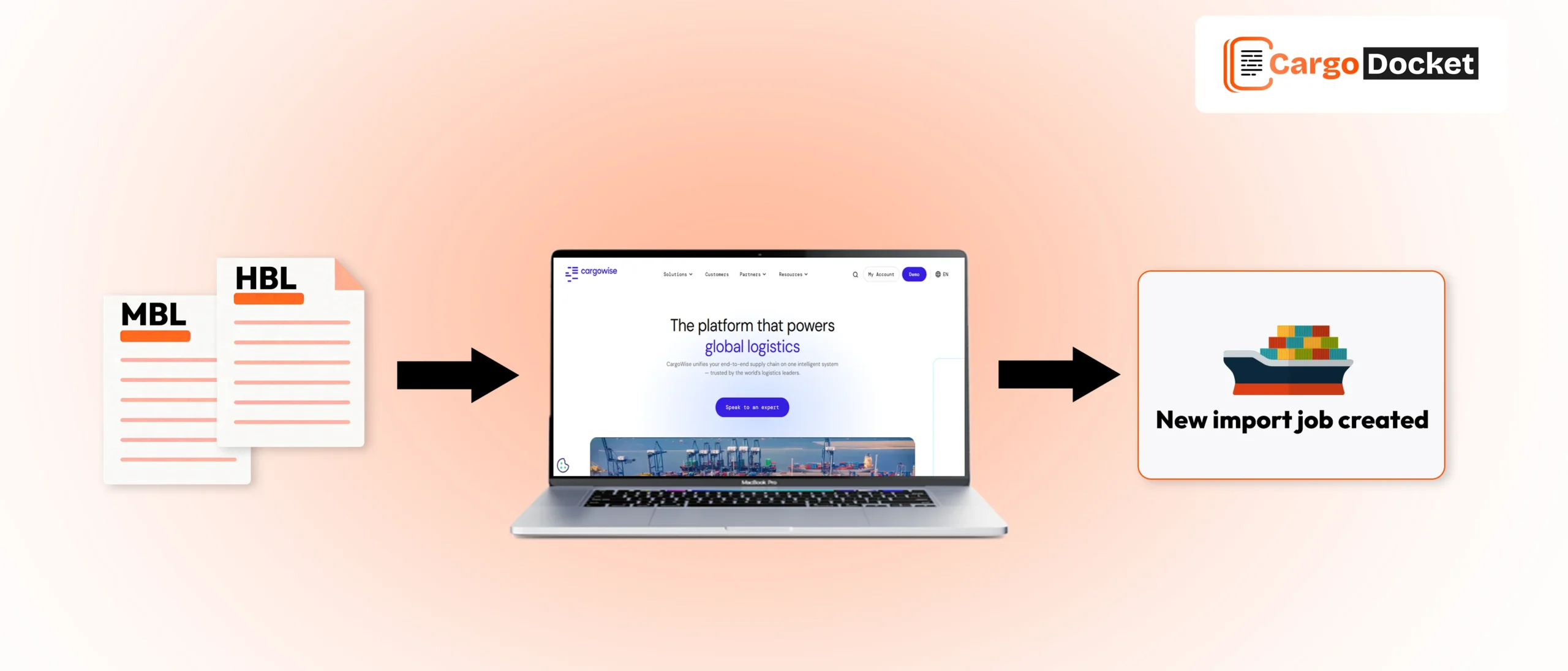
As MBLs and HBLs arrive, shipment data is extracted, validated, and used to automatically create or update orders, shipments, consolidations, or container records inside CargoWise. Supporting documents are attached to eDocs instantly, and records stay synchronized in real time.
What once took half an hour now takes minutes, and accuracy improves at the same time. Instead of reacting to missing references or late documents, teams work from a clean, continuously updated job structure.
How CargoDocket Handles MBL & HBL Data Automatically?
CargoDocket continuously monitors incoming emails for pre-alerts and Bills of Lading. It understands how Master and House Bills relate to one another and validates shipment details before anything reaches CargoWise.
The platform groups documents correctly, updates existing records when new information arrives, and ensures every import job is built with clean, reliable data. Operators stay informed through real-time updates but only step in when something genuinely requires attention.
This allows CargoWise to remain the system of record, while CargoDocket ensures the data entering it is accurate, complete, and ready to use.
What Changes When Import Jobs are Automated?
Once automation is in place, the operational shift is immediate:
- Import jobs are created in under five minutes
- MBL and HBL data are validated automatically
- Consolidations and containers are linked accurately
- Documents are attached without manual handling
- Operators focus on shipments, not data entry
Import job creation becomes a background process instead of a daily obstacle.
Why Accurate MBL & HBL Data Matters from Day One?
Master and House Bills of Lading drive everything that follows, customs clearance, invoicing, accruals, and customer communication. Errors introduced during job creation don’t disappear; they surface later as amendments, delays, and disputes.
By validating Bills of Lading at the document stage, automation ensures CargoWise receives accurate, structured data from the start. This reduces rework, speeds downstream processes, and builds trust between operations and finance.
Accuracy becomes a system outcome rather than a manual responsibility.
The Business Impact for CargoWise Users
With automated import job creation, teams can handle higher shipment volumes without increasing headcount. Turnaround times improve, customer updates become more reliable, and operators regain time to focus on exception management and relationship-building instead of repetitive admin work.
Most importantly, accuracy improves where it matters most, at the point where the job is created. That control at the source sets the tone for the entire import lifecycle.
Conclusion
Import job creation doesn’t have to be the slowest part of your import workflow. With CargoDocket automatingMBL and HBLprocessing directly inside CargoWise, teams eliminate manual work, reduce errors, and move faster from day one.
If your operators are still spending 30 minutes building import jobs by hand, there’s a smarter way forward. Book a free demo today and see how CargoDocket transforms import job creation in CargoWise, making it faster, cleaner, and easier.