
All freight movements begin with the creation of a shipment. Before booking freight or preparing documentation, the shipment must be created in the system. In many logistics teams, this still includes analyzing booking emails, accessing attachments, and manually entering information onto platforms such as CargoWise.
This process can take 10–30 minutes per shipment, and small errors, such as incorrect port codes or container types, can lead to booking delays or documentation issues.
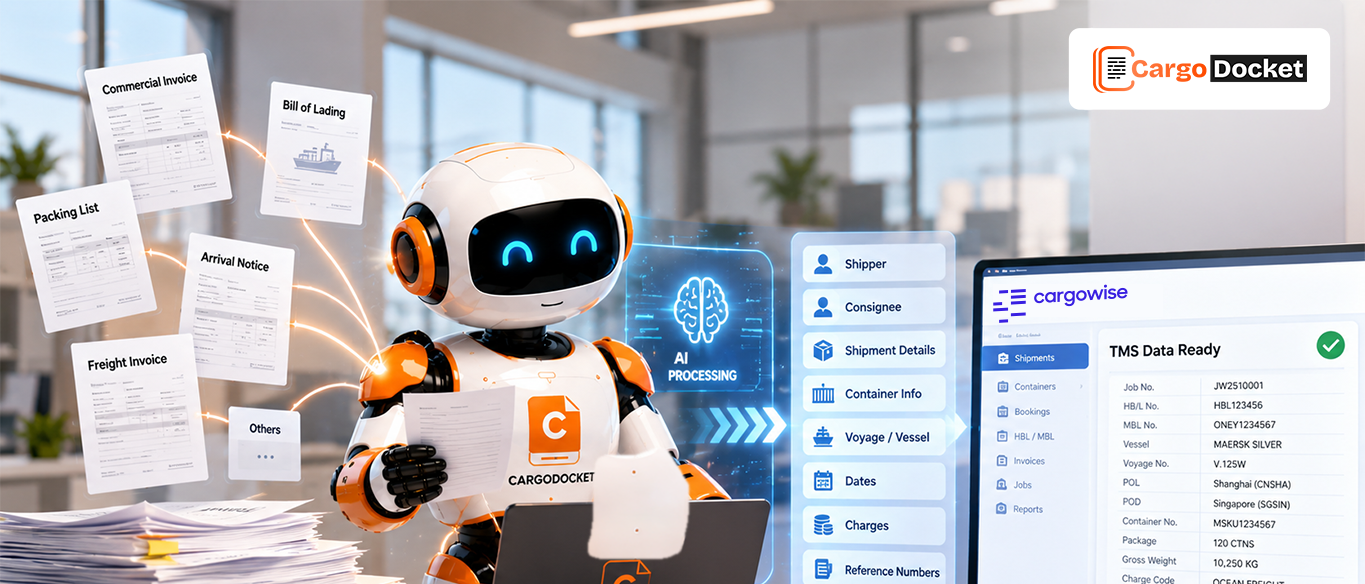
Cargo Docket AI simplifies this step by reading shipment instructions, extracting key details, validating the data, and automatically creating the shipment record in CargoWise, making the process faster, more accurate, and far less manual.
Why Manual Shipment Creation Slows Down Freight Operations?
Shipment creation may seem simple, but it directly influences how smoothly freight operations run. In reality, shipment requests arrive in multiple formats, emails from customers, spreadsheets from overseas agents, or PDF instructions from partners. Operations teams must review each request and manually enter the details into the system.
This manual process slows things down and increases the risk of errors. Something as small as an incorrect container type or port code can lead to booking issues, documentation mismatches, or last-minute corrections.
It also reduces planning time. When shipment creation is delayed, carrier tenders go out later, limiting capacity planning and often resulting in rushed bookings or higher freight costs.
Automation changes this dynamic by capturing shipment details automatically and validating the data before it is entered into the system. Freight teams can create shipments faster, reduce errors, and keep freight operations moving smoothly
What Shipment Creation Automation Means for Logistics Teams?
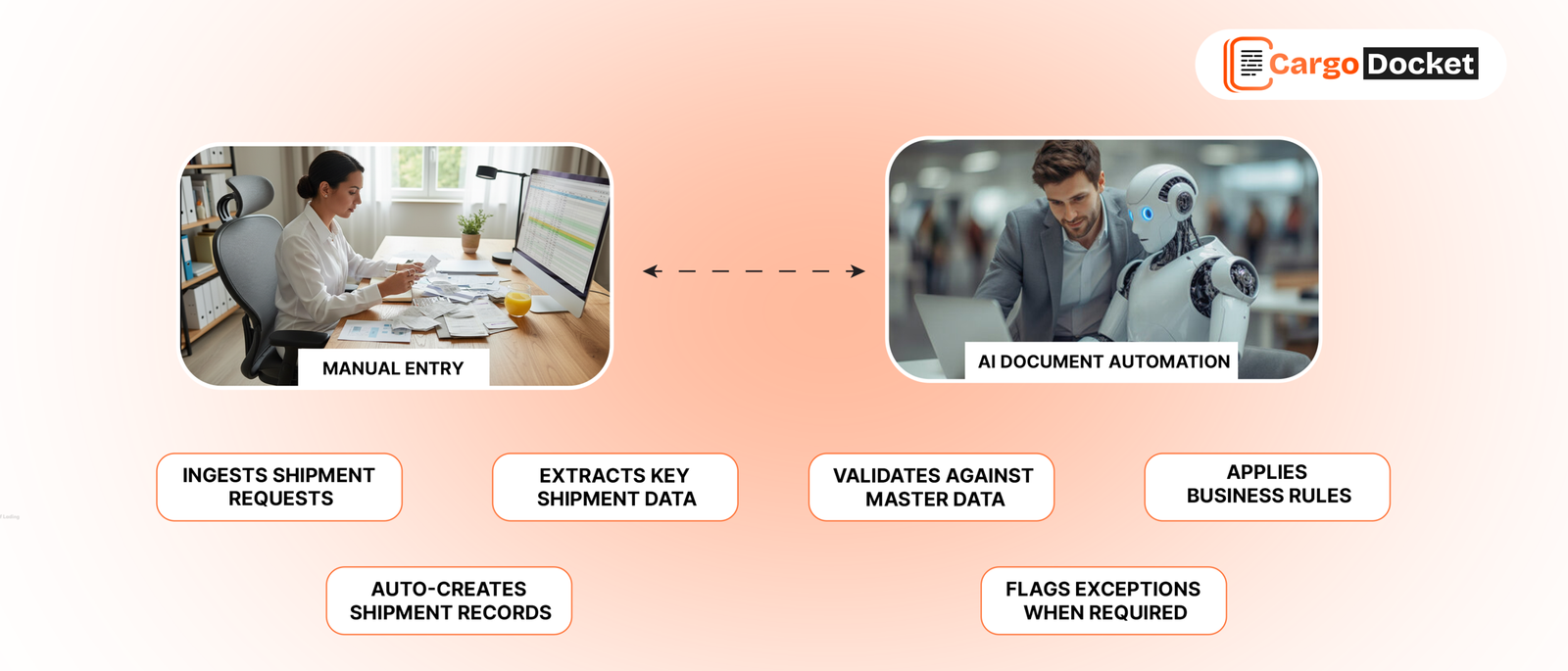
Shipment creation automation replaces manual data entry with intelligent data processing. Instead of operations teams manually reviewing every shipment request and entering the details into the system, automation tools analyze incoming instructions and convert them into structured shipment records.
AI-powered document recognition reads shipment requests from emails, spreadsheets, or attachments and extracts important logistics fields. These typically include shipper and consignee details, origin and destination locations, cargo specifications, container types, and delivery timelines.
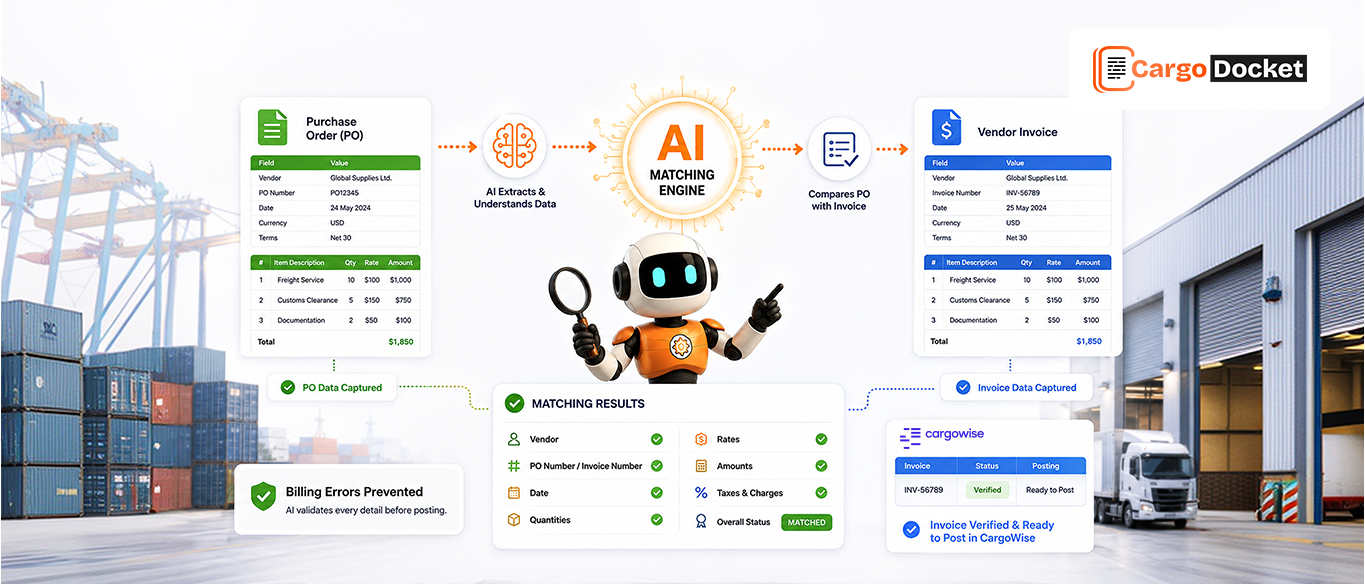
Once extracted, the system validates the data against operational master records. If everything matches, the shipment is created automatically in CargoWise. This allows logistics teams to focus on managing freight movements rather than on data entry.
How Cargo Docket Automates Shipment Creation in CargoWise?
Cargo Docket is built specifically for freight document automation and shipment intake. Its AI engine captures incoming shipment requests and converts them into structured shipment records ready for CargoWise.
Instead of operations teams manually copying details from emails or spreadsheets, Cargo DocketAI reads the request, extracts shipment data, validates key fields, and automatically creates the shipment inside CargoWise.
Because the data is validated before entering the system, shipment records remain cleaner and more consistent, reducing manual corrections and helping operations teams process shipments faster.
How does the Automated Shipment Workflow work?
Shipment creation automation typically follows a structured workflow:
Shipment Request Capture
Incoming shipment instructions are automatically captured from emails, spreadsheets, uploaded documents, or system integrations.
AI Data Extraction
The system reads the shipment request and extracts key logistics fields such as shipper, consignee, origin, destination, cargo details, container types, and delivery timelines.
Operational Data Validation
Extracted data is checked against master records such as port codes, container types, and customer references to ensure operational accuracy.
Automatic Shipment Creation
If the information passes validation checks, the shipment record is automatically created inside CargoWise.
Exception Handling
If certain fields are missing or inconsistent, the system flags the shipment for operations review so teams can correct the data quickly.
This process ensures shipment creation becomes faster while maintaining operational accuracy.
Operational Benefits Freight Teams Experience
Shipment automation delivers several measurable improvements for logistics teams.
Faster Shipment Processing
Shipment records can be created in minutes rather than taking 20–30 minutes per job.
Reduced Manual Workload
Operations teams spend less time entering shipment data and more time coordinating freight movements.
Improved Data Accuracy
Validation checks reduce the risk of incorrect shipment references, port codes, or container types.
Earlier Carrier Tendering
Shipments are created earlier, giving carriers more time to plan equipment and confirm capacity.
Better Operational Visibility
Teams gain clearer insight into shipment workflows and operational status.
These improvements allow freight companies to handle higher shipment volumes without increasing operational headcount.
Manual Shipment Entry vs Automated Shipment Creation
| Manual Workflow | AI-Powered Workflow |
| Operations teams manually review emails | Shipment requests captured automatically |
| Shipment data typed into CargoWise | AI extracts shipment data instantly |
| Higher risk of entry errors | Data validated against master records |
| Shipment creation takes up to 30 minutes | Shipments created within minutes |
| Carrier bookings are often delayed | Carriers receive shipment details earlier |
Automation removes operational obstacles at the very beginning of freight execution.
How Cargo Docket AI Helps Freight Operations?
Cargo Docket AI is built specifically for logistics workflows. It understands the structure of booking emails, shipment instructions, and freight documentation.
Instead of treating shipment requests as generic documents, Cargo Docket AI recognizes logistics-specific data fields and processes them accordingly.
Key Ways Cargo Docket AI Helps
Automated Shipment Intake
Cargo Docket monitors incoming emails and documents, capturing shipment instructions automatically without manual review.
AI Logistics Data Extraction
The system extracts key freight details, including shipper, consignee, ports, container types, cargo weight, and shipment references.
Data Validation Before System Entry
Operational checks ensure shipment data matches system master records before creating the shipment.
Direct Integration with CargoWise
Validated shipment data is integrated directly into CargoWise, eliminating manual entry.
Exception Management
If shipment information is incomplete or inconsistent, Cargo Docket flags the issue so operations teams can review it quickly.
With Cargo Docket handling shipment intake and validation, logistics teams spend less time entering data and more time managing freight operations.
Shipment creation may seem like a small task, but it directly impacts how efficiently freight execution begins. Manual processes slow operations, reduce carrier planning time, and increase the risk of errors.
Cargo Docket AI transforms this step by automatically extracting shipment data, validating key fields, and creating shipment records directly inside CargoWise.
View our live demo to see how Cargo Docket AI automates shipment creation and speeds up freight operations
Conclusion:
AI-powered shipment automation changes this. By automatically extracting shipment data and creating validated records in CargoWise, Cargo Docket enables logistics teams to process shipments faster and more accurately.
The result is earlier carrier visibility, improved planning windows, stronger operational coordination, and more reliable freight execution.
If your team is still manually creating shipments from emails and spreadsheets, it may be time to see how AI automation can transform your workflow. Book a demo today and discover how Cargo Docket can automate shipment creation and accelerate your CargoWise operations.