
Imagine this, when your customs documents were submitted on time, but one missing piece of information results in a delayed clearance, additional charges, and a red flag on your compliance record. It’s frustrating, but it happens more often than it should. In global logistics, documentation errors are still a leading cause of delays, penalties, and regulatory setbacks.
So, the big question is: how can logistics teams reduce compliance risks without slowing down their operations?
The answer? AI Automated document checks are an increasingly vital part of modern freight forwarding and logistics compliance.
Why are Document Compliance Checks So Critical in Logistics?
In logistics, documents are everything. From air waybills to commercial invoices, packing lists to certificates of origin, each document plays a role in clearing goods and ensuring lawful international movement.
- Most errors happen because of missing or incorrect documentation.
- Customs authorities are now more tech-driven and less forgiving.
- Delays and fines affect not just one shipment, but can trigger audits or blacklisting.
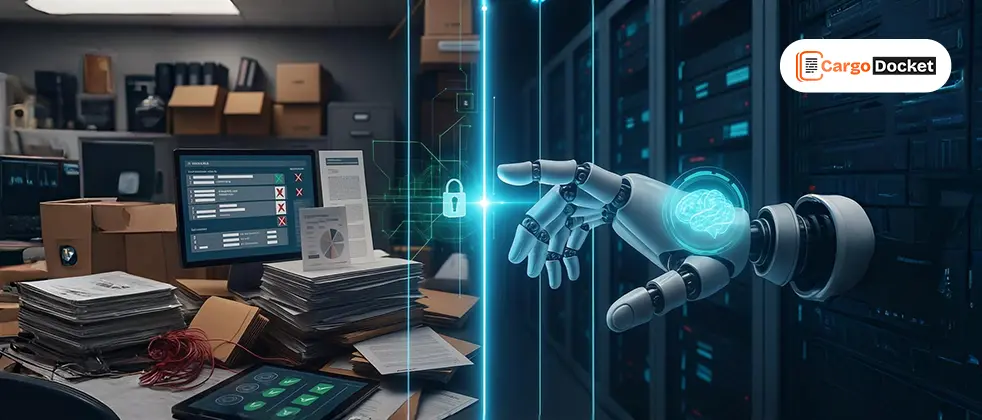
Manual checks are simply not enough. You may have a seasoned team, but when you’re processing hundreds of shipments per day, manual oversight becomes the weakest link.
What are the Common Compliance Risks Caused by Document Errors?
Let’s break down a few of the most common (and costly) compliance risks that logistics companies face:
Missing Commercial Invoices or Packing Lists
Customs clearance can’t proceed without them. Missing even one can hold up an entire shipment.
Incorrect HS Codes
Tariff misclassification can lead to overpayments, underpayments, or fines.
Inaccurate Origin Declarations
False or missing country-of-origin details can trigger legal actions or trade penalties.
Mismatched Data Across Documents
If the data on the Bill of Lading doesn’t match the commercial invoice or purchase order, expect questions and delays.
Expired Permits or Licenses
If a document has an outdated approval stamp or expired validity, it’s non-compliant.
All these risks stem from human error, time pressure, or simply not having a system that flags inconsistencies early.
How Does Automation Help Reduce These Risks?
This is where automated document checking completely changes everything.
Here’s what a modern system can do for you:
Extract Data from Unstructured Documents
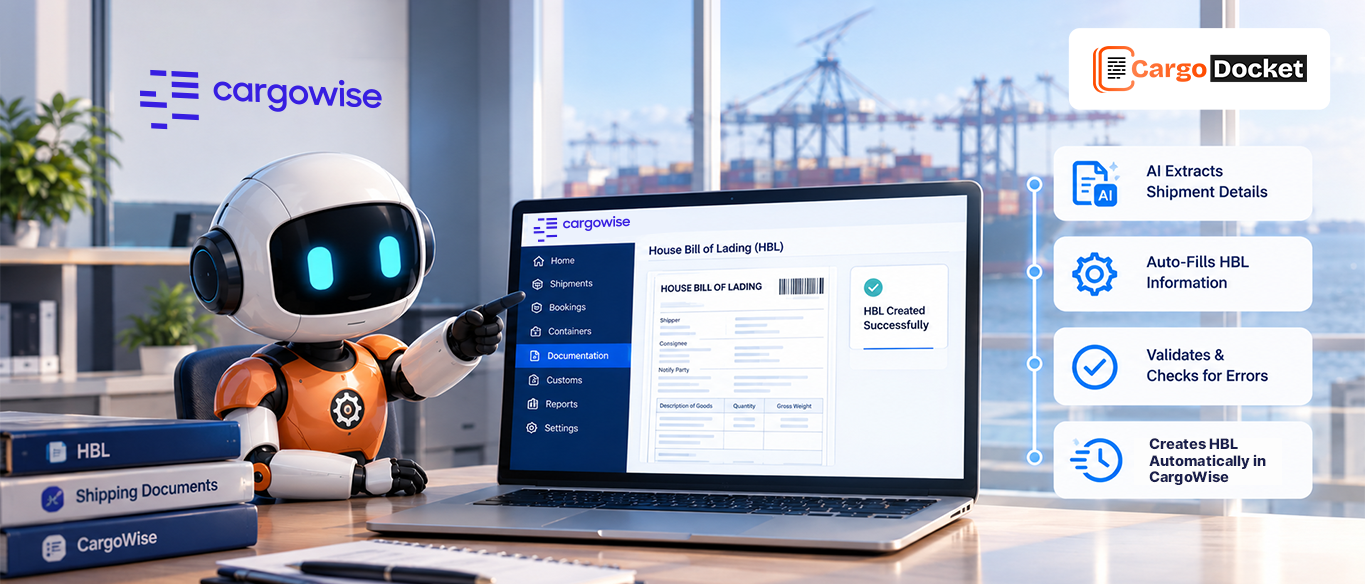
Instead of your staff reading each document manually, AI tools can “read” scanned PDFs, Excel sheets, and even email attachments to extract critical data fields.
Standardize and Normalize Data
Once extracted, data is cleaned and formatted, ensuring the values are consistent, currency is uniform, and formats are structured for system comparison.
Cross-Validate Information
Now comes the magic:
The system automatically compares document data across multiple files. For example, it checks if:
- Invoice amount = Purchase Order total
- Quantity on packing list = Quantity on invoice
- HS code = Approved tariff schedule
- Consignee and shipper details = What’s in your TMS
This ensures consistency before the documents are submitted to customs or customers.
Trigger Alerts for Exceptions
When something is missing or mismatched, the system flags it instantly.
Your team doesn’t have to review every document, only the ones that need attention.
Enable Real-Time Compliance Monitoring
All checks and validations are recorded in audit logs. This makes compliance tracking easier and audit preparation less stressful.
What Areas of Logistics Benefit the Most from Automated Document Checks?
While this is useful across the board, here’s where it has the most impact:
Customs Clearance – Prevent rejections and delays due to documentation inconsistencies.
Freight Forwarding – Keep all stakeholders aligned with document verification built into the flow.
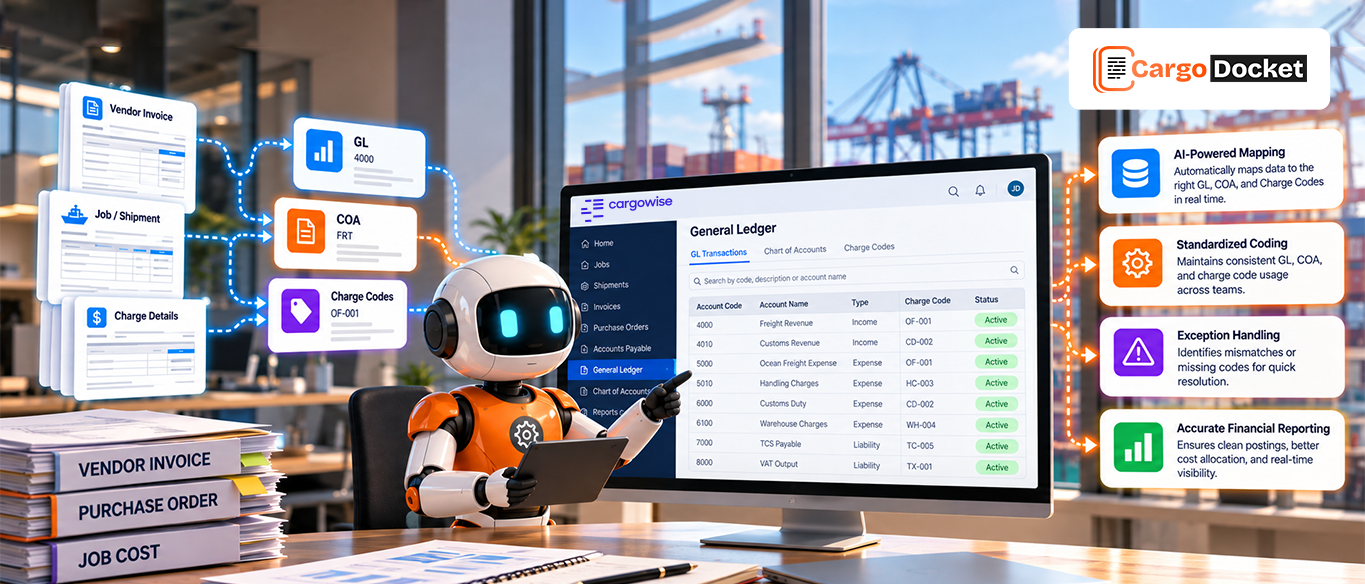
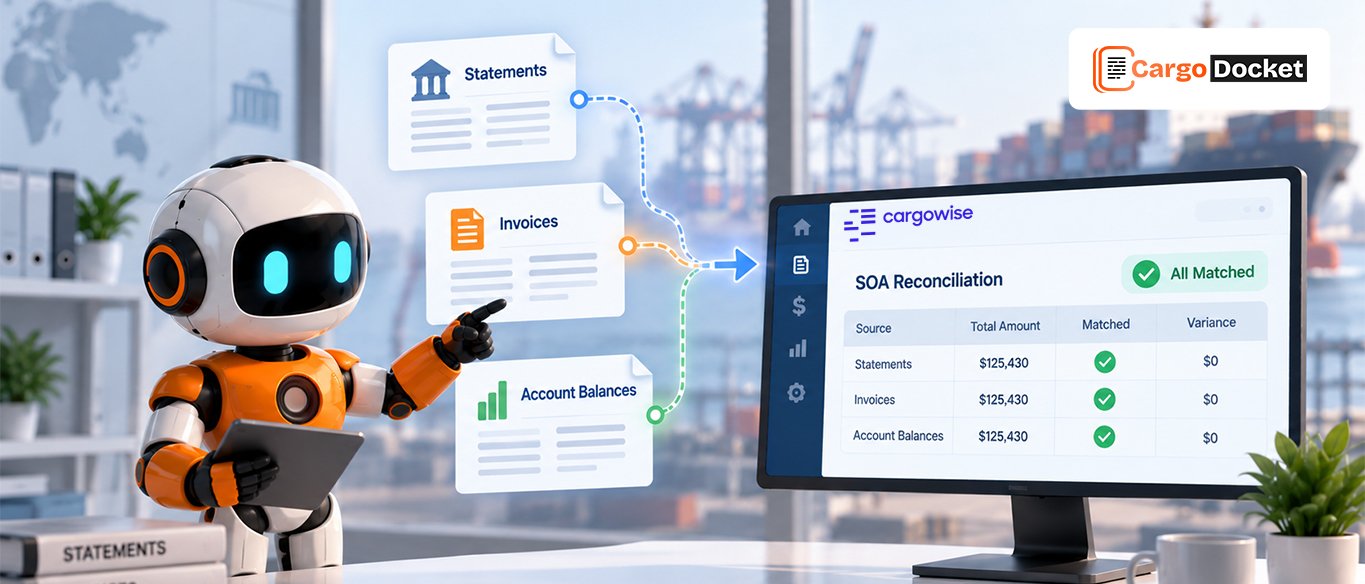
Accounts Payable – Catch discrepancies between invoices, purchase orders, and vendor credits.
Trade Compliance – Flag incorrect HS codes, restricted parties, and non-compliant origin details.
Customer Service – Reduce client issues caused by shipment hold-ups or resubmissions.
Why is this More Relevant in Today’s Logistics Environment?
1. Tighter Regulatory Pressure
Governments are increasing enforcement with digital tools. Customs authorities now use AI to screen incoming documents, so your documents need to be just as smart.
2. Higher Shipment Volumes
Post-pandemic recovery, e-commerce growth, and cross-border trade mean your document workload is only growing. Manual processes can’t scale.
3. Shorter Timelines
Clients expect visibility and speed. Every delay, especially for compliance reasons, erodes trust.
When Should a Company Adopt Automated Document Checks?
The right time to adopt is when:
- You process 20+ shipments per day and rely on document accuracy for smooth customs clearance.
- You face repetitive errors or corrections from regulatory bodies.
- Your team spends too much time manually verifying documents.
- You want faster, more confident approvals with less human dependency.
If any of this sounds familiar, you’re ready.
What Should You Look for in an Automation Tool?
Look for a solution that offers:
- AI-based document reading (OCR + contextual understanding)
- Cross-document validation (invoice to packing list to PO)
- Pre-set compliance rules based on your region or country-specific customs regulations
- Audit trails and reporting for transparency and traceability
- Integration with CargoWise or your ERP/TMS
- Scalability to handle high document volumes without manual setup
Additionally, it includes a dashboard where your team can track the status of each document and compliance flag in real-time.
Conclusion
Compliance in logistics isn’t just about avoiding penalties, it’s about building trust, protecting your brand, and moving cargo without surprises and when the cost of a simple document error can cascade into thousands of dollars in fees, storage, or lost business, prevention becomes a priority.
AI Automated document checks are no longer a nice-to-have, they’re a need-to-have.
With the right tools, your team can:
- Reduce risk
- Process faster
- Stay ahead of regulatory shifts
- Build smarter, more resilient workflows
Need help building your automated document compliance flow?
At Cargo Docket, we help logistics businesses like yours simplify everything from document intake to intelligent validation, all integrated with CargoWise or any other ERP.
Let’s connect. Book your free consultation, and we’ll show you how to catch errors before they cost you.