
On average, logistics teams spend 30–40% of their working hours manually processing documents, invoices, Bills of Lading, packing lists, airway bills, and more. Each document can take 20–30 minutes to review, validate, and enter into CargoWise.
If your company processes 400–500 shipments a month, that’s more than 150–200 hours lost every month to manual typing and rechecking.
And here’s the part most companies underestimate: manual documentation carries an average 15–25% error exposure rate. That means container number mistakes, mismatched accruals, missing HS codes, and incorrect charge codes, all of which create downstream delays.
Manual document handling doesn’t just slow operations. It slows revenue, compliance, and growth.
Let’s look at why.
The Hidden Cost of Manual Document Handling
Manual workflows appear manageable at first. Someone receives a document. They open it. They enter data. They validate it. Done.
But in reality, each step introduces friction.
Every document requires:
- Data extraction from email or PDF
- Manual entry into CargoWise
- Cross-checking against shipment records
- Matching against POs or accruals
- Rechecking for compliance
When errors happen, and they do, corrections add another 10–15 minutes per document. Across hundreds of shipments, those small delays compound into a major operational drag.
The hidden cost includes:
- Slower billing cycles
- Increased AP disputes
- Delayed revenue recognition
- Higher compliance risk
- Over time, during peak seasons
- Staff burnout
And when shipment volume increases by 20–30%, manual workload increases at the same rate. That means hiring more people just to keep up with documentation.
That’s not scalable.
Why Manual Work Slows Down the ERP?
ERP is designed to run on structured, clean, validated data. When the data entering the system is inconsistent or delayed, workflows break.
Manual processing creates:
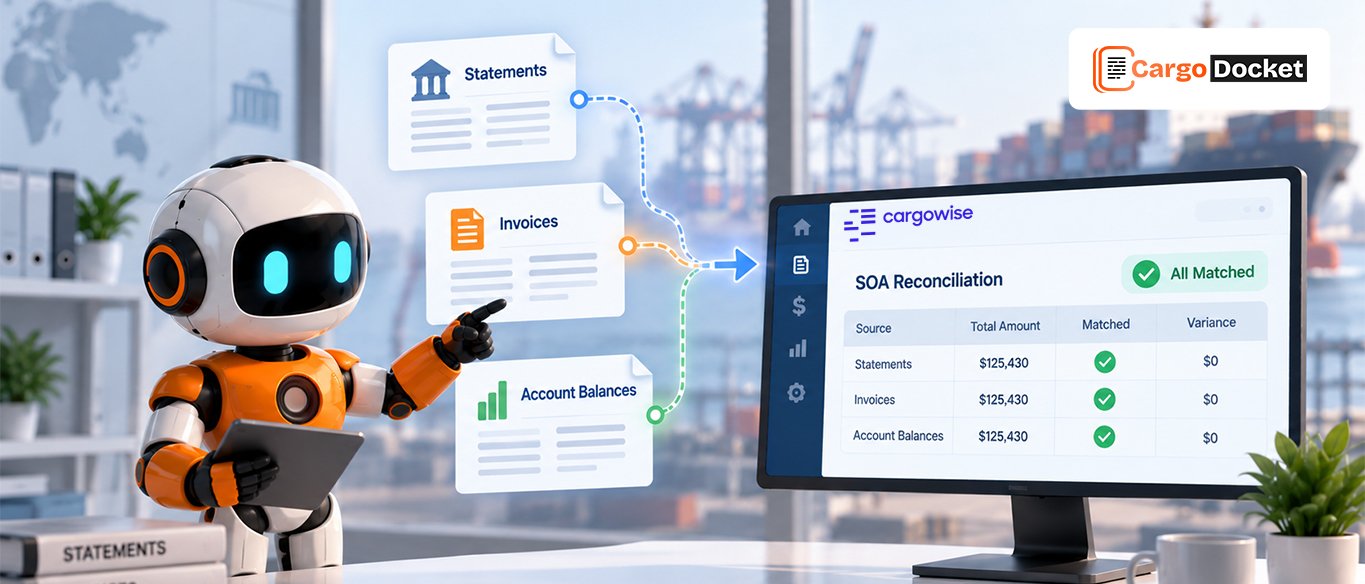
- Accrual mismatches between AP and shipment records
- Duplicate or incomplete entries
- Missing e-doc attachments
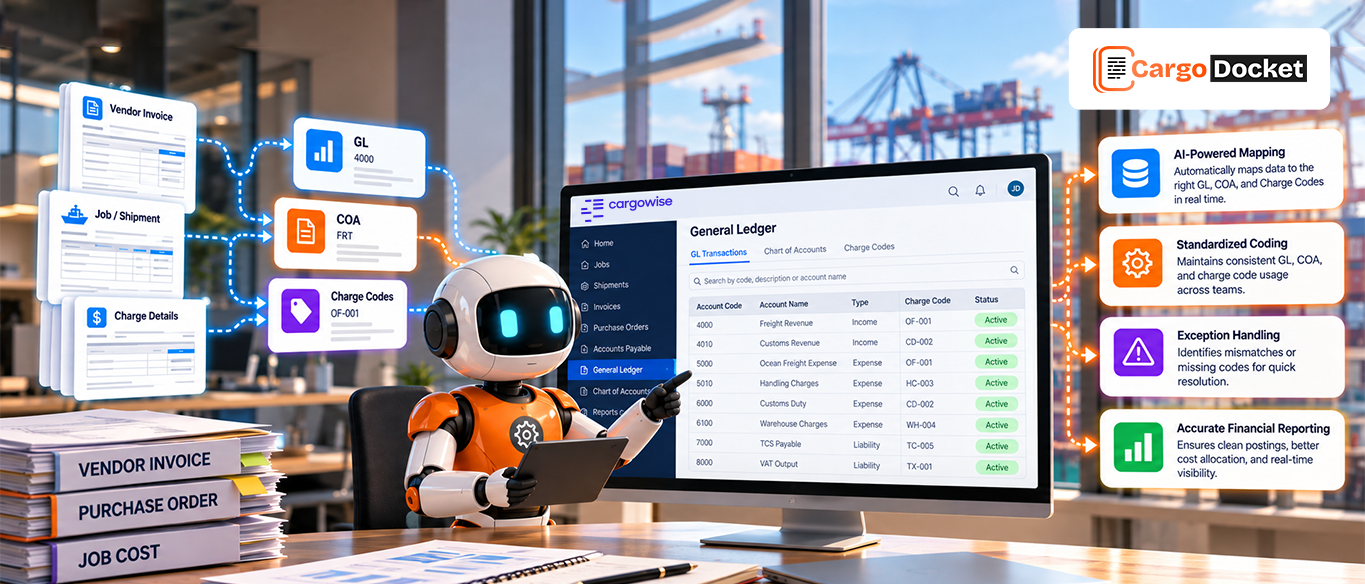
- Incorrect charge code postings
- Delayed consolidation linking
Instead of automation driving performance, the ERP becomes dependent on human speed and accuracy.
- Finance waits for operations to confirm values.
- Operations wait for suppliers to resend corrected documents.
- Approvals stall.
- Invoices delay.
The ERP isn’t slow. It’s manual input feeding. That’s why AI document automation is highly useful.
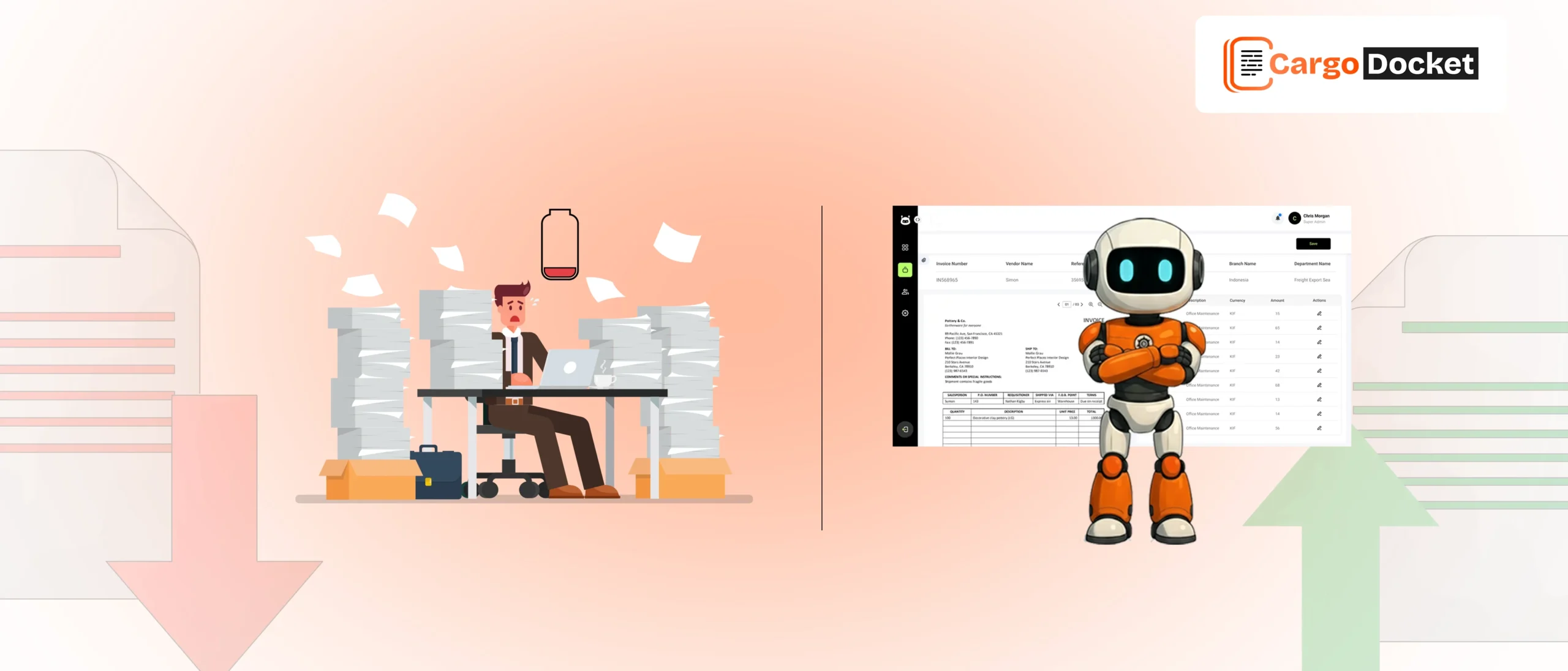
Manual Workflow vs With Cargo Docket AI
Here’s where the transformation becomes measurable.
| Manual Workflow | With Cargo Docket AI |
| 20–30 minutes per document | Under 2 minutes end-to-end |
| 15–25% error exposure | 95–99% validated accuracy |
| Manual review of every document | Exception-based review only |
| Frequent accrual mismatches | Automated accrual matching |
| Delayed invoice posting | Faster billing cycles |
| Scaling requires more staff | Scales without added headcount |
What Happens When Cargo Docket AI Steps in?
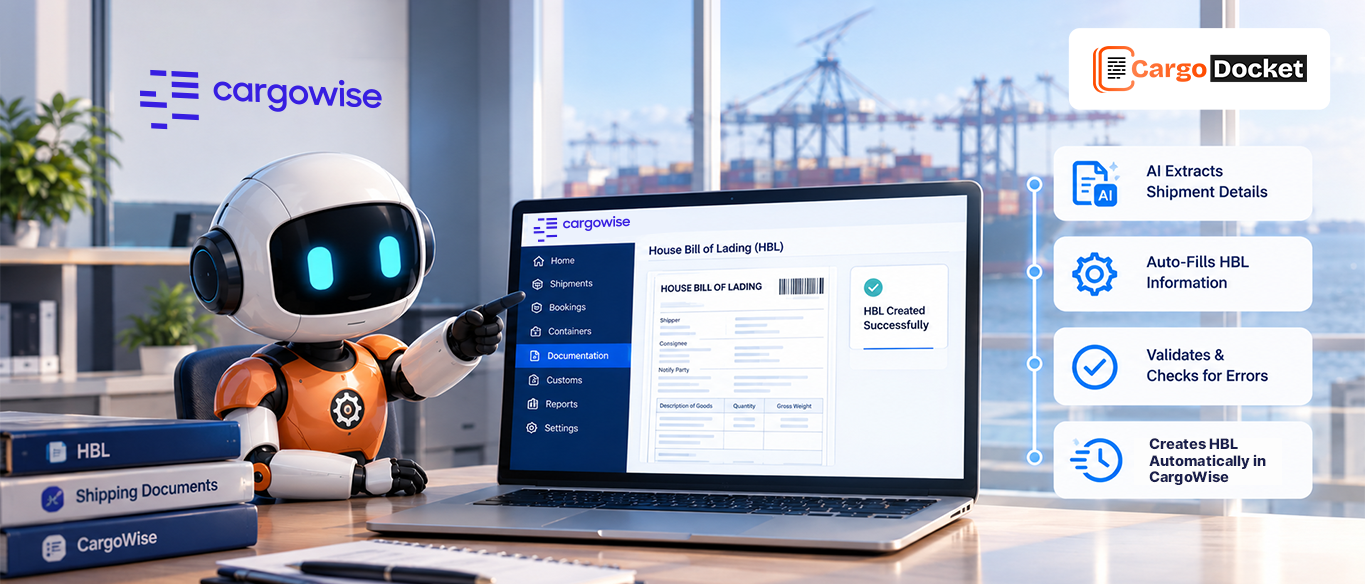
When documents arrive, whether invoices, BOLs, packing lists, or shipment confirmations, Cargo Docket AI automatically:
- Extracts all key data fields
- Validates formats and shipment references
- Matches invoices against CargoWise accruals
- Verifies container numbers and compliance fields
- Flags only true discrepancies
Processing time drops by 70–80%.
Error rates drop below 3%.
Manual workload has reduced dramatically.
Instead of reviewing every document, your team focuses only on exceptions.
That means:
- Faster job creation
- Quicker invoice approvals
- Improved financial accuracy
- Real-time ERP updates
- Reduced compliance exposure
Automation doesn’t replace people. It removes repetitive typing and repetitive checking. Your team remains in control, but with speed and accuracy working in their favor.
Conclusion
Manual document handling creates delays because it relies on repetitive human input in a high-volume, high-precision industry. As shipment volumes grow, so do errors, corrections, and delays.
Cargo Docket AI eliminates that friction by automating document extraction, validation, and integration directly into CargoWise. The result is faster workflows, fewer errors, stronger financial control, and scalable growth without proportional staffing increases.
If your team is still spending hours manually entering freight documents, you’re not just losing time, you’re limiting operational potential. Book a demo today and see how Cargo Docket AI transforms documentation from operational drag into operational advantage.