
Logistics teams process hundreds of shipment documents every day, and keeping everything accurate is becoming harder than ever. Studies suggest that nearly 60–70% of supply chain information still moves through documents, making documentation one of the biggest drivers of operational efficiency.
A missing shipment reference, incorrect invoice value, or incomplete document may seem like a small issue at first. But when these issues begin appearing across multiple shipments, they create delays, operational rework, and constant follow-ups between teams.
That’s why logistics businesses are moving toward centralized dashboards that help teams identify document issues faster and improve visibility across operations.
How Small Document Issues Quietly Slow Down Freight Operations?
Freight operations depend on information flowing correctly between systems, teams, and customers. But in real-world logistics environments, things rarely arrive perfectly organized.
One shipment may have missing data, another may include duplicate documents. A carrier may send an updated file while a previous version is still sitting in someone’s inbox.
The challenge isn’t always the mistake itself. The challenge is finding where the issue exists before it creates a bigger operational problem.
Common issues often include:
- Missing shipment references
- Duplicate document submissions
- Incorrect consignee information
- Incomplete shipment records
- Delayed approvals between teams
At first, these issues may seem harmless. But over time, they create operational friction that slows shipment execution and affects customer experience.
Instead of focusing on freight movement, teams often spend valuable time reviewing emails, searching through folders, and asking for updates.
Why Every Logistics Document Comes with its Own Challenges?
Every logistics document supports a different stage of the shipment lifecycle. Because of that, each document introduces its own operational complexity.
Bills of Lading
Bills of Lading connect shipment ownership and transportation details. Missing references or inconsistent shipment information can affect shipment visibility and freight planning.
Commercial Invoices
Commercial invoices support customs declarations and payment activities. Small mismatches in shipment values or product information can delay approvals and create additional review steps.
Packing Lists
Packing Lists contain item quantities, product descriptions, dimensions, and packaging details. Missing or incorrect information frequently causes customs or warehouse issues.
Purchase Orders
Purchase Orders connect procurement and shipment activities. When purchase details do not align with shipment information, operational teams often spend additional time correcting records.
Air Waybills
Air Waybills help support air freight movement and shipment tracking. Incorrect airway references can affect coordination and delay shipment processing.
Shipment Supporting Documents
Certificates, declarations, permits, and supporting shipment files often arrive separately and require additional verification before processing can continue.
As shipment volumes increase, handling all of these files manually becomes increasingly difficult.
What is an All-in-One Dashboard and How does it Change Workflows??
An all-in-one dashboard creates one centralized place where logistics teams can review, monitor, and manage shipment documents without constantly switching between systems.
Think about how teams usually work every day:
- Email inboxes
- Shared folders
- ERP systems
- Cargo platforms
- Spreadsheets
- Communication tools
Switching between multiple systems consumes time and creates confusion. A centralized dashboard changes that process completely.
Teams immediately understand:
- Which shipments require attention
- Which documents contain issues
- Who owns specific tasks
- Current workflow status
Instead of searching for information, teams can focus on resolving problems faster.
How Cargo Docket Helps Teams Resolve Document Issues Faster?
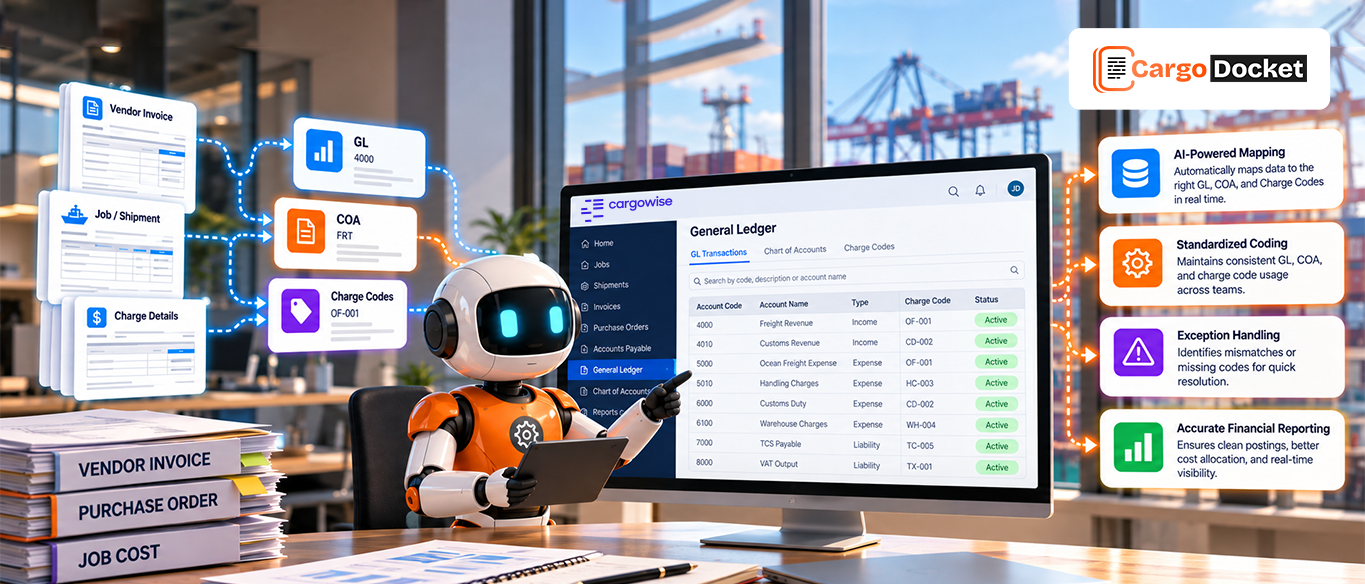
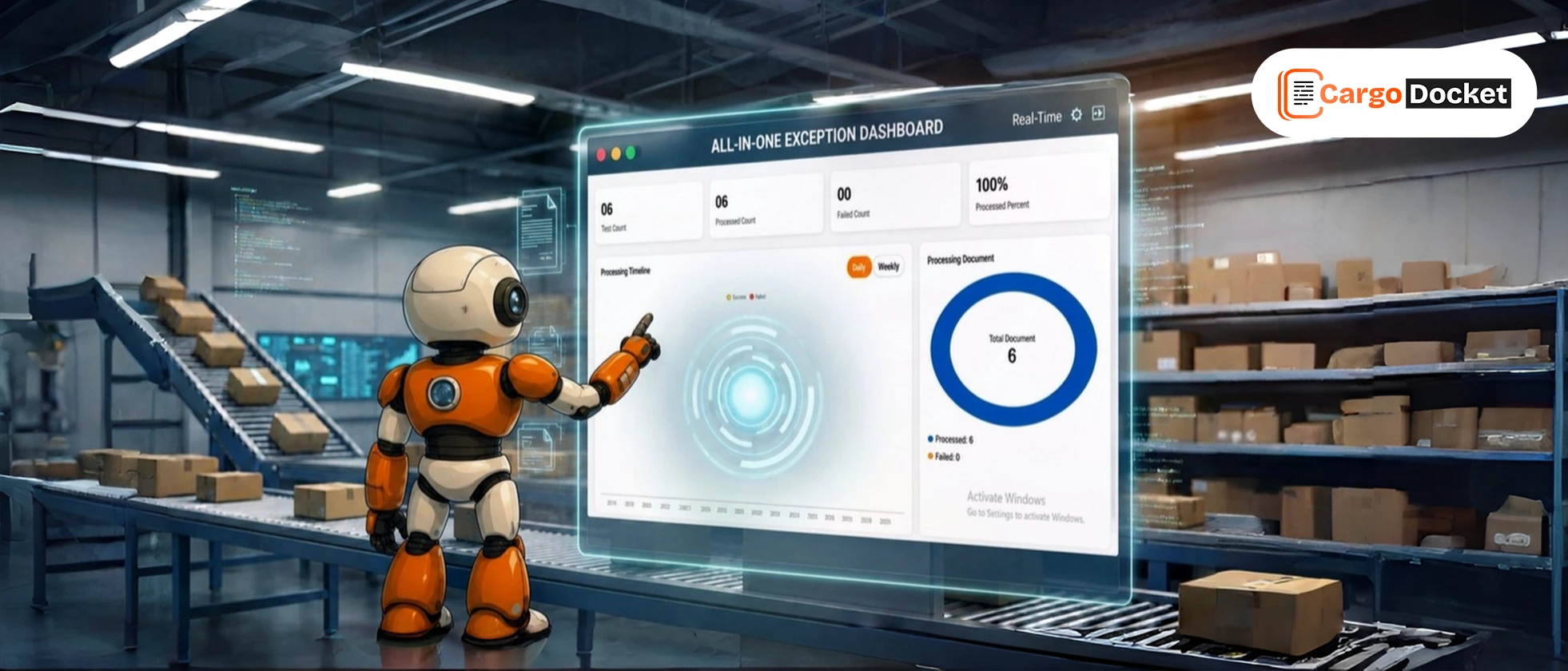
Cargo Docket provides an intuitive, all-in-one dashboard designed specifically for logistics document workflows. Rather than forcing teams to jump across different systems, the platform consolidates document tracking and issue management into one operational workspace.
When shipment documents arrive with extraction issues, missing fields, or incorrect information, teams can immediately identify and resolve them.
Cargo Docket helps teams:
- Address extraction errors quickly
- Validate missing or incorrect shipment information
- Assign tasks directly to individual operators
- Track document activities in real time
- Improve collaboration across departments
Built-in collaboration capabilities also reduce unnecessary back-and-forth communication.
Instead of searching through long email chains or asking multiple teams for updates, everyone works from one dashboard with complete visibility. That means less time spent finding issues and more time spent moving freight.
How does AI Help Reduce Manual Review Work?
Traditional document processing relies heavily on people manually reviewing every shipment file.
That process works when shipment volume remains low, but as operations grow, manual reviews become difficult to manage.
AI changes the process by reviewing information automatically before it reaches operational teams.
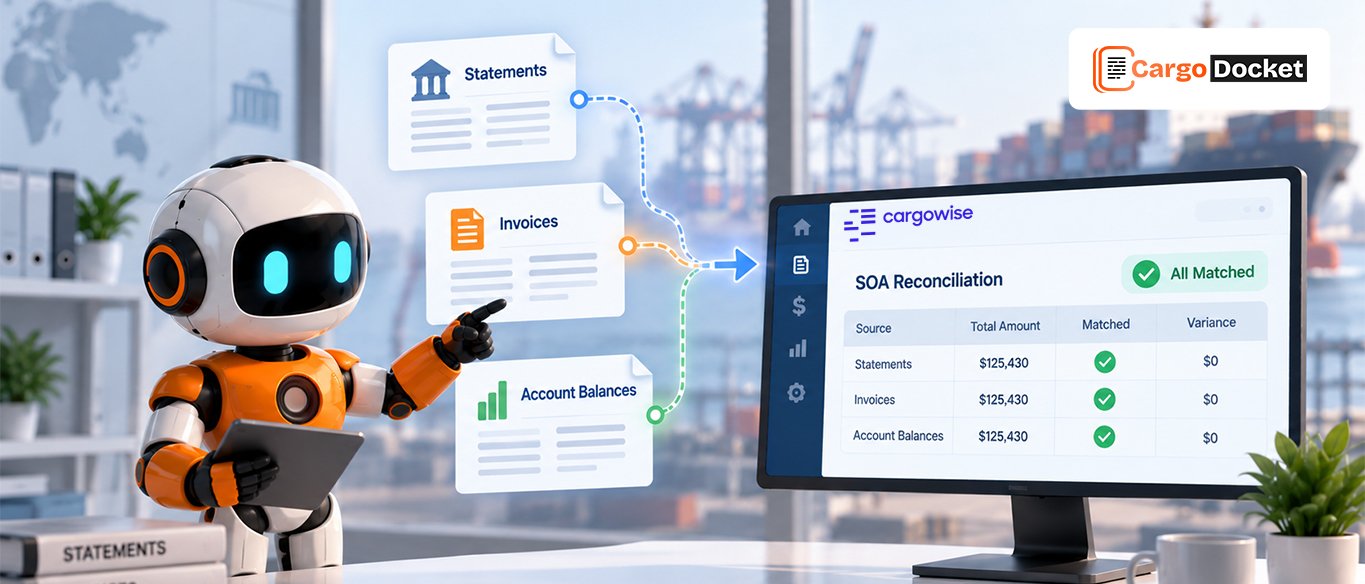
For example, if shipment references do not align between multiple files, the system identifies the mismatch early instead of allowing the issue to continue through the workflow.
AI can help with:
- Detecting missing information
- Identifying inconsistent shipment details
- Validating document fields
- Highlighting mismatched references
- Prioritizing documents requiring attention
Instead of replacing operational teams, AI removes repetitive work that slows them down.
How Intelligent Validation Improves Logistics Operations?
Speed matters in logistics, but speed without accuracy often creates larger problems later.
This is why intelligent validation has become important in modern freight operations.
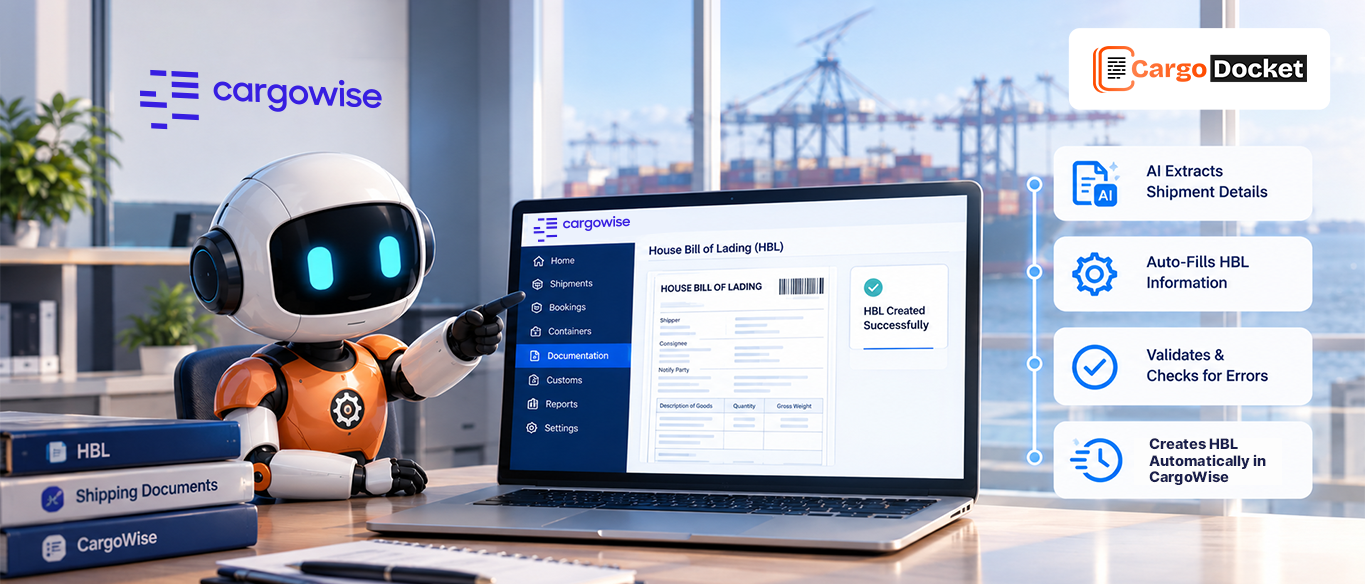
Many businesses use CargoWise Export Bills of Lading Automation because shipment references often require additional verification before processing begins.
Shipment files frequently contain Master Bills and House Bills, requiring accurate MBL/HBL validation before shipment records move forward.
By combining document grouping with validation logic, teams gain stronger control over shipment data before it enters CargoWise workflows.
The result becomes:
- Cleaner shipment records
- Reduced manual corrections
- Faster processing time
- Better shipment visibility
Even small improvements in validation often create larger operational improvements later.
How AI Exception Handling Helps Teams Focus on Priority Work?
As shipment volumes continue increasing, not every document requires the same level of attention.
Some files move through workflows normally. Others require immediate review.
This is where AI exception handling becomes valuable.
Instead of asking operators to review every document equally, the system automatically identifies files requiring action and prioritizes them.
Benefits include:
- Reduced review workload
- Faster issue identification
- Better document visibility
- Improved operational focus
- Increased productivity
This allows logistics teams to spend more time on high-value work rather than repetitive manual activities.
Conclusion
Document issues are a part of logistics operations, but spending hours searching, validating, and fixing them shouldn’t be. With AI document automation, logistics teams can improve visibility, reduce manual effort, and resolve document issues faster while keeping workflows organized and efficient.Ready to simplify your logistics workflows? Schedule a call to see how Cargo Docket can help your team simplify document processing, improve accuracy, and move freight faster.