
Freight teams receive booking requests every day through emails, attachments, customer forms, and different document formats.
The challenge is not receiving requests. It is converting that information into accurate bookings quickly without slowing down operations.
With Booking Creation Automation, logistics teams can process customer requests faster, reduce manual work, and create a smoother path from inquiry to shipment execution.
📦 What is Booking Creation Automation in Logistics?
Every shipment begins with a booking. Before freight moves, teams need to collect shipment details, verify customer requirements, and prepare accurate information for operations.
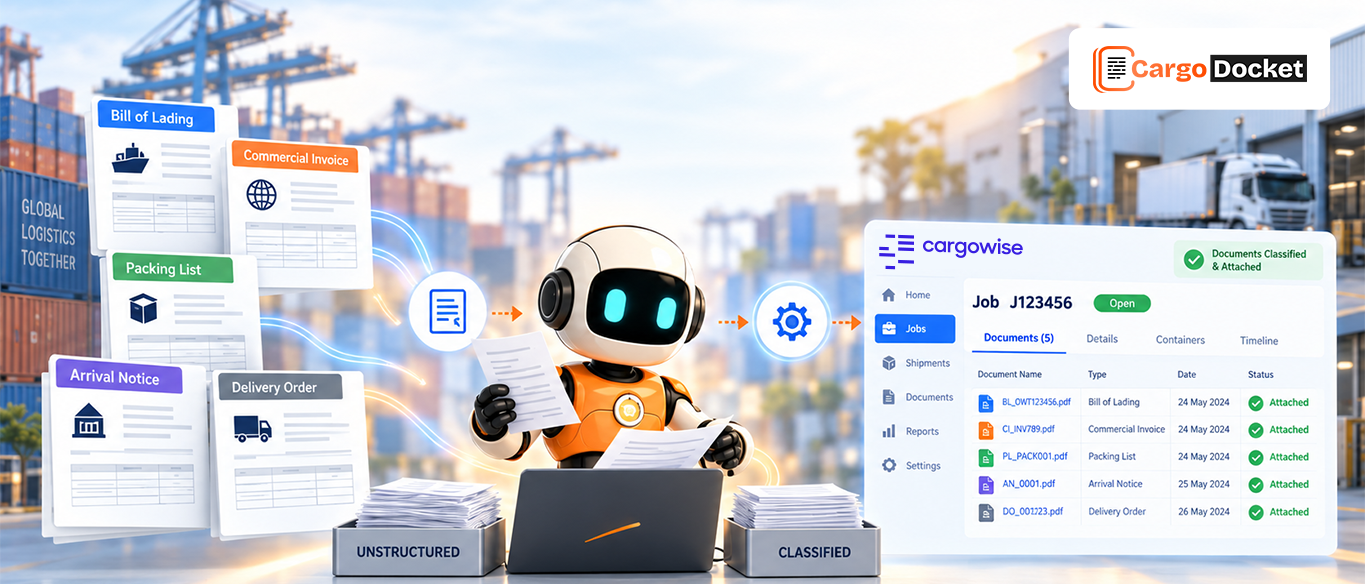
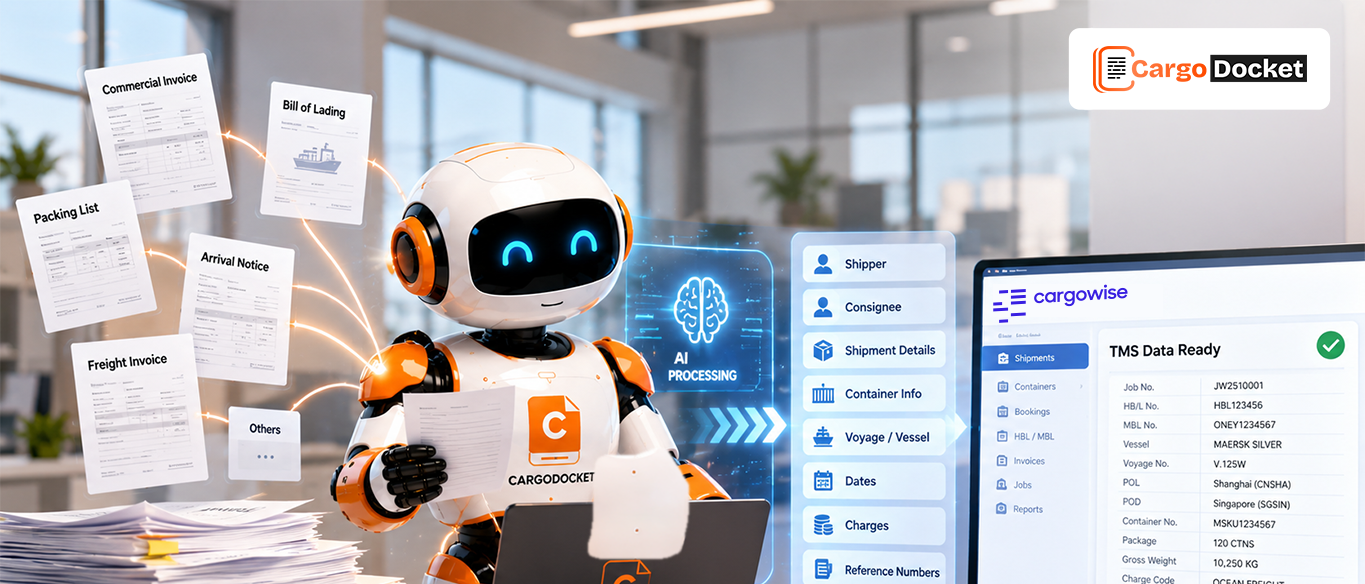
Booking Creation Automation uses AI to read incoming booking documents, extract shipment details, validate information, and convert requests into ready-to-use data.
It helps capture:
- Customer and consignee details
- Origin and destination information
- Cargo descriptions
- Shipment dates
- Reference numbers
- Special handling requirements
Instead of spending time reviewing documents and entering the same information manually, freight teams can move booking data faster into their operational workflows. This creates a stronger and more reliable starting point for every shipment.
📩 Why Accurate Bookings Create Better Freight Operations?
A booking is more than the first step of a shipment. It becomes the information source that supports every process that follows, from planning and documentation to transportation and customer updates.
Operations teams depend on accurate booking data to arrange shipments, coordinate with partners, and avoid unnecessary delays.
Incorrect or incomplete booking details can impact:
- Shipment planning
- Carrier coordination
- Documentation accuracy
- Customer communication
- Delivery schedules
When booking information is captured correctly from the beginning, teams spend less time fixing issues later and more time keeping shipments moving.
⏳ What Makes Manual Booking Processing Difficult?
Traditional booking creation involves multiple manual steps before a shipment can move forward. Teams receive information from emails, PDFs, spreadsheets, and customer instructions. Every detail needs to be reviewed, entered, and checked. As booking volumes increase, these small tasks create bigger operational challenges.
Teams often spend time:
- Searching through incoming requests
- Reading different document formats
- Copying shipment information
- Checking missing details
- Correcting manual mistakes
A delay at the booking stage can affect the entire shipment journey. That is why freight teams are adopting smarter ways to manage booking information.
🤖 How AI Supports Faster Booking Creation?
AI-powered booking automation helps logistics teams handle incoming requests with better speed and consistency. Instead of manually reviewing every document, AI converts shipment information into structured data that teams can use.
📥 Booking Requests are Received
Customer booking requests arrive through emails, attachments, portals, and shared locations. AI organizes incoming information and prepares it for processing, helping teams manage requests without spending time sorting documents manually.
🧠 AI Extracts Shipment Information
AI reads booking documents and captures important shipment details, including:
- Customer information
- Cargo details
- Shipment references
- Pickup and delivery information
- Transport requirements
This turns unstructured booking documents into organized information ready for freight workflows.
✅ AI Validates and Highlights Exceptions
Accurate data at the booking stage prevents bigger issues later.
AI checks extracted information and identifies:
- Missing details
- Incorrect values
- Duplicate requests
- Data mismatches
Teams only review exceptions instead of checking every booking manually.
🔄 Turning Booking Data into Shipment Execution
Once booking information is accurate, freight teams can move faster into shipment operations.
A simplify booking workflow improves:
- Shipment preparation
- Internal team coordination
- Documentation processing
- Customer response times
- Operational visibility
Automation helps teams move away from repetitive tasks and focus more on managing freight movement and customer needs.
📊 Why are Freight Teams Moving Toward Booking Automation?
As logistics operations grow, manual booking management becomes harder to maintain. More shipments mean more emails, more documents, and more information to process every day.
Booking Creation Automation helps logistics teams improve:
- Faster inquiry processing
- Reduced manual data entry
- Improved shipment accuracy
- Better team productivity
- Ability to manage higher shipment volumes
The goal is not to replace logistics expertise. It is giving teams more time to focus on decisions, exceptions, and delivering better customer experiences.
🚀 Final Thoughts
Every successful shipment starts with a well-managed booking process. When information is captured accurately from the outset, freight teams can move faster, reduce delays, and ensure smoother operations from inquiry through shipment execution.
As shipment volumes continue to grow, relying on manual booking creation makes it harder to keep up with customer expectations and operational demands.
With AI Document Automation, logistics teams can automatically capture booking details, validate shipment information, and turn customer requests into ready-to-process workflows.
It’s time to move beyond manual document handling and build a faster, smarter, and more accurate way to manage freight operations.