
How many invoices does your finance team process every single day?
An invoice is sent by email, you download the file, check the charges, verify the shipment references, put the data into CargoWise, and then start the reconciliation. Then there are approvals, corrections, and follow-ups between finance and operations teams.
Now imagine doing that for 300, 500, or even 1,000 invoices every month.
For many logistics businesses, accounts payable documentation has quietly become one of the biggest operational slowdowns inside finance workflows.
That’s exactly why in 2026, more logistics businesses are prioritizing CargoWise AP automation to reduce manual documentation work, speed up invoice reconciliation, and improve financial visibility across operations.
📄 Why AP Documentation is More Complex in Logistics?
Accounts payable processing in logistics is far more complicated than standard invoice handling.
Every invoice is connected to shipment activity, operational costs, vendor charges, taxes, accruals, and customer transactions. Finance teams must ensure that all invoice values match operational records accurately before payments are processed.
A typical logistics invoice may include:
- Shipment and consolidation references
- Freight charges and surcharges
- Vendor and carrier costs
- Multi-currency transactions
- Operational accrual references
For businesses handling hundreds of shipments every week, this creates a massive documentation workload.
The challenge is that many logistics businesses still process these invoices manually using PDFs, scanned files, spreadsheets, and email attachments.
⚠️ Why Manual Invoice Reconciliation Slows Down Operations?
Manual AP reconciliation may seem manageable at first, but once invoice volumes grow, the process becomes difficult to control efficiently.
Finance teams often spend several hours every day:
- Reviewing invoice details line by line
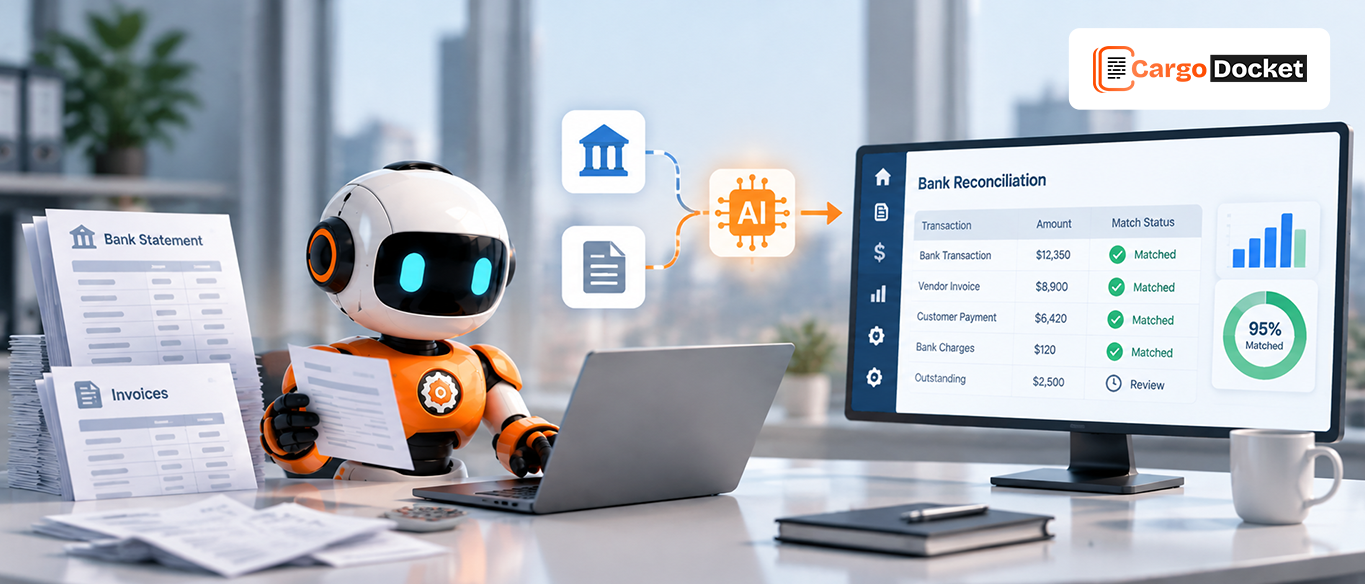
- Comparing invoice costs against CargoWise accruals
- Checking shipment references manually
- Correcting mismatches between systems
- Following up with operations teams for validations
This creates delays that impact both finance and operations.
The result is usually:
- Slower invoice approvals
- Delayed vendor payments
- Increased reconciliation errors
- Heavy administrative workload
- Reduced financial visibility
Even a single missing shipment reference or incorrect charge can create approval delays across workflows.
🔄 How CargoWise AP Automation Simplifies Financial Workflows?
CargoWise AP automation changes how invoice data moves through logistics finance operations.
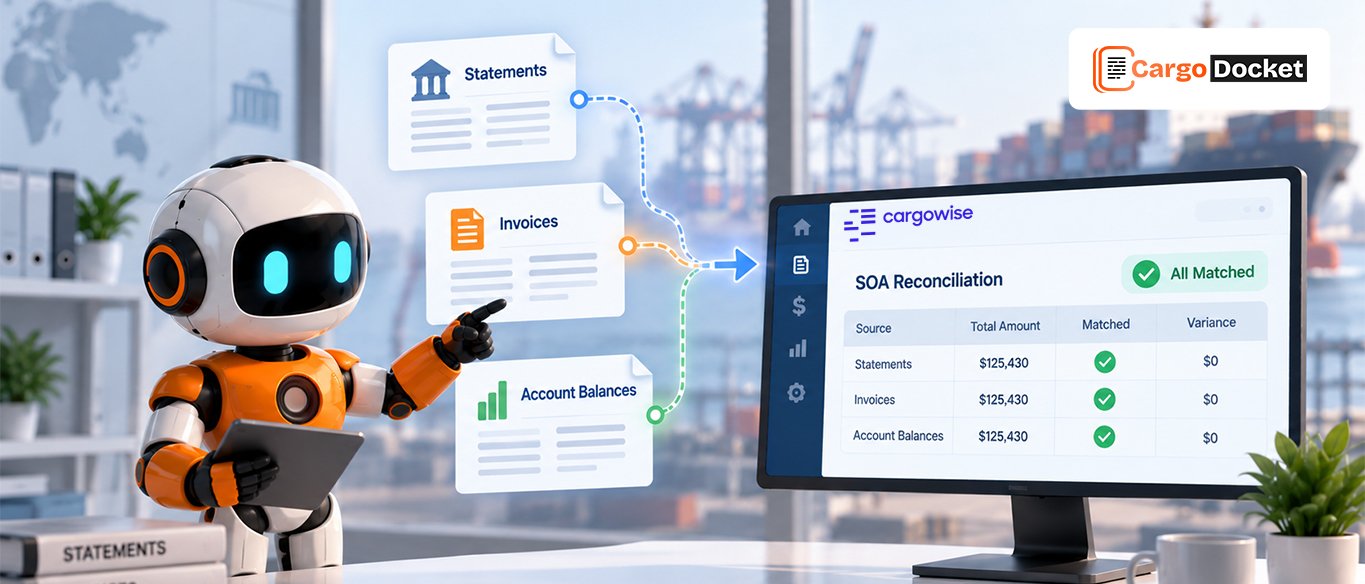
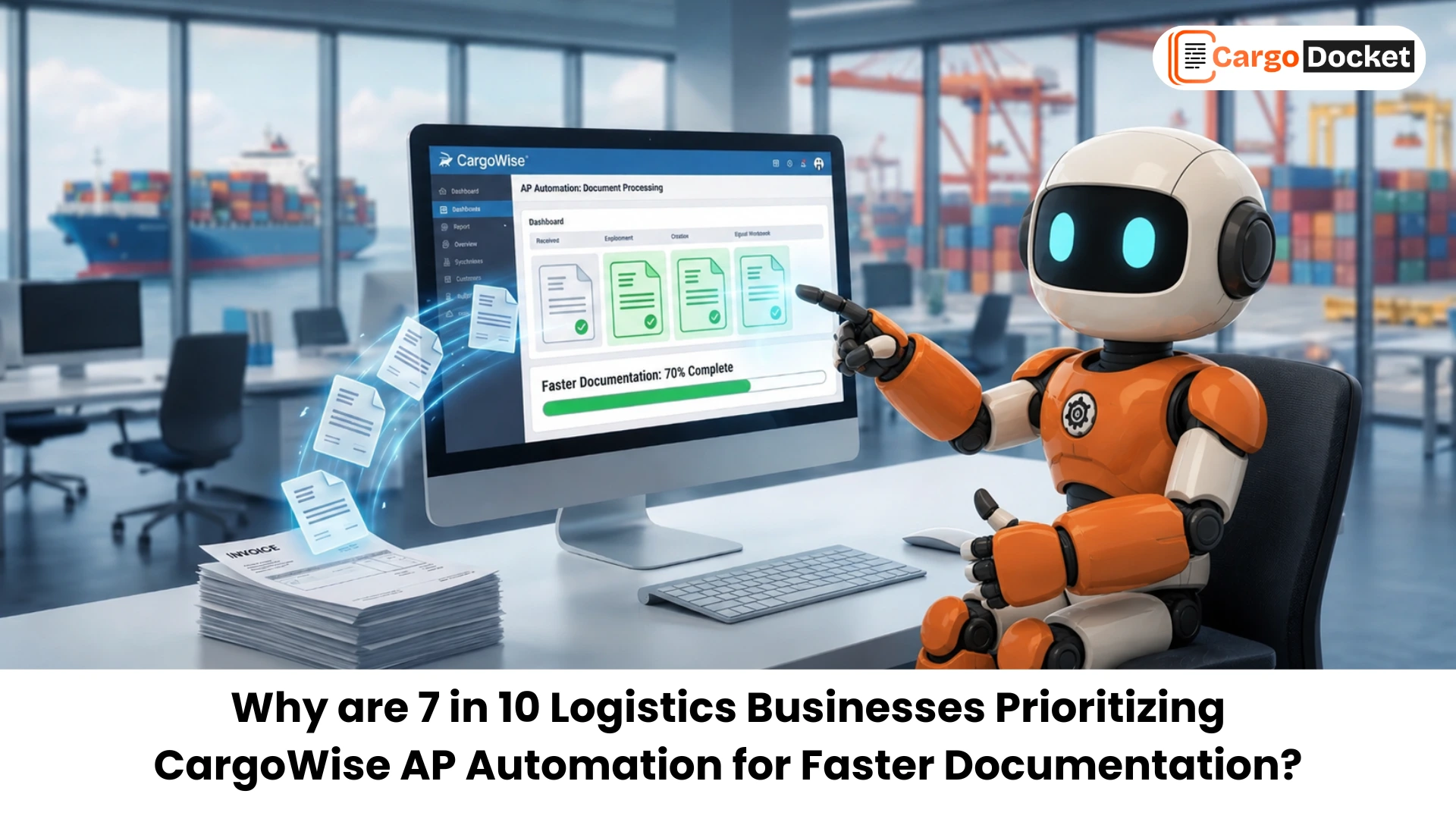
Instead of manually processing invoices, automation captures invoice information automatically, validates it against operational records, and prepares it for reconciliation workflows in CargoWise.
The workflow becomes significantly faster and more connected.
Automated AP workflows can:
- Retrieve invoices directly from emails or shared folders
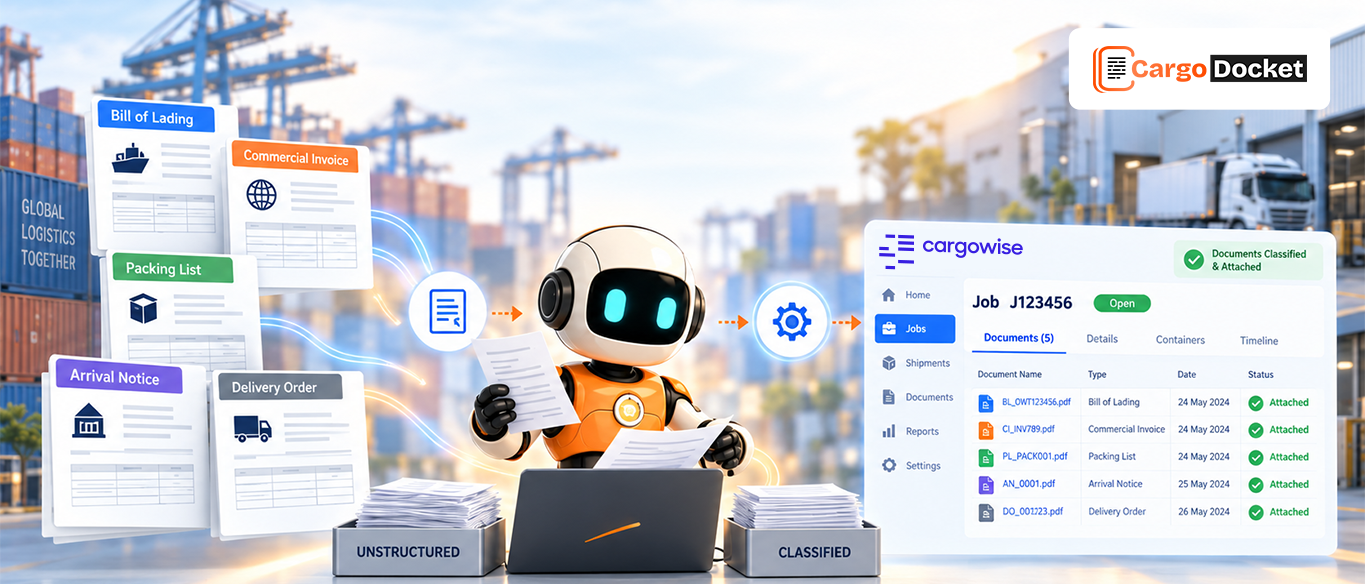
- Extract invoice data from PDFs and scanned files
- Match invoice values against CargoWise accruals
- Identify exceptions automatically
- Push validated data directly into CargoWise and ERP systems
What once required multiple manual steps can now happen within minutes instead of hours.
🤖 Improving Accuracy Across Invoice and Accrual Matching
One of the biggest reasons logistics businesses are adopting AP automation is accuracy.
Manual reconciliation increases the risk of duplicate entries, incorrect shipment references, mismatched accruals, and inconsistent financial records.
For finance teams processing 200 to 500 invoices weekly, even small errors create significant operational delays.
CargoWise AP automation improves this process by validating invoice data before it enters financial workflows.
This helps businesses:
- Reduce reconciliation discrepancies
- Improve consistency across operational and financial records
- AI detects mismatches faster
- Strengthen audit visibility and compliance tracking
Instead of fixing issues later, teams can identify exceptions immediately during processing.
📊 Why Businesses are Reducing Manual Documentation Work by 85%?
The biggest operational improvement comes from eliminating repetitive manual invoice handling tasks.
Instead of manually opening, reviewing, validating, and entering every invoice, finance teams can focus mainly on exceptions and approvals.
Businesses implementing CargoWise AP automation are improving efficiency because:
- Invoice extraction happens instantly
- Validation workflows run automatically
- Data moves directly into CargoWise
- Exceptions are highlighted immediately
- Teams spend less time on repetitive processing work
For businesses handling thousands of invoices every month, this creates a major reduction in operational workload.
📑 Supporting Multiple Invoice Formats and Global Workflows
Modern logistics businesses receive invoices from vendors, agents, carriers, and partners across multiple countries every day. The challenge is that invoices arrive in many different formats and structures.
CargoWise AP automation supports workflows involving:
- Single and multi-page invoices
- PDF and scanned invoice documents
- Excel and CSV invoice files
- Image formats such as JPEG, PNG, and TIFF
- Multi-currency invoices
- Documents in multiple languages
- Email attachments and text-based formats
This allows logistics businesses to standardize invoice processing workflows across global operations without increasing manual effort.
🔗 Creating Better Coordination Between Finance and Operations
Accounts payable workflows affect more than finance teams alone.
Shipment costs, operational accruals, carrier invoices, and vendor charges all connect directly to logistics operations.
When invoice processing is handled manually, finance and operations teams often work with disconnected information.
AP automation creates a more synchronized workflow where invoice data aligns directly with operational records in real time.
This improves:
- Faster invoice approvals
- Better shipment cost visibility
- Improved accrual accuracy
- Reduced delays between departments
- Stronger financial reporting consistency
Instead of chasing information across systems, teams work with connected workflows and real-time visibility.
🚀 Why AP Automation is Becoming a Priority in 2026?
Logistics businesses are processing larger invoice volumes than ever before while dealing with tighter margins and increasing operational pressure.
At the same time, finance teams are expected to:
- Process invoices faster
- Improve financial visibility
- Reduce reconciliation delays
- Maintain stronger compliance controls
- Support real-time reporting across operations
Manual AP workflows cannot scale efficiently under this level of demand.
This is why more logistics businesses are rapidly prioritizing AP automation to create faster, more scalable finance operations.
🔮 The Future of Logistics Finance Operations
The future of AP processing in logistics is moving toward connected and intelligent workflows where invoices, shipment data, and financial records stay synchronized automatically.
Businesses are moving away from repetitive manual document handling and toward environments where invoice reconciliation happens faster, operational visibility improves in real time, and finance teams spend less time on manual processing.
This shift allows logistics businesses to operate with greater financial accuracy, efficiency, and operational control.
🚀 Final Thoughts
AP automation is helping logistics businesses reduce manual documentation work, improve invoice reconciliation accuracy, and accelerate financial workflows by creating faster and more connected AP processes, and as invoice volumes and operational complexity continue to increase in 2026, now is the right time to explore how AI Document Automation can simplify invoice processing, eliminate repetitive reconciliation tasks, and help your logistics finance operations move faster with greater visibility, efficiency, and control