
A supplier invoice comes in with a different charge, a cost is still waiting on an invoice, or a job has financial information that needs another look. For finance teams, these situations can quickly turn into extra checking and reconciliation work.
As the number of jobs and documents grows, finding these differences manually becomes harder. AI can help finance teams catch potential issues earlier, so they can spend less time searching for differences and more time resolving the ones that actually need attention.
What do WIP and ACR Mean in CargoWise?
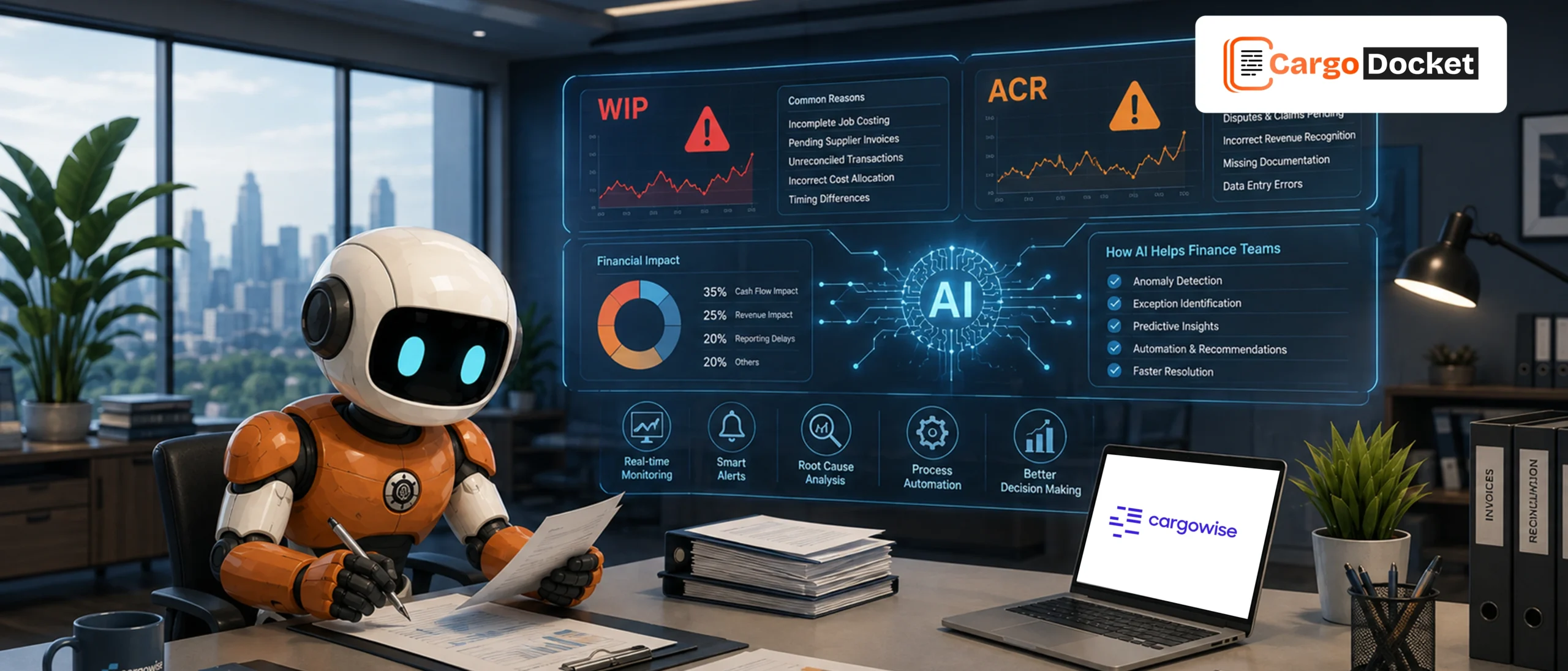
Work in Progress (WIP) is used for work that has already been performed but has not yet reached the right stage for financial recognition. For example, work may have been completed on a logistics job, but the related revenue may still be waiting for the appropriate accounting stage.
Accruals (ACR) are used for expected costs or revenue when the final invoice or billing transaction has not arrived yet. For example, a supplier may have completed a service, but the invoice may not arrive until later. The expected cost can still be accounted for in the appropriate period.
In simple terms, WIP helps track work that has not reached its financial recognition stage, while ACR helps account for expected costs or revenue before the final transaction arrives.
Why do WIP and ACR Exceptions Happen in CargoWise?
Exceptions usually happen when the financial information connected to a job does not match what finance expects to see in CargoWise.
A supplier invoice may show a different charge from the expected accrual. An invoice may arrive late, a job reference may be incorrect, or an additional charge may appear after the original amount was recorded.
Common causes include:
- Missing or delayed invoices
- Charges that do not match expected accruals
- Incorrect job references
- Duplicate invoices
- Additional charges
- Missing financial information
The difference itself may be small, but finding and resolving it can take time, especially when finance teams are dealing with a large number of jobs.
Where does the Financial Information Behind WIP and ACR Come From?
The information behind WIP and ACR often comes from supplier invoices, shipment records, rates, and other financial documents connected to a job.
A supplier invoice may contain the invoice number, supplier name, job reference, charges, currency, and total amount. The problem is that these details can arrive in different formats. One supplier may send a PDF, another may use a spreadsheet, and another may send a scanned document.
When teams manually read and enter this information, missing or incorrect details can make their way into the financial workflow. That can later create differences that finance teams have to investigate.
How can AI Capture Financial Data More Accurately?
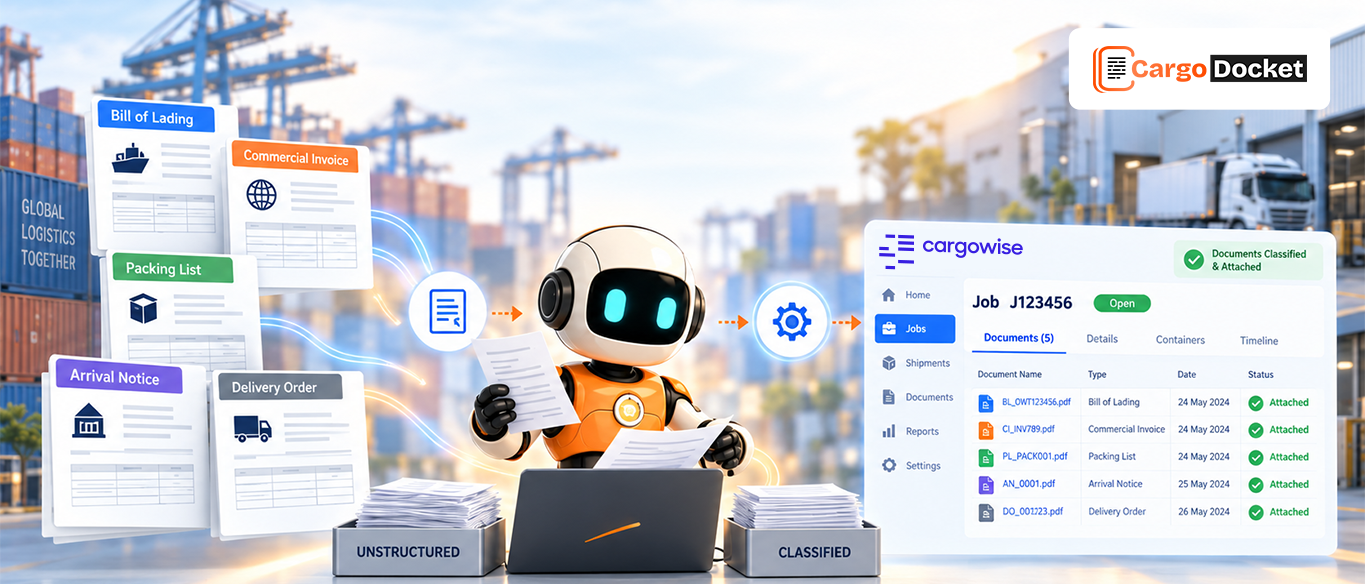
AI can read incoming invoices and other financial documents and capture the information needed for processing.
It can identify details such as:
- Invoice number and date
- Supplier information
- Job or shipment reference
- Charges and line items
- Currency
- Invoice total
The information can then be structured and mapped to the relevant CargoWise records.
Instead of manually opening every document and copying information field by field, finance teams can start with data that has already been captured and prepared for the next check.
How does AI Spot Differences Between Invoices and CargoWise Data?
Once the information is captured, AI can compare it with the relevant data already available in CargoWise.
For example, if an invoice contains a charge that is different from the expected accrual, AI can identify the difference during processing.
It can check details such as:
- Invoice charges against expected accruals
- Job references against CargoWise records
- Supplier information against existing data
- Invoice totals against relevant financial information
If everything matches, the document can continue through the workflow. If something does not match, it can be flagged for review. This gives finance teams a chance to address the issue earlier instead of finding it during a later reconciliation.
What Happens When AI Finds a WIP or ACR Exception?
Not every difference is necessarily an error. A supplier may have added a valid charge, a rate may have changed, or an earlier accrual may need to be updated.
When AI finds an exception, it can bring the transaction to the finance team for review. The team can check the invoice and CargoWise information and decide whether the difference should be corrected, approved, or investigated.
This keeps financial decisions with the people who understand the business context, while AI handles the initial checking.
How can AI Make Reconciliation Easier for Finance Teams?
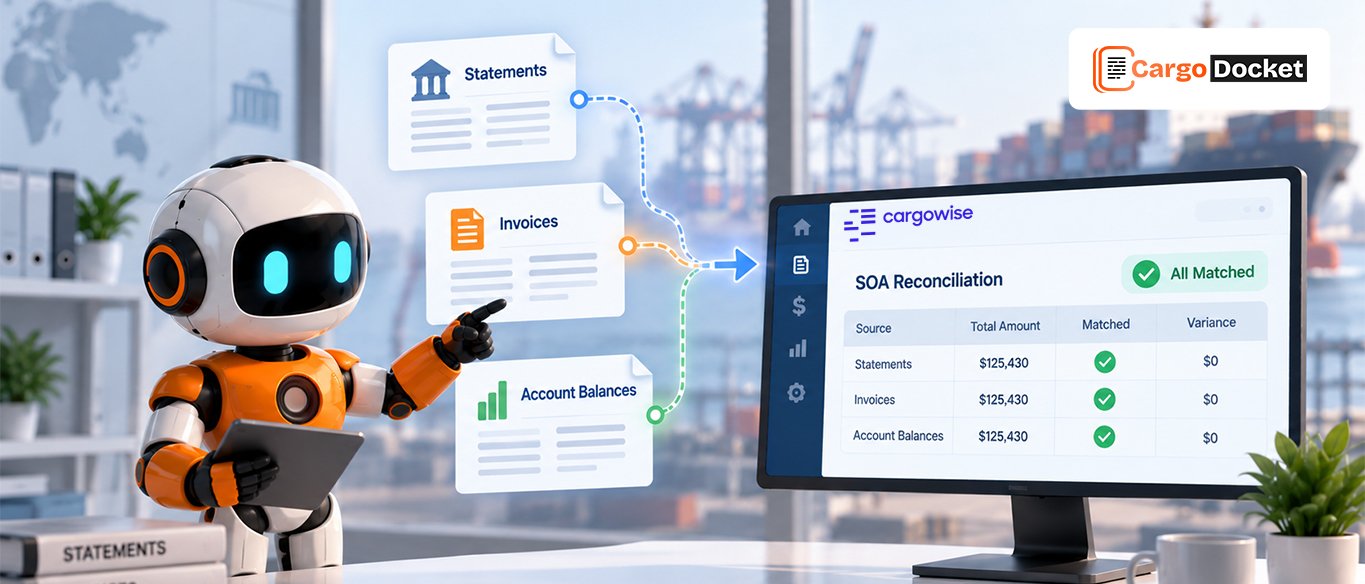
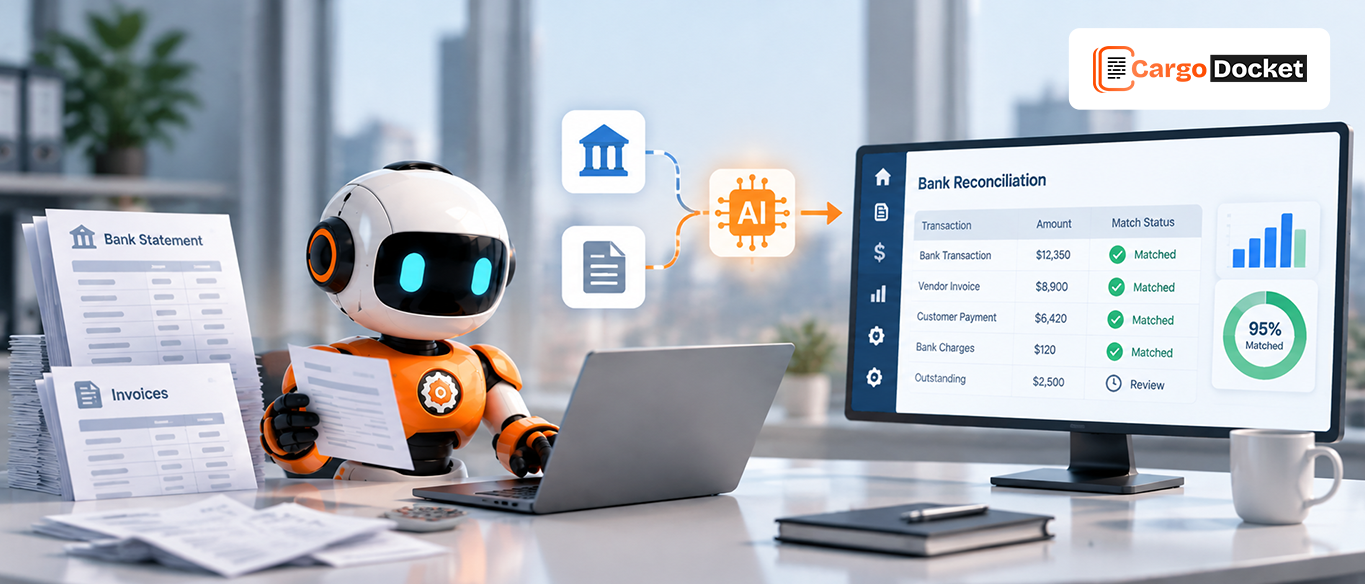
Finance teams can spend a lot of time checking documents just to find the few that actually have an issue. AI can handle the initial reading, extraction, and comparison, so finance professionals can focus on the exceptions that need their attention.
The process becomes:
Documents received → Data captured → Information compared → Exception identified → Finance review
Instead of searching through every invoice, teams can work from a more focused list of transactions that need action that can make reconciliation less repetitive and give finance professionals more time for supplier issues, unusual charges, financial analysis, and month-end activities.
How does CargoDocket AI Help Finance Teams Manage WIP and ACR Exceptions?
CargoDocket AI helps CargoWise users automate the document processing behind financial workflows. It can read incoming invoices, extract relevant information, map it to CargoWise records, and identify differences that may need attention.
For Accounts Payable workflows, AI can compare invoice charges with relevant CargoWise accrual information. When the information matches, the document can continue through the process. When a difference is found, the exception can be brought to the finance team for review.
The workflow is simple:
Read → Extract → Map → Compare → Identify Exceptions → Review → Process in CargoWise
The idea is not to remove finance teams from the process. It is to reduce the repetitive checking so they can focus on decisions and exceptions that require their judgment.
What can Finance Teams Gain from Better WIP and ACR Management?
When financial information is captured and checked more consistently, finance teams can get better visibility into the differences affecting their CargoWise jobs.
AI-powered document processing can help with:
- Earlier visibility into WIP and ACR differences
- Less repetitive invoice checking
- More consistent financial information
- Reduced reconciliation work
- Fewer avoidable corrections
- Easier handling of growing document volumes
The bigger benefit is simple: finance teams spend less time looking for problems and more time solving them.
Conclusion
WIP and ACR exceptions often come from financial information that is missing, delayed, or does not match the expected job data. AI can help identify these differences earlier and reduce the manual work needed to resolve them.
Ready to simplify WIP and ACR exception handling? Schedule a demo to see how CargoDocket AI can support your CargoWise finance workflow.