
A freight forwarding job involves much more than moving cargo. From responding to quotation requests and arranging bookings to processing documents, coordinating customs, and reviewing invoices, every stage requires accurate information and timely action.
When these tasks are handled manually across multiple shipments, the workload adds up. AI automation helps freight forwarders reduce repetitive work, organize information, and manage daily operations more efficiently. Let’s explore where it can make a difference throughout the shipment process.
What Happens During a Freight Forwarding Job, From Quote to Delivery?
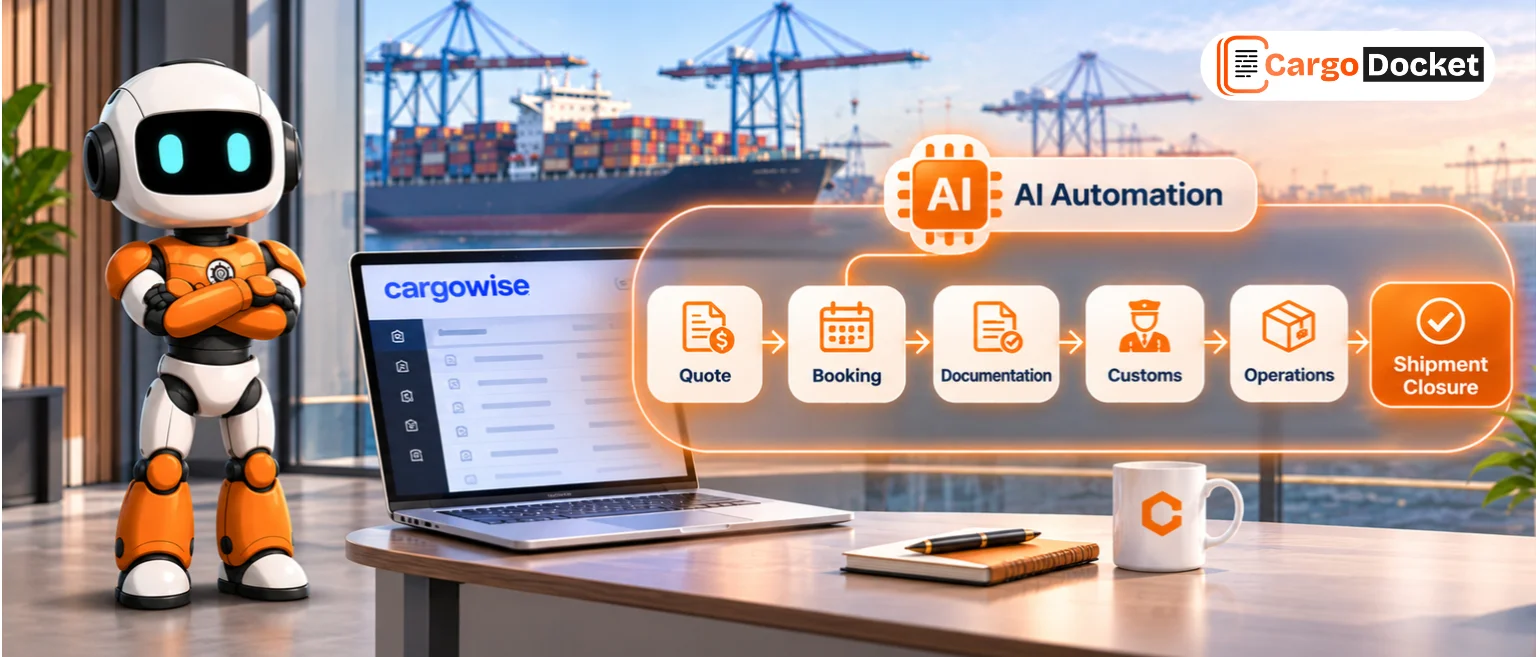
A typical freight forwarding job moves through several stages:
Customer Inquiry → Quotation → Booking → Documentation → Customs Coordination → Shipment Tracking → Delivery → Invoicing and Job Closure
Each stage depends on information collected earlier. For example, details from a customer’s quotation request may be needed again when creating a booking, preparing shipping documents, or checking supplier invoices.
If the same information has to be entered several times, your team spends more time on administration and has more opportunities to make mistakes.
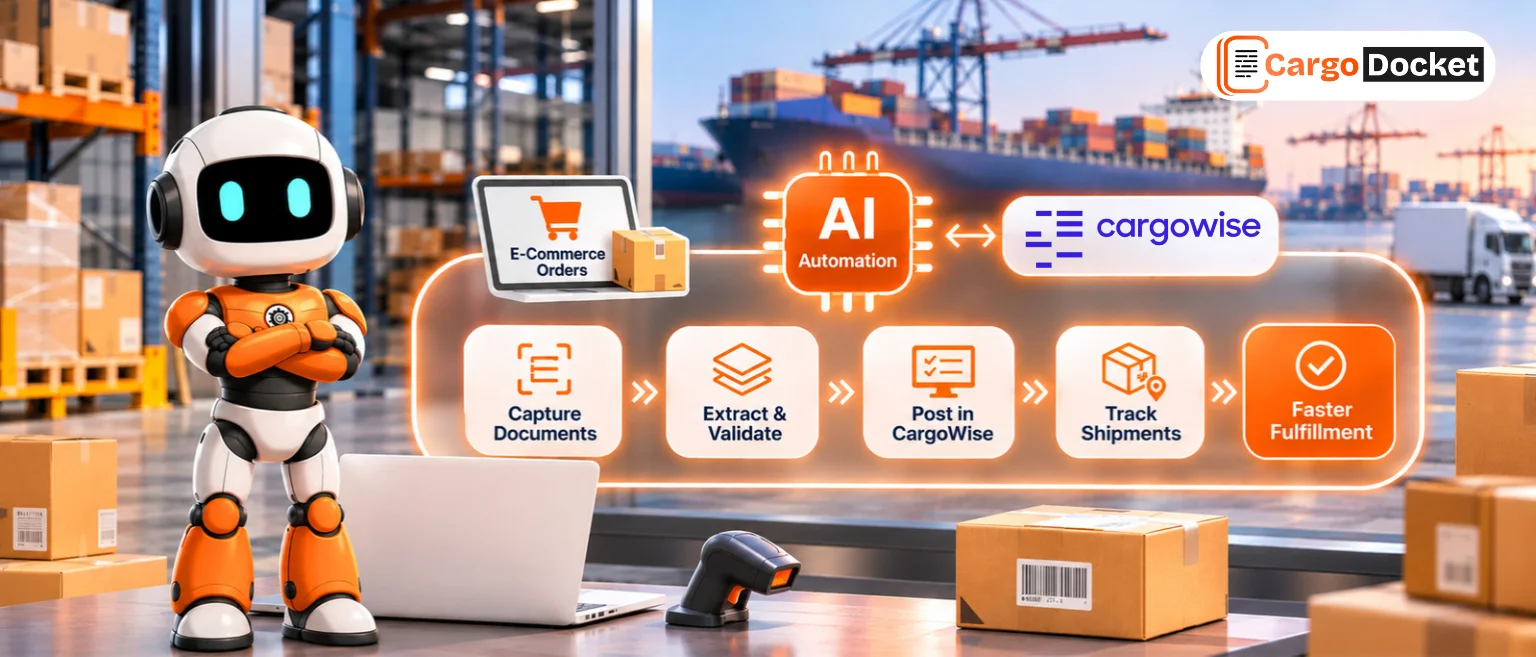
AI automation helps reduce this repeated effort by extracting information from incoming requests and documents, organizing it, and preparing it for review and use in configured workflows.
How can AI Help Freight Forwarders Handle Quotation Requests Faster?
The quotation process is often the first opportunity to respond to a potential customer. But preparing a freight quote involves more than looking up a rate. Your team needs to understand shipment requirements, check available pricing, calculate charges, and verify the final quote.
AI-powered quotation automation can support this process through six stages:
01. Request Parsing: AI reads incoming requests from emails, messaging channels, or sales portals and extracts details such as origin, destination, cargo type, weight, and dimensions.
02. Rate Retrieval: The workflow can help retrieve available contract rates, review internal rate sheets, or request updated rates from carriers and agents, depending on the systems and integrations available.
03. Quote Assembly: Shipment details and available rates are organized to prepare a quotation using configured pricing rules, customer requirements, and applicable charges.
04. Pricing Validation: AI can flag missing information, unusual charges, or potential margin differences for the pricing team to review.
05. Quote Delivery: After approval, the quotation can be prepared in the company’s preferred format and shared with the customer through the configured process.
06. Centralized Quote Records: Customer requests, pricing details, quote versions, and approval decisions can be maintained in an organized record for easier follow-up.
This approach helps pricing teams spend less time gathering information and more time reviewing rates and responding to customer requirements.
What Happens After a Customer Accepts the Quote?
Once the customer approves the quotation, the focus shifts to booking and shipment coordination. The operations team needs to confirm shipment details, arrange space with the carrier, and create the relevant job records in CargoWise.
This is where the information collected during quotation becomes important. Re-entering the same details can create unnecessary work and inconsistencies.
Configured automation workflows can help organize approved quotation information, prepare data for subsequent processing, and flag missing details for review. This gives the operations team a more consistent starting point for managing the shipment.
How can AI Take the Repetitive Work Out of Shipment Documentation?
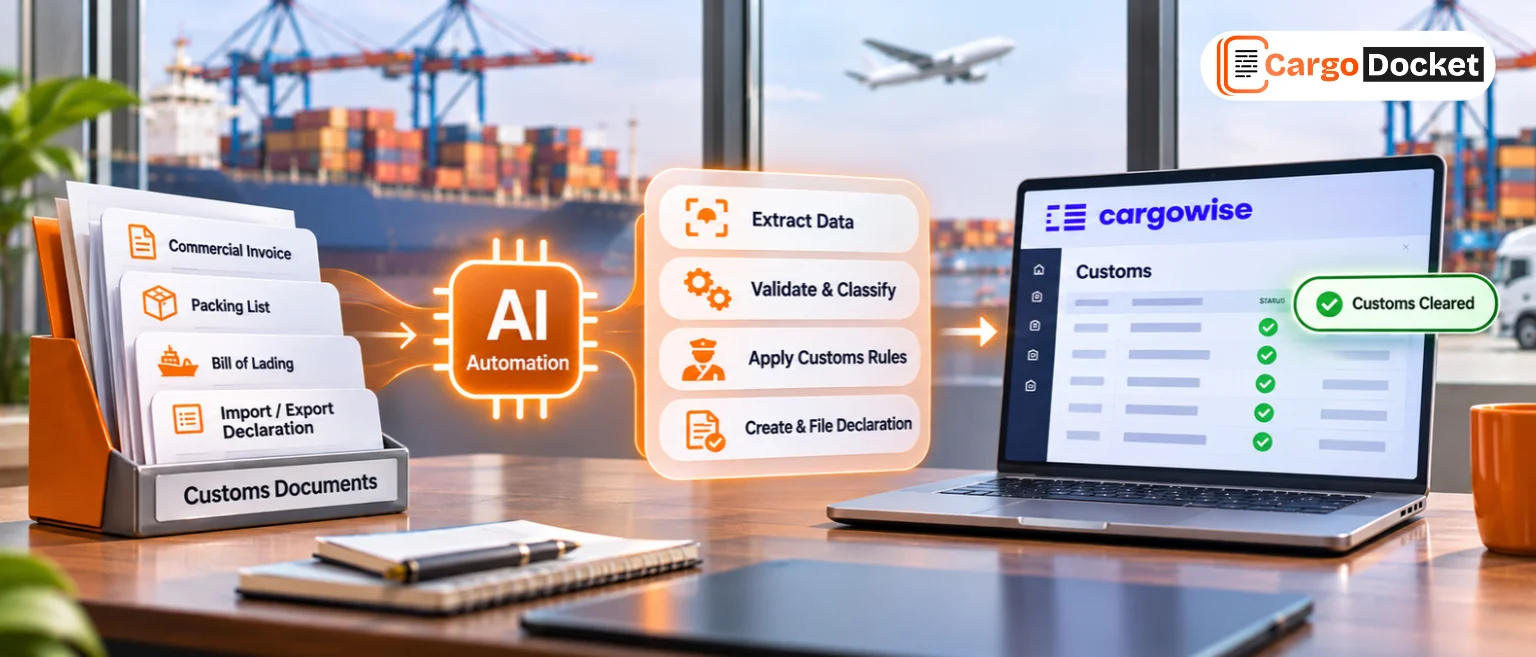
A single shipment can involve commercial invoices, packing lists, bills of lading, certificates of origin, and other supporting documents. Your team needs to identify the right information in each file and make sure it matches the shipment record.
AI Document Automation can support this work by:
- Extracting shipper, consignee, cargo descriptions, quantities, weights, and other relevant details.
- Reading information from different document formats.
- Organizing extracted information into structured fields.
- Flagging missing or inconsistent details for review.
- Preparing validated data for configured CargoWise workflows.
Instead of opening every document and entering information line by line, employees can focus on checking the extracted details and resolving exceptions.
How can AI Support Customs Preparation and Shipment Updates?
Customs preparation depends on accurate information from several supporting documents. Differences in cargo descriptions, quantities, weights, or invoice values may need to be investigated before a declaration proceeds.
AI can help extract and compare available information, identify missing fields, and flag inconsistencies for the customs team. However, customs decisions, regulatory interpretation, and declaration approval should remain with qualified professionals.
Once the shipment is moving, teams also need to follow departure, arrival, transshipment, and delivery milestones. Automation can help organize incoming updates, support routine notifications, and bring important changes to the team’s attention.
This gives the freight forwarder more time to handle delays, customer questions, and shipment exceptions instead of chasing routine information.
How can Automation Simplify Pre-Alerts and Job Closure?
As cargo approaches its destination, the origin team needs to share shipment details and supporting documents with the destination agent. Preparing a pre-alert often means collecting the commercial invoice, packing list, bill of lading, and other required files.
AI document processing can help identify and organize these documents against the relevant shipment record. Configured workflows can then support pre-alert preparation and distribution, reducing the manual effort involved in collecting and checking files.
After delivery, there is still work to complete. Finance teams need to review supplier invoices, customer charges, accrued costs, and outstanding amounts before closing the job.
AI-powered accounts payable automation can extract supplier invoice details, organize line items, and flag differences for review. This helps reduce manual invoice entry and gives finance teams more time to check costs and resolve discrepancies.
How can CargoDocket Support these Tasks in CargoWise?
Quotation preparation, shipment documentation, pre-alerts, and invoice processing all involve repetitive information handling. These are practical areas where freight forwarders can introduce automation into their existing CargoWise workflows.
CargoDocket helps CargoWise users reduce this workload through AI-powered automation made around document-heavy logistics tasks.
Here’s where CargoDocket can support your team:
- Quotation Automation: Helps process incoming quotation information and supports configured quote preparation workflows.
- Commercial Invoice Automation: Extracts and organizes invoice details for review and processing.
- Bill of Lading Automation: Processes import and export bill of lading documents and extracts relevant shipment information.
- Pre-Alert Automation: Helps organize shipment documents for pre-alert preparation.
- Accounts Payable Automation: Extracts supplier invoice information and supports invoice processing workflows.
By automating these tasks, CargoDocket helps reduce repeated data entry and manual document handling. Your team can spend more time reviewing information, resolving exceptions, and managing customer requirements while automation supports the repetitive work behind the scenes.
Make More Time for the Work that Moves Shipments Forward
AI automation can help freight forwarders spend less time on repetitive tasks and more time managing shipments, customers, and exceptions.
Ready to reduce manual work in your CargoWise operations? Explore CargoDocket’s AI Document Automation solutions and book a call to discuss how your team can simplify quotation, document processing, pre-alert, and accounts payable workflows.