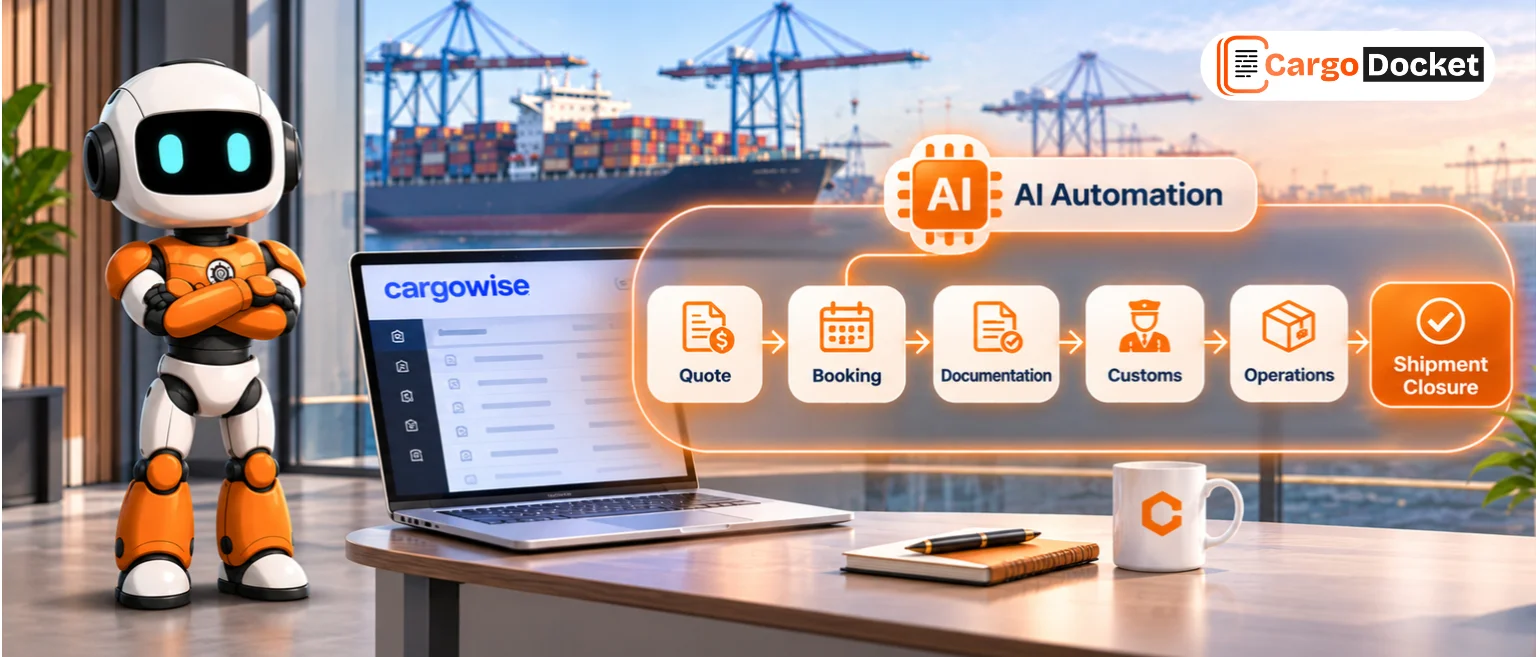

One online order is easy to handle. Now imagine processing hundreds or thousands of parcels every day, each with different product details, shipment references, values, and customs requirements. That’s where e-commerce growth can put serious pressure on freight forwarding teams.
Hiring more people isn’t always the answer. Freight forwarders need a way to manage increasing shipment volumes without adding the same amount of manual work. By combining CargoWise workflows with AI Document Automation, teams can reduce repetitive document processing, prepare shipment information faster, and keep operations moving as parcel volumes grow.
What Makes Growing E-Commerce Volumes Difficult for Freight Forwarders?
E-commerce shipments often involve large numbers of individual orders moving through consolidated freight networks. Even when parcels travel together, the information associated with each order still needs to be captured and managed correctly.
For freight forwarders, this creates several operational challenges.
- More shipment records: Every parcel can require its own order and shipment information.
- Different product details: Goods descriptions, quantities, and declared values vary across orders.
- More supporting documents: Commercial invoices, packing lists, and other shipment documents need to be processed.
- Customs data requirements: Incomplete or inconsistent information can delay declaration preparation.
- Growing administrative workload: Teams spend more time collecting, checking, and entering information as volumes increase.
The real challenge isn’t just moving more parcels. It’s managing the information behind every shipment without overwhelming the operations team.
How can CargoWise Manage High-Volume E-Commerce Operations?
CargoWise provides freight forwarders with capabilities to manage cross-border e-commerce operations, including order handling, shipment consolidation, customs processing, and delivery coordination.
For example, individual orders can be organized into consolidated shipments, while the relevant shipment and customs information is managed through connected workflows.
This helps teams manage growing volumes without relying on disconnected systems and repeated manual updates.
However, shipment management is only one part of the process. Teams also need to capture information from the documents that support those orders. This is where AI-powered document processing can complement CargoWise workflows.
Where can AI Automation Reduce Manual Work?
As e-commerce volumes increase, document processing can become an obstacle. The freight forwarder may need to open multiple files, locate product and shipment details, and manually enter information into the relevant CargoWise records.
AI Document Automation can help reduce these repetitive steps.
For example, it can support:
- Product data extraction: Capture goods descriptions, quantities, and other available product details from supported documents.
- Invoice information capture: Extract invoice numbers, values, currencies, and supplier information.
- Shipment reference identification: Capture relevant order, booking, and shipment references.
- Document data organization: Structure extracted information into fields required by the configured workflow.
- Exception Identification: Missing AI Flag Exception for further review.
Instead of manually going over each document from scratch, a freight forwarder can spend their time checking information that requires their attention.
How does Shipment Information Move Into CargoWise?
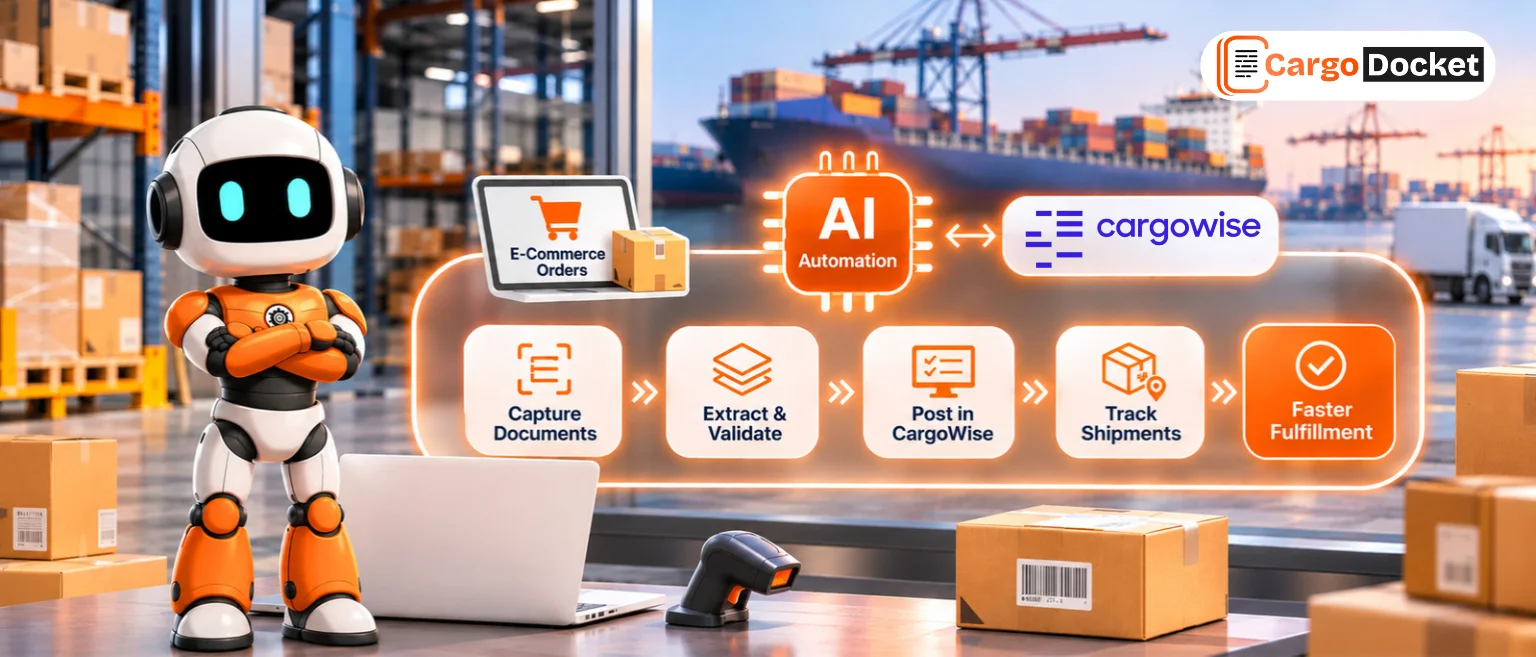
Extracting data is useful only when that information reaches the right operational workflow. A configured AI automation and CargoWise integration can help connect document processing with shipment management.
A typical process looks like this:
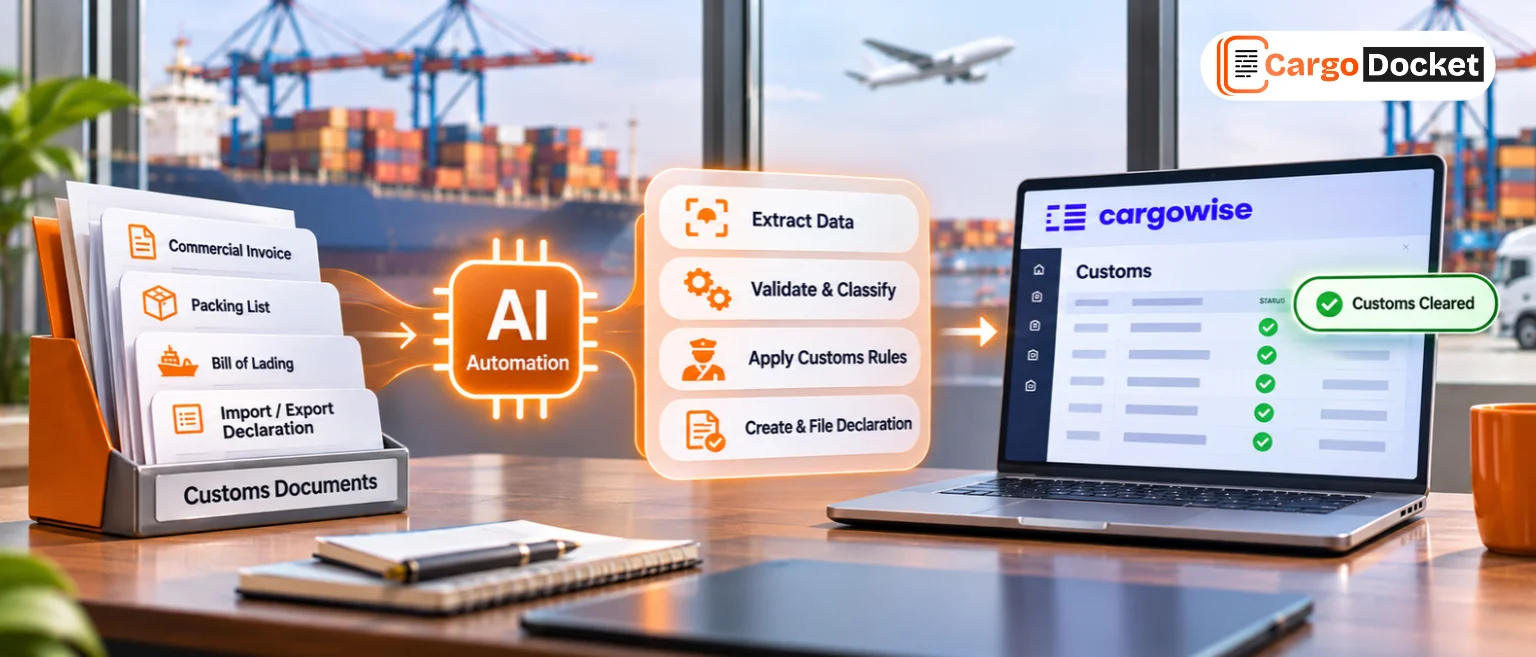
- Receive documents: Collect commercial invoices, packing lists, and other supporting shipment documents.
- Extract information: Use AI to identify product, invoice, and shipment details.
- Structure the data: Organize the extracted information into the required fields.
- Check discrepancies: Identify missing details or differences that need verification.
- Transfer approved data: Map validated information to the relevant CargoWise workflow through the configured integration.
This reduces repeated data entry and helps teams prepare shipment information more consistently.
How can Freight Forwarders Handle More Parcels Without Increasing Manual Work?
Automation should address the tasks that consume the most time, not simply add another tool to the existing process.
Freight forwarders can start by identifying repetitive document-handling activities and testing which ones can be automated safely.
A practical approach includes:
- Reviewing how shipment documents are currently received and processed.
- Identifying high-volume document types and repetitive data entry tasks.
- Defining validation rules for important shipment and product details.
- Keeping customs-related decisions and uncertain information under appropriate human review.
- Monitoring processing time, exceptions, and data correction rates.
This allows teams to expand automation gradually while maintaining control over shipment information.
How can CargoDocket Support Growing E-Commerce Operations?
CargoDocket’s AI Document Automation is designed to support document-processing workflows connected to CargoWise.
For freight forwarders managing growing e-commerce volumes, it can help extract relevant information from supported shipment documents, organize the data, and prepare it for configured CargoWise workflows. Where validation rules are in place, missing or inconsistent details can be flagged for review before information moves forward.
The goal is to reduce repetitive document handling, limit manual data entry, and help operations teams manage increasing shipment volumes without increasing administrative work at the same pace.
Scale Your E-Commerce Operations With Less Manual Work
More e-commerce shipments shouldn’t automatically mean more paperwork for your team. CargoWise helps manage shipment and customs workflows, while Document Automation can support the document processing that happens behind them.
When these workflows are connected properly, freight forwarders can spend less time entering information and more time managing shipments, resolving exceptions, and supporting customers.
Ready to handle growing e-commerce volumes without adding more manual work? Contact us to explore AI document automation for CargoWise users and see how your document-processing workflow can support your next stage of growth.