
Behind every shipment are dozens of documents that need attention before operations can move forward. Finance teams, operations staff, customs specialists, and customer service teams all rely on the same information, yet much of their day is still spent opening documents, searching for details, and entering data manually. Studies show that employees spend nearly 30% of their workday searching for information, while manual document processing continues to slow down business operations.
With AI becoming part of everyday logistics operations, businesses are finding faster ways to process information, reduce repetitive work, and improve operational efficiency without adding more manual tasks.
What is AI Document Processing in Logistics?
AI document processing combines Artificial Intelligence (AI) with technologies such as Optical Character Recognition (OCR) and machine learning to automatically read, understand, and organize information from logistics documents.
Unlike traditional document scanning, AI does more than simply convert printed text to digital text. It recognizes various document types, extracts important information from them, and prepares that data for business systems.
For logistics companies, this means that documents no longer have to be handled one at a time. Whether information arrives via emails, scanned PDFs, customer uploads, or shared folders, AI can consistently process various formats and convert them into structured data that is easier to review and use.
Rather than spending valuable time manually entering shipment details, teams receive organized data that is ready for the next stage of the workflow.
Why is Manual Document Processing Becoming Harder to Manage?
Every day, the logistics industry generates enormous amounts of information. Every shipment generates documents that must be transferred between customers, carriers, customs authorities, warehouses, finance teams, and operational systems.
Document volumes grow in lockstep with business expansion. What was once manageable with manual processes becomes difficult when hundreds or thousands of documents require attention each week.
The challenge is no longer collecting documents. The challenge is processing the information in those documents accurately and quickly enough to support daily operations.
Without automation, logistics teams often spend time:
- Looking for information across multiple documents.
- Entering the same shipment details into different systems.
- Comparing information between related documents.
- Correcting typing mistakes.
- Following up on missing or incomplete data.
Although these tasks may appear small individually, they create significant delays when repeated throughout the day.
How does AI Improve the Way Logistics Teams Process Documents?
AI is changing document processing, eliminating the repetitive work that would otherwise need to be done manually. Rather than having employees read through every document line by line, AI identifies the critical information, extracts what’s needed, and prepares it for validation before it gets to operational systems.
With data being collected automatically, logistics teams can spend less time on administrative tasks and more time on shipment planning, communicating with customers, and making operational decisions.
The end result is a more fluid document workflow, information moves faster, documents are easier to manage, and business processes are more consistent.
Which Logistics Documents can AI Process?
One of the biggest strengths of AI is its ability to process multiple document types across logistics operations. Rather than creating different workflows for every document, AI applies the same intelligent process while recognizing the unique structure of each file.
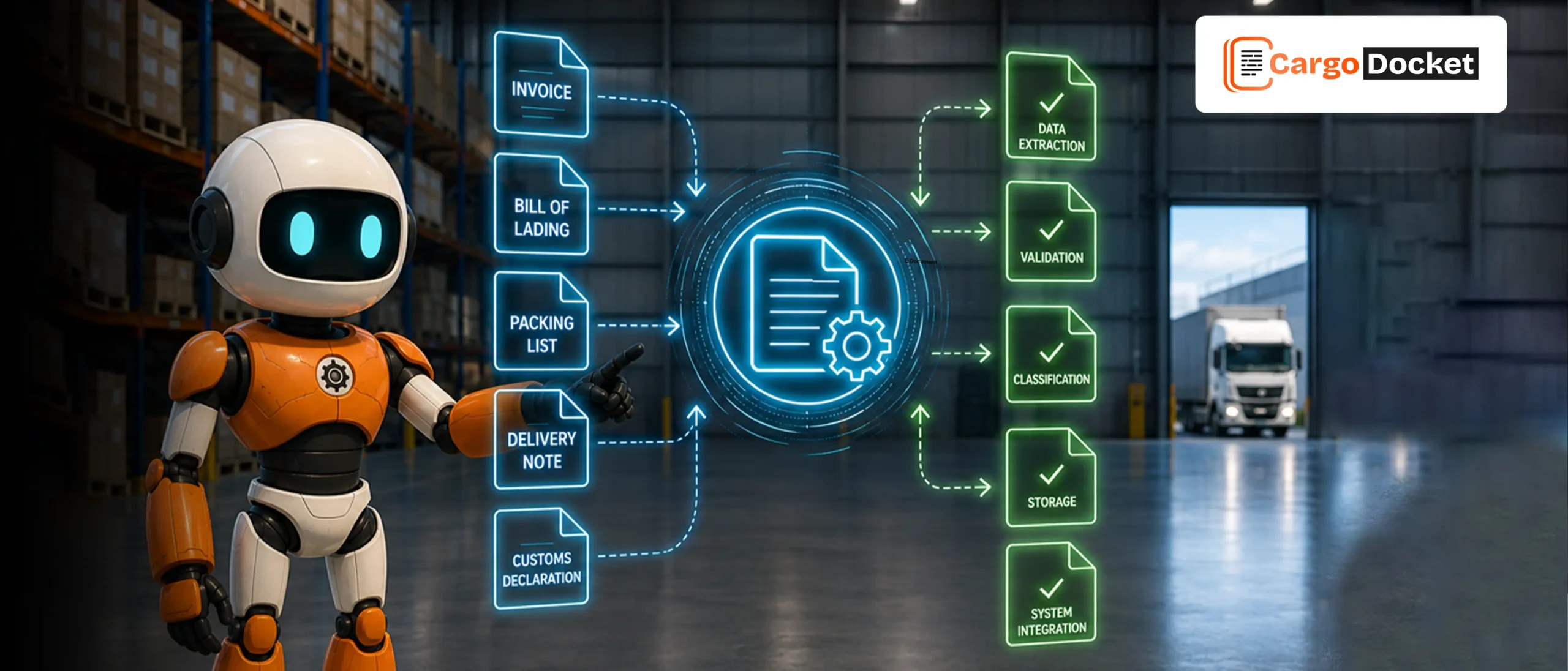
Some of the most common logistics documents include:
- Commercial Invoices
- Bills of Lading (HBL/MBL)
- Packing Lists
- Air Waybills
- Purchase Orders
- Freight Invoices
- Customs Documents
- Certificates of Origin
- Delivery Receipts
- Proof of Delivery
- Arrival Notices
Each document contains valuable operational information that AI can extract, organize, and prepare for business use.
How AI Turns Logistics Documents into Business-Ready Information?
The biggest advantage of AI is not simply reading documents, it’s creating a connected workflow that transforms document information into structured data ready for daily operations.
Receive Documents
It starts with gathering documents from various sources such as emails, customer portals, cloud storage, shared folders, and connected apps. Documents are collected automatically into a central workflow, rather than having to be downloaded and organized manually.
Read and Extract the Data
After documents are received, AI analyzes PDFs, scanned images, spreadsheets, and other document formats to identify important information. It captures shipment references, supplier details, customer information, product descriptions, invoice values, quantities, and many other data fields without requiring manual typing.
Data Mapping and Conversion
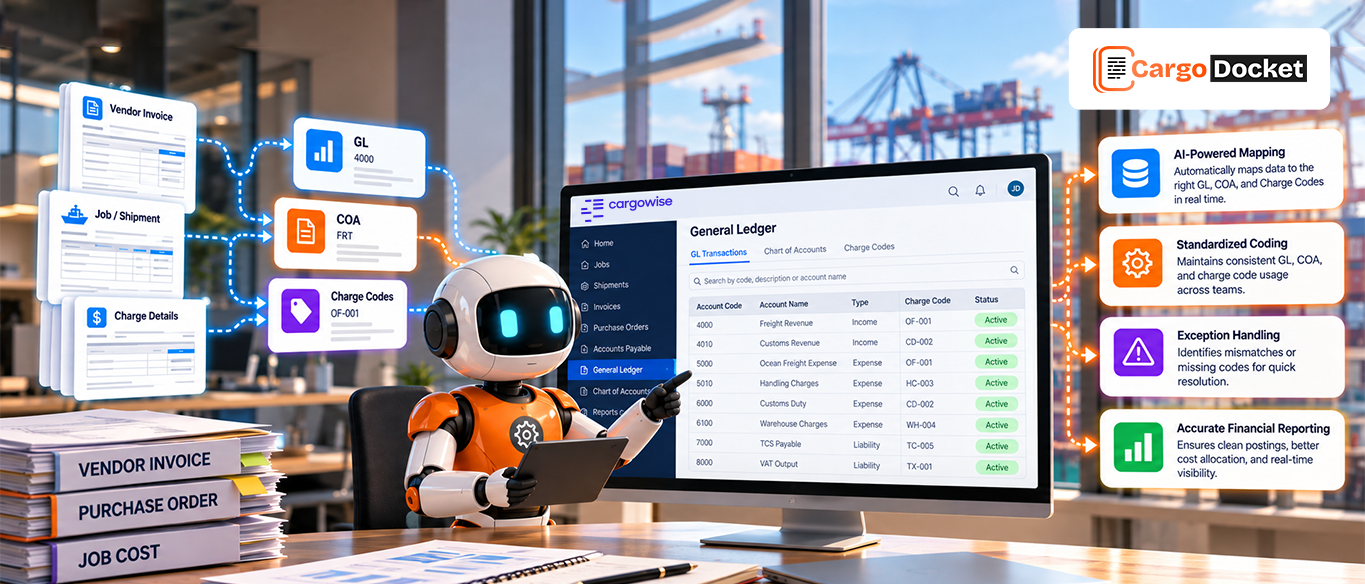
Once the information has been extracted, it is mapped against ERP or Transportation Management System master data and converted into the required business format. This helps maintain standardized information across systems while reducing duplicate data entry and improving overall data consistency.
Validate the Information Before Processing
The data is extracted, mapped, and AI verifies the extracted data against business rules, ERP master data, and existing records before moving forward in the process.
It identifies missing values, duplicate references, incorrect invoice numbers, or mismatched shipment details early, allowing teams to correct issues before they affect operations. This helps improve data accuracy while reducing manual corrections later.
Exception Management
Some documents may have missing information, be difficult to read, or have details that do not match information already on record.
Instead of interrupting the entire workflow, AI automatically highlights these exceptions for review. Teams can quickly focus on the documents that need attention while the remaining documents continue through the process, reducing review time and improving productivity.
Send Business-Ready Data into ERP and Operational Systems
Rather than stopping the entire process, AI automatically flags these exceptions for review. This helps teams quickly focus on the documents that require attention while the rest of the documents move through the process, reducing review time and improving productivity. Ready, structured and verified, teams no longer need to enter the same information manually. This creates a smoother workflow, improves data consistency, and keeps operational systems up to date.
How Better Document Processing Creates More Efficient Logistics Operations?
Better document processing creates a positive impact across the entire logistics operation. When information is available sooner, different teams can complete their work without waiting for manual document updates.
Operations teams can prepare shipments faster, finance teams receive accurate information for billing, customs teams spend less time checking documents, and customer service teams can respond to inquiries more quickly.
Businesses using AI-powered document processing often reduce manual document handling by 50% or more, allowing employees to spend less time on repetitive work and more time on activities that improve customer service and operational performance.
Some of the biggest improvements include:
- Faster document processing.
- Better data accuracy.
- Reduced manual data entry.
- Improved document visibility.
- More efficient collaboration across teams.
Why Human Expertise Still Matters in AI-Powered Document Processing?
AI has become an important part of modern document processing, but it does not replace the knowledge and experience of logistics professionals.
Sometimes you need the human touch, especially when documents have odd shipping instructions, missing information, customer-specific requirements, or compliance issues. Often, such decisions require business knowledge that is not in the document.
AI assists with these scenarios by taking on the repetitive tasks that drain valuable time so employees can focus on reviewing exceptions, resolving operational problems, and making informed decisions.
Businesses integrate AI with human know-how to create a better document process where technology boosts efficiency, while seasoned professionals maintain quality, accuracy, and operational control.
How Cargo Docket Helps Logistics Businesses Simplify Document Processing?
Managing large volumes of logistics documents becomes increasingly challenging as businesses expand their operations. More customers, more shipments, and more trading partners naturally create more documents that need to be processed every day.
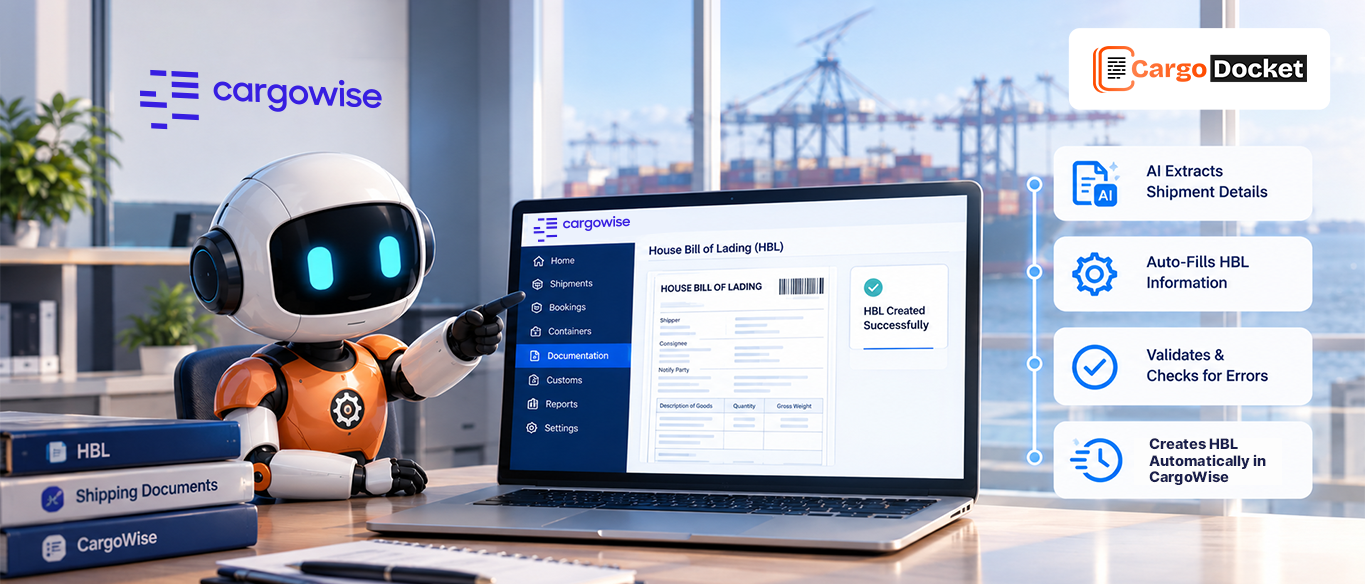
Cargo Docket helps simplify this process through AI-powered document automation designed specifically for logistics businesses. Instead of manually reviewing every invoice, Bill of Lading, packing list, customs document, or freight record, the platform captures important information automatically and converts it into structured business data.
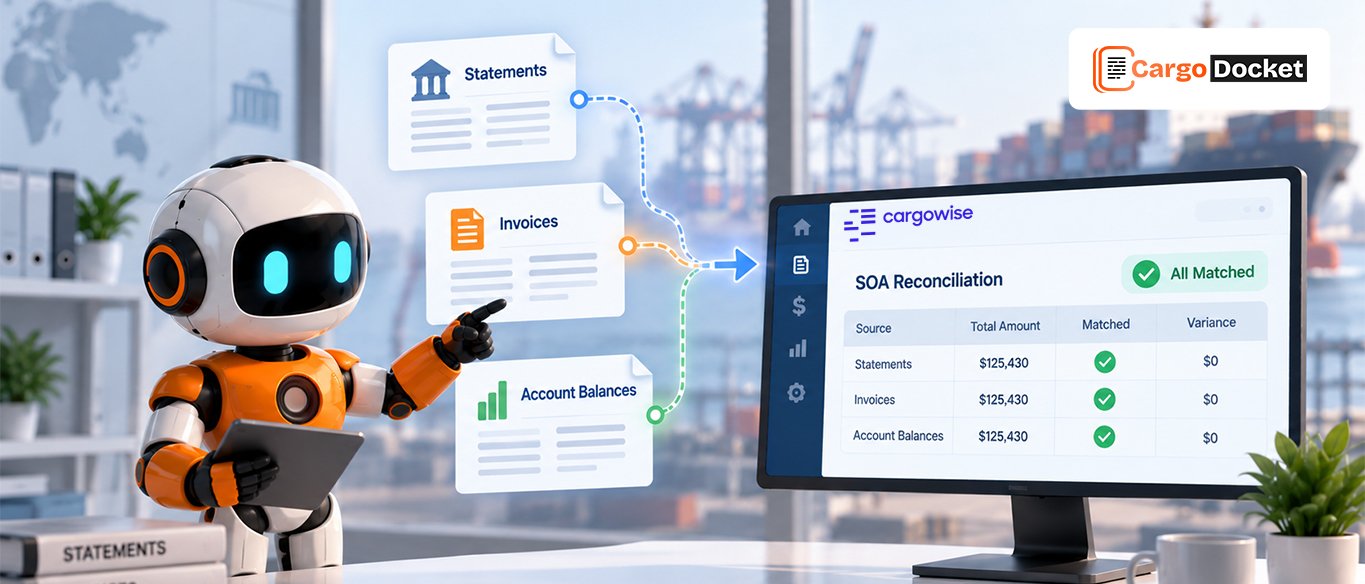
The platform also supports document validation, intelligent data mapping, exception management, and seamless integration with CargoWise and other ERP systems. Cargo Docket reduces repetitive manual work and increases accuracy by organizing document information before it reaches operational systems.
The platform does not disrupt but complements existing logistics processes, helping teams to process documents faster, increase visibility, and keep greater consistency across day-to-day operations.
Conclusion
Manual document processing can slow logistics operations as document volumes continue to grow. AI helps businesses transform documents into accurate, structured information, reducing repetitive work while improving speed, consistency, and visibility across daily operations.
By combining AI with human expertise, logistics businesses can build smarter document workflows, improve operational efficiency, and better prepare for the growing demands of modern supply chains.
If you’re exploring smarter ways to simplify logistics document processing, our team is here to help. Contact us to learn how AI-powered document automation can support your business and help you create faster, more efficient document workflows.