
A Bill of Lading lands in your inbox. Then the real work starts.
Someone has to open the document, find the shipment details, check the parties and routing information, enter the required data, make sure the details match the shipment, and prepare the HBL in the right format.
One document may not seem like a big deal. But when your team is processing 50, 100, or more B/Ls, those small manual tasks can quickly eat up hours.
And the bigger problem? Your team isn’t spending that time on something that requires much human judgment. They’re often repeating the same steps over and over.
That’s where HBL automation with AI can help. AI can read incoming Bill of Lading documents, extract the required information, validate it, identify exceptions, and support the configured CargoWise workflow, so your team can spend less time on repetitive document work.
What Makes Manual HBL Processing so Time-Consuming?
HBL preparation depends on information coming from shipping documents, emails, and shipment records. Your team needs to bring those details together before the document can move forward.
Depending on the shipment, this can include B/L references, shipper and consignee details, vessel and voyage information, routing and port details, container information, cargo and package details, and other configured shipment fields.
When this information is handled manually, the process often becomes open, search, copy, enter, check, and repeat.
How can AI Read the B/L and Find the Required Information?
The first opportunity for automation is the document itself.
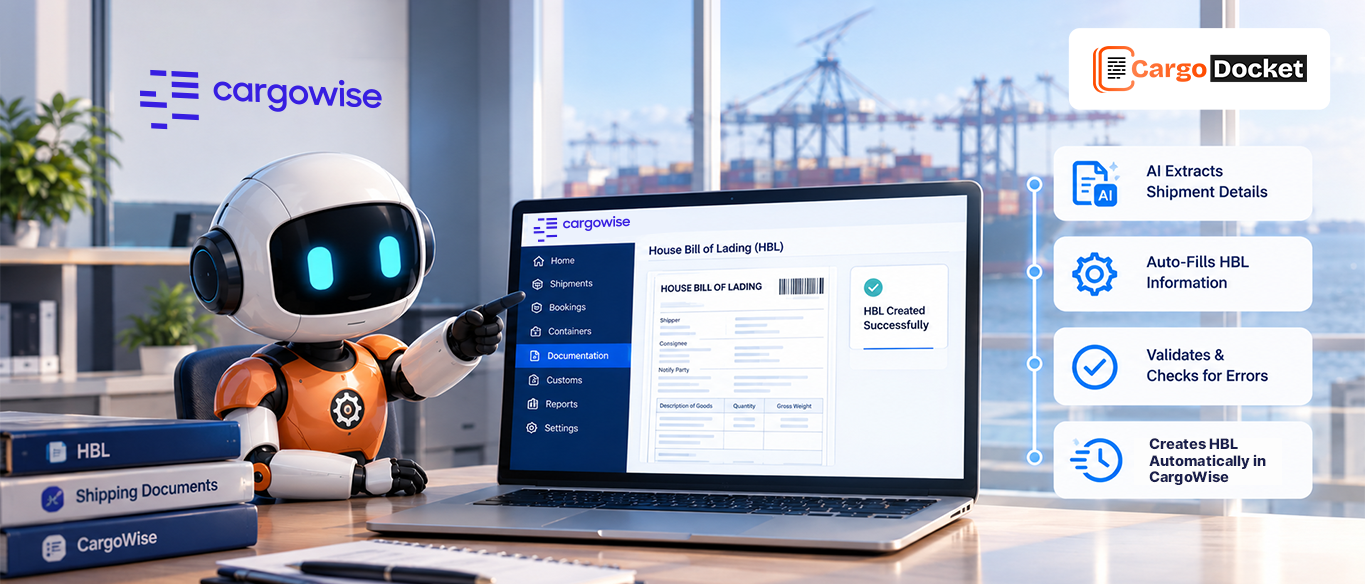
When a B/L arrives by email, AI can read the document and identify the information needed for the HBL workflow. Instead of requiring someone to manually search through the document for every value, the automation can extract the configured shipment fields and structure them for the next stage.
For example, it can identify the B/L reference, parties, routing, vessel and voyage details, container information, cargo details, and other required shipment information.
Your team can then start with structured information that is ready to be checked, rather than manually entering everything from scratch.
How is the Extracted Data Prepared for CargoWise?
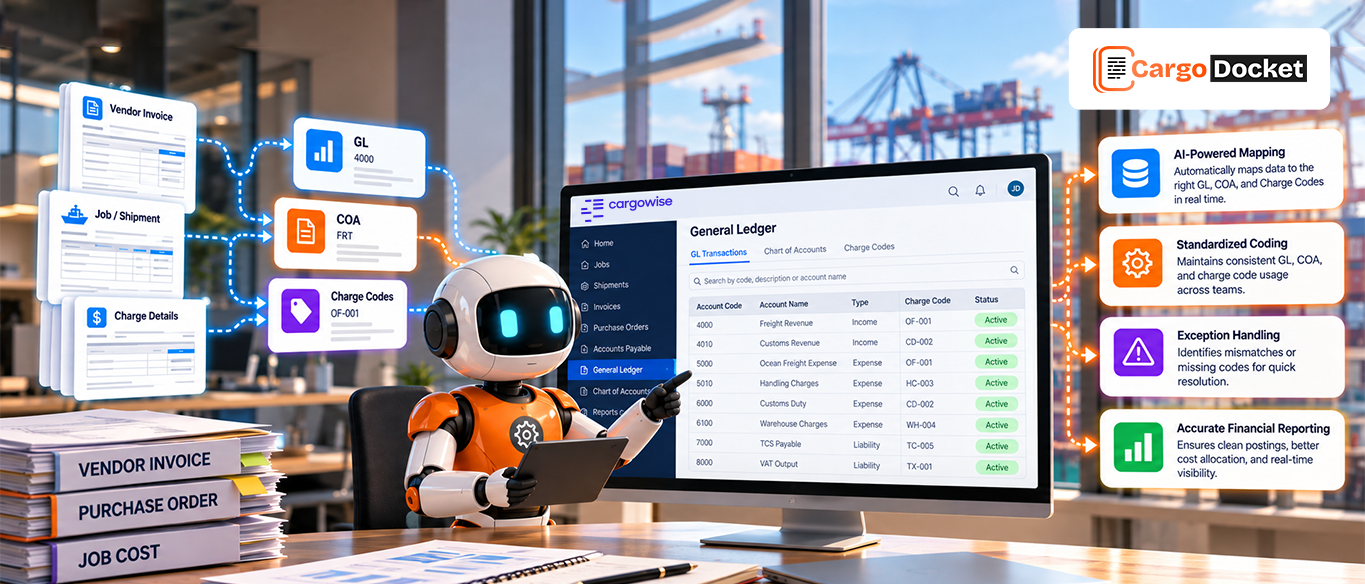
Extracting information isn’t enough. The data needs to be mapped to the right fields and checked before it moves forward.
The automation can map the extracted B/L information to the required CargoWise fields and validate whether the information is complete and consistent.
If a required shipment reference is missing or a value doesn’t match the expected information, the workflow can identify it before processing continues.
What if the B/L Information Requires Attention?
Not every B/L will arrive in perfect condition. You may have missing information, unclear fields, or details that don’t match the relevant shipment.
Instead of stopping the entire workflow, automation can separate those documents or fields for review.
If the required information is complete, the document can continue through the configured process. If something is missing, unclear, or unmatched, the workflow can flag it for your team.
That way, your team can focus on the documents that actually need attention instead of manually checking every B/L from beginning to end.
How can Automation Make HBL Formatting Easier?
There is another part of HBL preparation that can quietly consume time: document setup and formatting.
The information may be correct, but the final document still needs the right structure, logo, layout, and other configured elements.
Automation can apply predefined document rules and formatting requirements so your team doesn’t have to repeatedly set up the same elements.
This can help reduce manual work around logo placement, document layout, standard field formatting, repeated data entry, and consistent document preparation.
The idea is pretty simple: set the rules once and let the workflow handle the repetitive parts.
How can Documents Stay Connected to the Shipment?
Once processing is complete, the processed B/L and related documents can be attached to the relevant shipment in CargoWise eDocs.
That keeps supporting documentation connected to the shipment record instead of leaving your team searching through email threads or folders later.
It also gives your team a clearer picture of what has already been processed and what still needs attention.
At this point, you might be wondering: Can CargoDocket make HBL processing easier when your team is handling a high volume of B/Ls?
Yes. CargoDocket uses AI to read B/Ls, extract and validate shipment data, and support the CargoWise workflow. It reduces repetitive manual work and helps your team focus on exceptions that need review.
How does CargoDocket Automate the HBL Process in CargoWise?
CargoDocket brings AI Document Automation into the CargoWise HBL workflow, helping handle the repetitive document-processing steps before and during shipment processing.
When a B/L arrives by email, CargoDocket AI can read the document and extract the required shipment information. That information can then be mapped to the configured CargoWise fields and checked for completeness and consistency.
If the B/L contains missing, unclear, or unmatched information, CargoDocket can separate those exceptions for review. When the information meets the configured requirements, the structured data can continue through the configured CargoWise process.
The workflow we follow:
Receive B/L → Read & Extract → Map to CargoWise → Validate → Review Exceptions → Process in CargoWise → Attach to eDocs
This approach means your team doesn’t have to manually work through every B/L from start to finish. CargoDocket handles the repetitive document work, while your team stays involved where human review and judgment are needed.
Conclusion
HBL processing can become difficult when your team has to repeatedly read B/Ls, find shipment information, enter data, check details, and prepare documents manually.
AI and HBL automation can reduce that repetitive workload by helping read incoming B/Ls, extract and validate shipment information, identify exceptions, support the CargoWise workflow, and keep documents connected to the shipment.
Ready to reduce the manual work involved in HBL processing? Contact us to see how AI Document Automation can help automate B/L data extraction, validation, HBL processing, and document management within your CargoWise workflow.