

Every shipment carries more than products. It carries important information that helps freight teams prepare, communicate, and keep cargo moving without unnecessary delays.
Pre-Alert documents give importers and destination teams the shipment details they need before cargo arrives. However, when these documents come through multiple emails, PDFs, and different file formats, manually checking every detail can slow down operations.
With smarter AI document processing, freight forwarders can:
- Capture important shipment information from incoming files faster
- Reduce repetitive document review and manual data entry
- Convert shipment documents into organized information ready for operational use
This helps teams prepare earlier, improve visibility, and manage cargo movement with better confidence.
What is a Pre-Alert Document in Freight Forwarding?
A Pre-Alert document is an advance shipment information package sent by the exporter or origin freight forwarder to the importer, consignee, or destination agent after the shipment has been dispatched.
It provides important details about the shipment before the cargo reaches its destination. This allows the receiving team to prepare documentation, coordinate import activities, and organize delivery requirements in advance.
In simple terms, a Pre-Alert document says:
“Your cargo is on the way. Here is the information you need before it arrives.”
For example, when goods leave an origin port, the destination freight forwarder does not have to wait until the vessel reaches the destination to begin preparation. The Pre-Alert information allows teams to check shipment details, verify documents, and prepare the next steps early.
This communication helps exporters, importers, and freight teams stay aligned throughout the shipment journey.
What Information is Included in a Pre-Alert Document?
A Pre-Alert is not usually just one document. It is a collection of shipment-related documents that provides complete visibility into the cargo movement.
Each document contains specific information required for import preparation, shipment verification, and operational planning.
A typical Pre-Alert package includes:
- HBL/MBL
- Bills of Lading
- Commercial Invoice
- Packing List
- Arrival Notice
- Additional shipment instructions or supporting documents
The Bill of Lading provides transportation details, shipment references, and party information. Commercial invoices contain product, pricing, and trade details. Packing lists explain cargo quantity, packaging, and weight information.
Together, these documents help freight teams understand what is arriving and what actions need to happen before the shipment reaches the destination.
Why Pre-Alert Documents Matter Before Shipment Arrival?
Freight forwarding depends on timing and accurate information. Even if a shipment moves perfectly, missing documents or incorrect information can create problems when cargo arrives.
Pre-Alert documents help destination teams prepare instead of waiting until the last moment.
They support:
- Early shipment review
- Better communication between the origin and destination teams
- Import documentation preparation
- Faster identification of missing details
- Improved cargo planning
For example, if the destination team notices an incorrect consignee detail before arrival, they have time to correct the information instead of discovering the issue when cargo is already waiting.
A strong Pre-Alert process creates smoother shipment handling and helps avoid unnecessary operational pressure.
When and How Freight Teams Share Pre-Alert Documents?
Pre-Alert documents are usually shared after the shipment is confirmed, dispatched, or loaded for transportation.
The origin freight forwarder, exporter, or overseas agent sends these details to the destination team through emails, freight systems, or digital communication platforms.
The purpose is simple: provide shipment visibility before cargo arrival.
For businesses handling a few shipments, manually reviewing documents may still be manageable. But freight forwarders processing hundreds or thousands of shipments deal with large amounts of information every day.
As document volume increases, teams need a more efficient way to capture, review, and manage shipment data.
Challenges of Handling Pre-Alert Documents Manually
Pre-Alert processing often involves information coming from different customers, carriers, agents, and overseas partners.
Documents may arrive as email attachments, scanned files, PDFs, or different templates. Teams need to open every file, search for important details, enter information into systems, and verify accuracy.
Manual processing can create challenges such as:
- Increased document handling time
- Repeated data entry across systems
- Missing or incorrect shipment details
- Delayed preparation before arrival
- More dependency on manual checking
- Difficulty managing growing shipment volumes
For example, an import team managing several vessel arrivals may receive hundreds of Pre-Alert files within a short period. Reviewing every document manually increases workload and creates opportunities for errors.
This is why many freight teams are moving toward smarter ways of managing shipment information.
How AI Changes the Way Freight Forwarders Process Pre-Alert Documents?
AI helps freight forwarders shift from manual document handling to intelligent information processing.
Instead of treating documents as files that employees need to review line by line, AI helps identify, extract, and organize important shipment details.
The traditional process depends on:
Receiving documents → Reading files → Entering data → Checking information
AI improves the workflow by helping teams move toward:
Receiving documents → Capturing information → Validating details → Preparing usable shipment data
This allows operations teams to spend less time searching through documents and more time managing shipments, solving exceptions, and supporting customers.
How Cargo Docket AI Turns Pre-Alert Documents into Ready-to-Use Shipment Data?
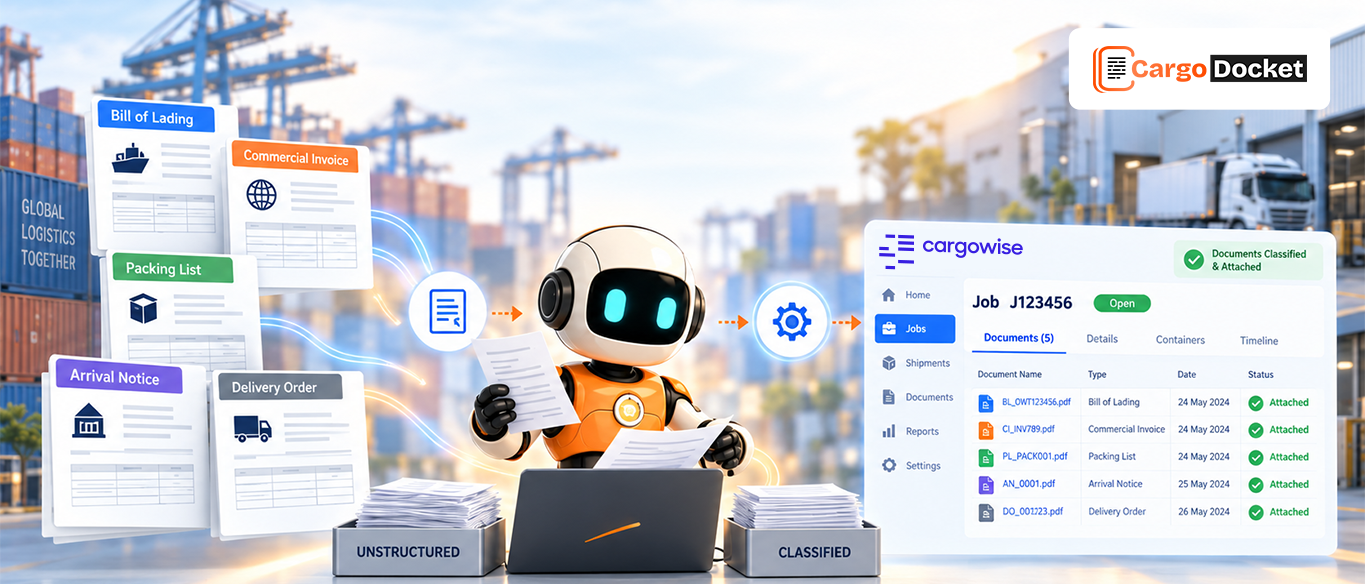
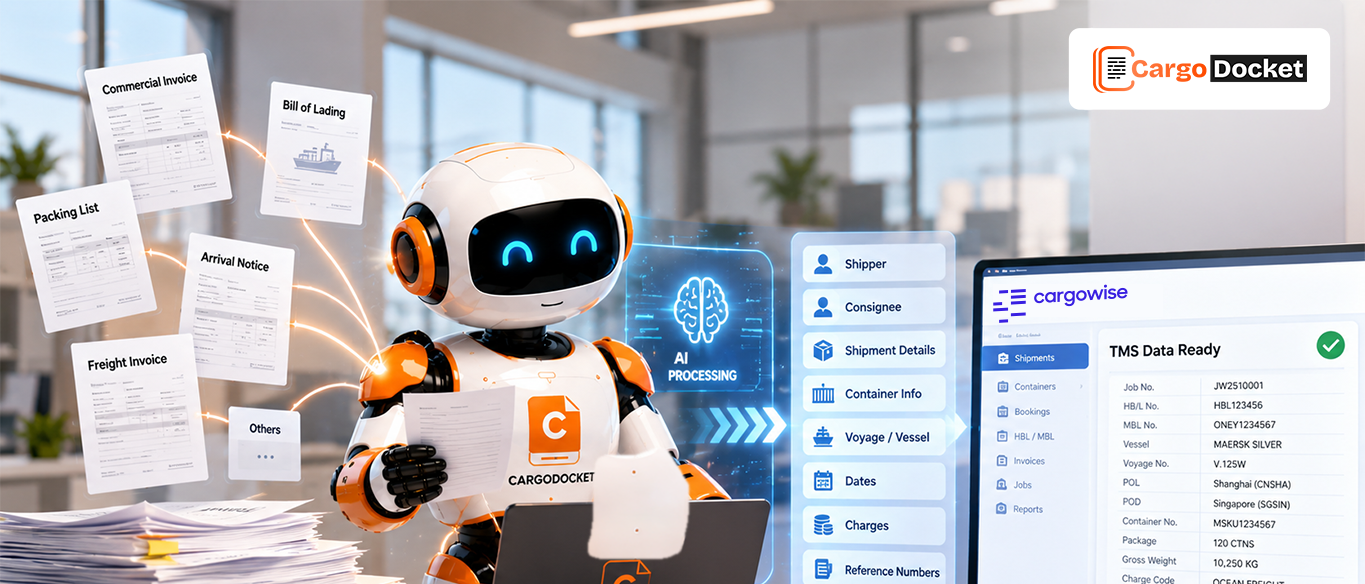
Cargo Docket AI helps freight forwarders process Pre-Alert documents by transforming unstructured shipment files into organized information.
Different document formats can be read, important details can be captured, and shipment data can be prepared for operational workflows.
Cargo Docket AI supports:
- Reading documents from multiple formats
- Extracting important shipment information
- Validating captured data
- Identifying information that requires review
- Preparing structured shipment data
For example, when a destination team receives Pre-Alert documents from multiple origin agents, Cargo Docket AI helps organize shipment information instead of requiring teams to manually search through each attachment. This creates faster preparation and better visibility before cargo arrival.
Key Pre-Alert Documents Processed with Cargo Docket AI
HBL and MBL Processing
House Bill of Lading and Master Bill of Lading include important shipment ownership and carrier information. Cargo Docket AI captures details such as shipment references, shipper information, consignee details, carrier information, and cargo-related data. This helps teams access accurate shipment information without manually reviewing every field.
Bills of Lading Processing
Bills of Lading are essential documents that support freight movement and shipment tracking. Important details such as container information, cargo descriptions, transportation references, and shipment instructions can be extracted and organized. This helps maintain consistency across freight operations.
Commercial Invoice Processing
Commercial invoices include important trade and financial information needed during shipment handling.
Cargo Docket AI helps capture details such as:
- Invoice information
- Product descriptions
- Quantity details
- Currency and values
Organized invoice information helps teams reduce manual review and improve document accuracy.
Packing List Processing
Packing Lists explain how cargo is arranged and packed. Important details such as package count, weight, dimensions, quantities, and product descriptions can be captured. This helps freight teams verify shipment information before cargo arrives.
Arrival Notice Processing
Arrival Notices provide important details about incoming cargo and expected arrival information. By processing these details earlier, freight teams can coordinate required activities and prepare before the shipment reaches the destination.
How Pre-Alert Document Automation Works from Capture to Shipment Readiness?
A smarter Pre-Alert workflow helps teams move information from documents into operations more efficiently.
1. Receive Pre-Alert Documents
Shipment files are received from exporters, agents, or freight partners through emails, PDFs, scanned files, or connected sources.
2. Capture Shipment Information
AI reads documents and identifies important information from shipment files.
3. Extract Important Data Fields
Details such as consignee information, shipment references, container numbers, invoice details, and cargo information are captured.
4. Validate Shipment Details
Extracted information is checked for accuracy and consistency before moving forward.
5. Review Exceptions When Needed
If missing or unmatched details are identified, teams can review and confirm information before approval.
6. Prepare Ready-to-Use Shipment Data
Validated information becomes structured data that helps freight teams prepare before cargo arrival.
Improving Import Operations with Faster and Accurate Shipment Information
Import operations become smoother when teams have the right information available at the right time. Accurate Pre-Alert processing helps freight forwarders improve preparation, communication, and operational visibility.
Instead of spending time searching through documents, teams can focus on coordinating shipments and delivering better customer experiences.
Reliable shipment information supports faster decisions and helps businesses manage increasing volumes more efficiently.
Building a More Efficient Pre-Arrival Process with AI
Modern freight operations depend on both cargo movement and information movement. As shipment volumes increase, manually handling every document becomes harder for growing logistics teams.
Using intelligent technology allows freight forwarders to create a more connected process where shipment information is captured, organized, and available when teams need it.
A stronger Pre-Arrival process helps businesses improve productivity, accuracy, and scalability.
Conclusion:
Pre-Alert documents are essential for preparing freight teams before cargo arrival. Managing these documents accurately helps improve shipment visibility, coordination, and operational efficiency.
Cargo Docket AI helps convert complex shipment documents into structured information that teams can use faster and with greater confidence.
By reducing manual document work and improving data accuracy, freight forwarders can prepare earlier and create smoother import operations.
Ready to improve the way your team handles freight documents? Contact us today to explore how AI document automation helps simplify shipment processing and build more efficient logistics workflows.