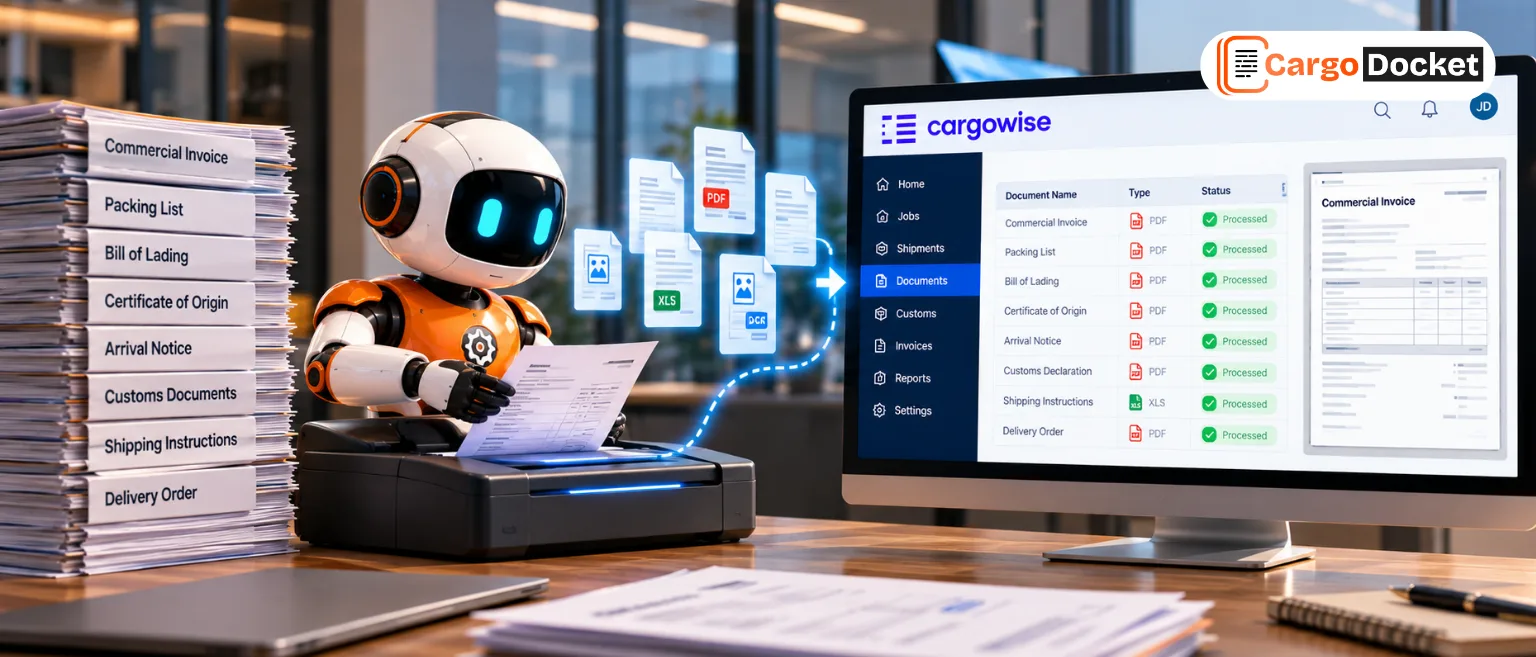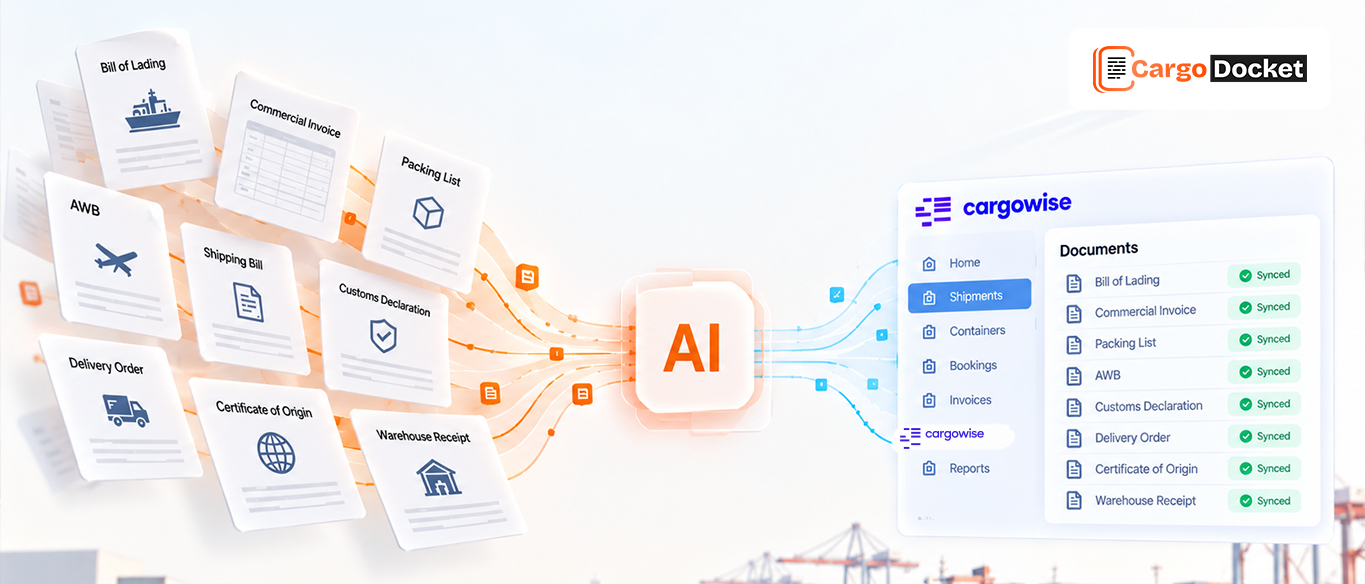


Every transport job begins with information. Before a shipment moves, logistics teams create a transport job using details from booking confirmations, transport orders, Bills of Lading, emails, and other freight documents.
For many logistics businesses, this is still a manual process. Teams spend time reviewing documents and entering shipment information into CargoWise, reducing the time available for higher-value tasks. As shipment volumes grow, this repetitive work can slow productivity and increase the risk of errors.
CargoWise Transport Job Automation simplifies this process by automatically converting freight document data into transport jobs, helping teams reduce manual effort and focus on keeping freight moving.
What Information Inside Freight Documents is Needed to Create a Transport Job?
A transport job isn’t built from a single document. Instead, it combines information from several documents created throughout the shipment lifecycle.
Each document contributes different pieces of information needed to complete the job accurately.
For example:
| Freight Document | Information Contributed |
| Booking Confirmation | Customer details, shipment references, transport requirements |
| Transport Order | Pickup and delivery instructions, service requirements |
| Bill of Lading | Cargo details, container information, consignee information |
| Delivery Instructions | Delivery locations, delivery windows, special handling notes |
| Customer Email | Last-minute changes, scheduling updates, and additional requests |
| Packing List | Package quantities, weights, and dimensions |
| Rate Confirmation | Carrier details, agreed pricing, service information |
Since these documents arrive in different formats, logistics teams often need to manually find and enter shipment information into CargoWise. As shipment volumes grow, this repetitive process can slow job creation and increase the risk of errors.
Automating this step helps create transport jobs faster while improving data accuracy and consistency.
Why does Transport Job Creation Still Depend on Manual Data Entry?
Transport job creation begins as soon as a customer’s transport request is received. However, the information needed to create a job often comes from multiple sources, including booking confirmations, transport orders, PDFs, emails, and customer portals.
Because these documents vary in format, logistics teams still spend time switching between documents and CargoWise to manually enter details such as customer information, pickup and delivery locations, shipment references, and transport instructions.
As shipment volumes grow, this repetitive process increases manual effort, slows job creation, and raises the risk of data entry errors.
The real challenge isn’t creating the transport job, it’s converting freight document information into accurate CargoWise data quickly and efficiently.
What Business Benefits can Logistics Teams Expect from Transport Job Automation?
The biggest advantage of transport job automation isn’t just creating jobs faster, it’s creating them more consistently.
When transport jobs are generated from freight documents instead of manual data entry, logistics teams spend less time correcting information and more time managing shipments. Every department also works from the same accurate data inside CargoWise, reducing communication gaps and duplicate work.
Some of the key business benefits include:
- Faster transport job creation
- Reduced manual data entry
- Improved data accuracy
- Better visibility across shipments
- Quicker response to customer requests
- More time for value-added activities
For growing logistics businesses, these improvements become increasingly important as shipment volumes continue to rise.
Why does Accurate Transport Job Data Matter Across the Business?
A transport job doesn’t only support the transport team. It provides information that other departments rely on throughout the shipment lifecycle.
For example:
- Dispatch teams use transport jobs to schedule pickups and deliveries.
- Warehouse teams rely on accurate shipment details to prepare freight.
- Customer service teams use the information to answer shipment inquiries.
- Finance teams depend on accurate job data for billing and reporting.
If incorrect information enters CargoWise at the beginning, the same errors can continue throughout the entire workflow.
By automating job creation from freight documents, businesses create a more reliable source of information that supports every stage of the shipment.
How can Logistics Businesses Get Started with Transport Job Automation?
Successful automation isn’t about replacing people, it’s about reducing repetitive work.
Before implementing transport job automation, businesses should identify processes that require employees to repeatedly enter the same shipment information into CargoWise.
It’s also important to establish validation rules so that missing or incorrect information is identified before a transport job is created. This allows routine jobs to be processed automatically while exceptions are sent to employees for review.
Taking this approach helps businesses improve efficiency without sacrificing control or data quality.
How CargoDocket Simplifies Transport Job Automation for CargoWise Users?
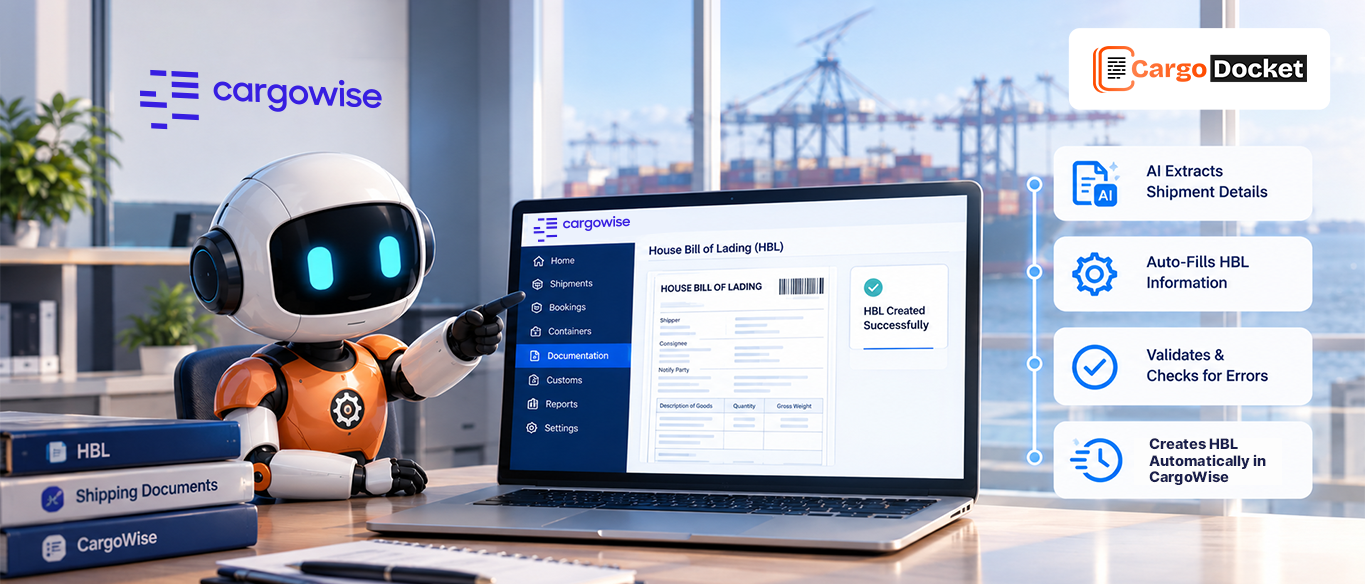
CargoDocket helps logistics businesses automate the process of creating transport jobs from freight documents. Using AI-powered document automation, CargoDocket reads incoming freight documents, extracts shipment information, validates the data against business rules, and automatically creates transport jobs in CargoWise.
When information is incomplete or doesn’t match predefined rules, only those exceptions are flagged for review. This allows teams to focus their attention where it’s needed most while routine transport jobs continue through the workflow.
Instead of spending hours entering shipment information manually, logistics teams can create transport jobs faster, improve data consistency, and keep freight moving with greater confidence.
Conclusion
As shipment volumes grow and freight documents become more complex, manual transport job creation can quickly become an obstacle. Automating the process helps logistics businesses reduce repetitive data entry, improve data accuracy, and create transport jobs more efficiently within CargoWise.
More importantly, it allows your team to spend less time transferring information between documents and systems and more time focusing on planning shipments, supporting customers, and managing exceptions.
Ready to simplify transport job creation in CargoWise? Contact us today to discover how AI-powered freight document automation can help your team create transport jobs faster, improve data quality, and simplify your logistics workflows.