
A freight forwarder can start the day by checking emails and processing shipment documents. Then the attachments keep coming.
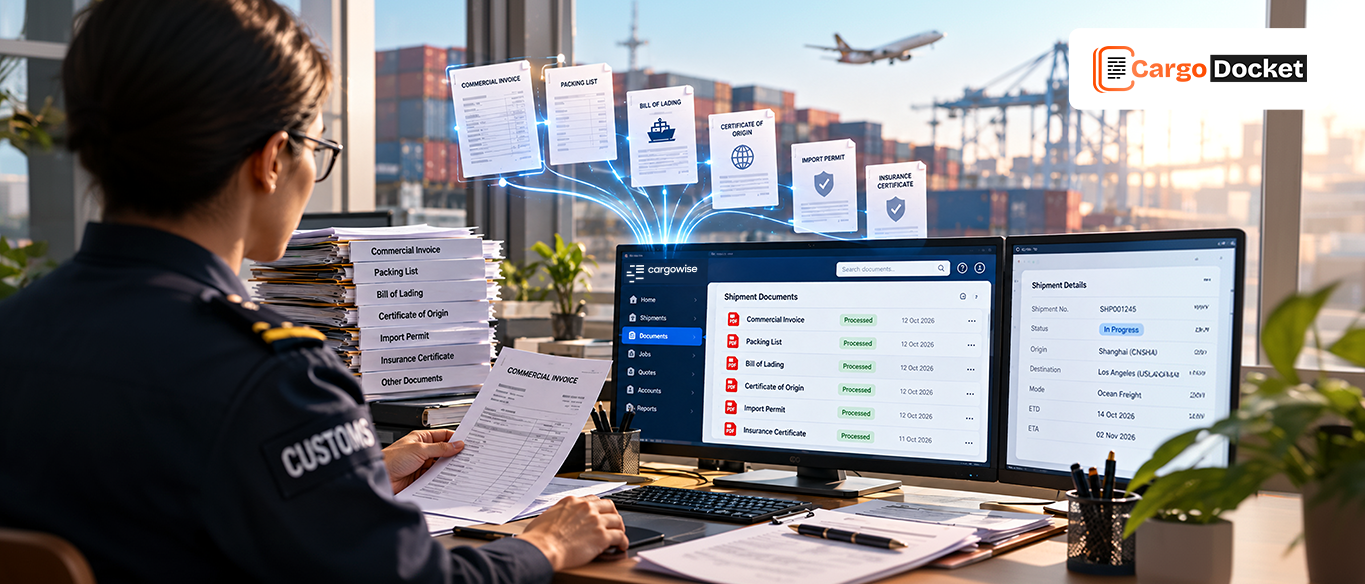
One email has a commercial invoice, another has a packing list, and a bill of lading needs to be checked against shipment details. Someone has to enter the data, spot missing information, update records, and follow up on anything that doesn’t look right.
Before long, the team is spending more time moving information around than actually working with it.
When this happens across hundreds of shipments, those small tasks can quickly consume a big part of the day. AI is changing that balance by taking on more routine documentation work, giving freight forwarders more time to focus on customers, exceptions, coordination, and decisions that need human judgment.
📄 What Makes Manual Documentation Such a Challenge?
Manual documentation isn’t just about typing information into a system. There is usually a chain of small tasks behind every document.
A team member may need to:
- Open emails and attachments individually
- Identify what type of document they received
- Find the shipment information they need
- Copy details into operational systems
- Compare information across multiple documents
- Check for missing or inconsistent data
- Follow up when something doesn’t match
- Repeat the same process for the next shipment
And here’s the catch: the more shipments a team handles, the more those small tasks add up.
There is also the human-error factor. A number can be entered incorrectly. A field can be overlooked. An updated document can sit in an inbox while an older version is used. A small discrepancy between two documents may not be noticed until much later in the workflow.
None of this means people aren’t doing their jobs well. It’s simply that repetitive documentation requires a lot of attention for work that often doesn’t require much judgment.
That’s where the conversation around AI starts to get interesting.
🔎 What Changes When AI Handles Routine Documentation?
AI can take on much of the repetitive work involved in getting information from documents into a usable format.
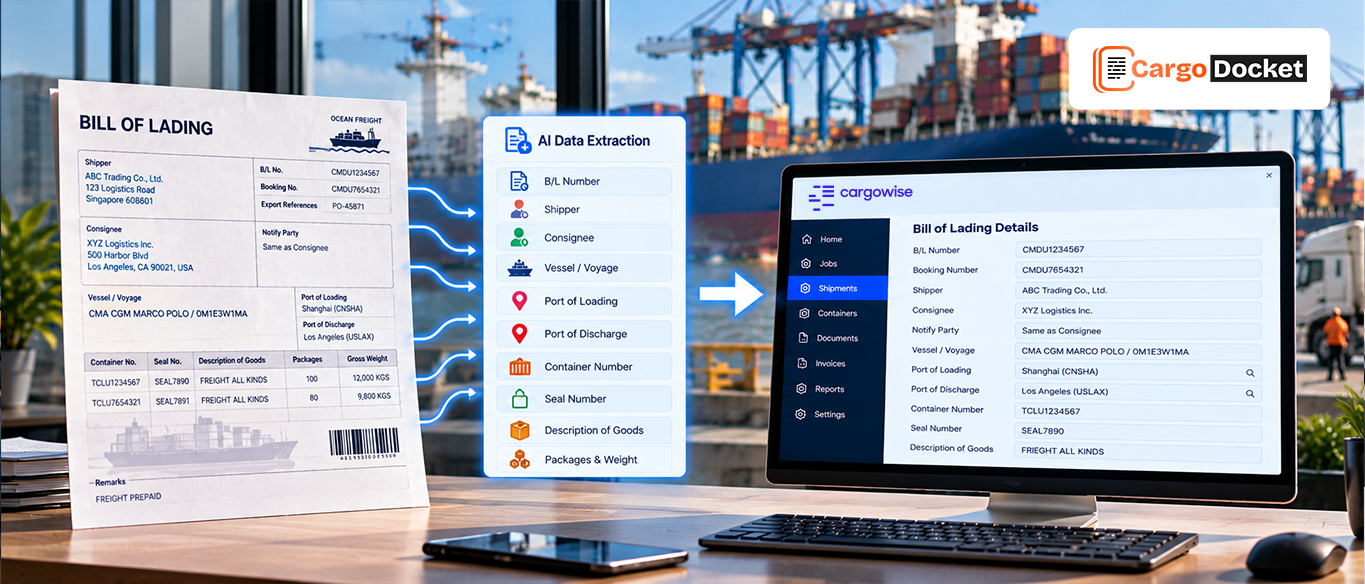
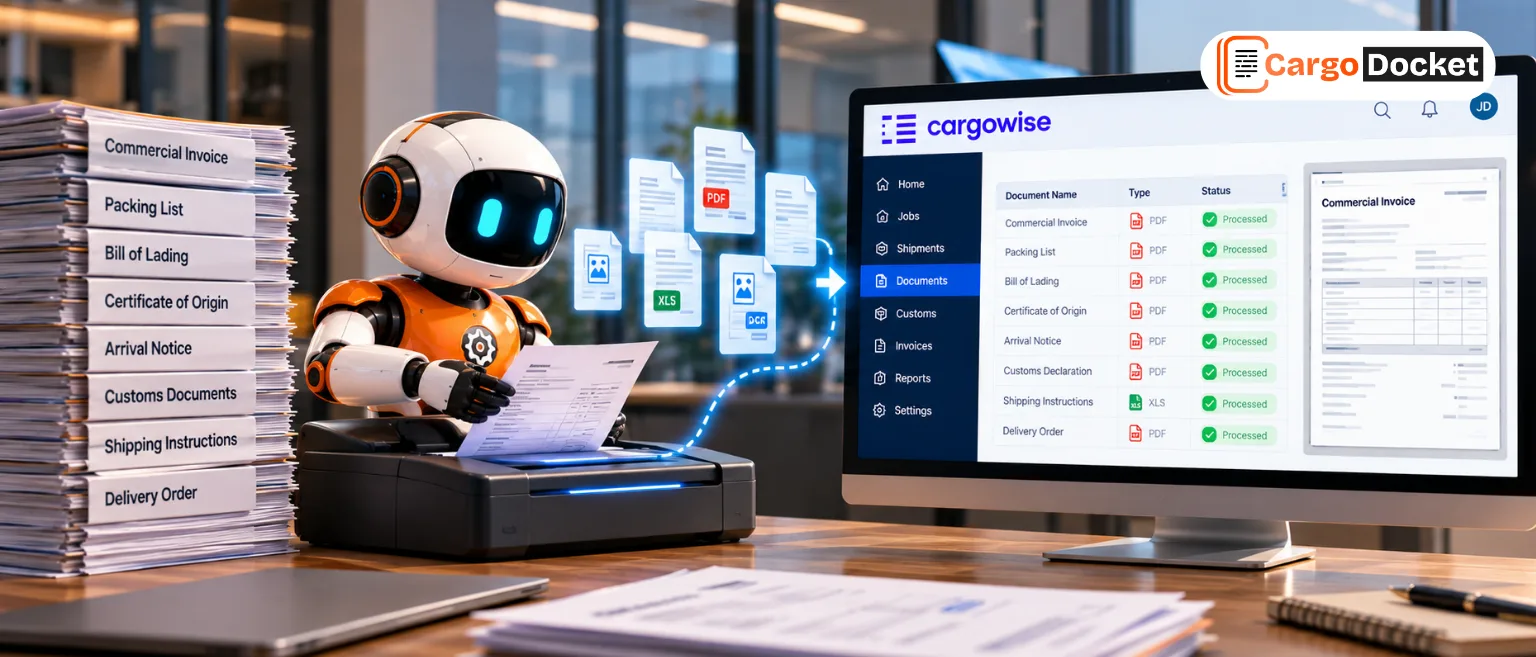
Instead of asking the freight forwarder to manually read every file and enter every relevant detail, AI can help identify documents, extract information, compare related data, and flag potential issues for review.
The difference is subtle but important.
The freight forwarder doesn’t disappear from the workflow. The freight forwarder role changes.
For example, imagine a customer sends several shipment documents through email.
Rather than someone opening every attachment and manually collecting the information, AI can process the documents and organize the relevant details. If something appears incomplete or inconsistent, it can bring that issue to the employee’s attention.
Now the person can focus on:
“What does this mean, and what should I do next?”
rather than:
“Where is this information, and where do I enter it?”
That shift can make a big difference in day-to-day operations.
👥 Where can Freight Forwarders Spend More Time?
Once routine documentation takes up less of the team’s attention, the freed-up time can be redirected toward work that benefits from human experience.
Customer communication is a good example.
Customers don’t always need another automated update. Sometimes they want someone to explain a delay, discuss available options, or help them understand what is happening with a shipment.
The same applies to exceptions.
A missing document might be easy to identify, but deciding how to handle the situation may require context. Is the shipment urgent? Is there a customer deadline? Does the issue affect clearance or delivery? Who needs to be contacted?
These are the kinds of questions where human judgment still matters.
Teams can also spend more time on:
- Resolving shipment exceptions
- Coordinating with customers and partners
- Reviewing unusual situations
- Following up on important issues
- Improving customer service
- Making operational decisions
In other words, AI can handle more of the repetitive work while people focus on the work that actually needs people.
⚙️ How does this Change the Day-to-Day Workflow?
The biggest change may not be a dramatic one.
It’s simply that the workflow starts with information that has already been organized and checked rather than information that someone has to manually gather first.
A typical process might look like this:
Documents arrive → AI processes information → Potential issues are flagged → Employee reviews the results → Action is taken
Compare that with a heavily manual workflow:
Documents arrive → Forwarder opens files → Reads information → Copies data → Checks details → Finds an issue → Investigates → Takes action
The second process can consume a lot of time before the actual decision even begins.
AI helps move the human into the part of the workflow where their judgment is most useful.
💬 Does AI Replace the Human Side of Freight Forwarding?
Not really. In many cases, it makes that human side more valuable.
Freight forwarding involves relationships, communication, negotiation, problem-solving, and decisions that don’t always fit neatly into a predefined process.
A customer with a shipment problem may need reassurance and a clear explanation. A complicated documentation issue may require someone to investigate several pieces of information before deciding what to do.
AI can provide the information and highlight where attention is needed. People still provide the context and judgment.
That creates a more practical division of work: machines handle repetitive processing, while people handle situations where experience and decision-making matter.
📈 What could this Mean for Freight Forwarding Teams?
The long-term opportunity goes beyond simply processing documents faster.
If routine documentation requires less manual effort, teams may be able to handle growing workloads without allowing administrative tasks to take over more of the working day.
More importantly, experienced employees can spend less time on repetitive data handling and more time on activities that directly support customers and operations.
The goal isn’t to automate every human interaction.
It’s to stop using valuable human time for tasks that technology can reasonably handle.
📌 Conclusion
The future of freight documentation isn’t about removing people from the process. It’s about giving them a better role in it.
As AI Document Automation handles more repetitive documentation work, freight forwarders can spend more time on customers, exceptions, coordination, and decisions that require real human judgment.
Want to spend less time buried in documents and more time moving your operations forward? Explore how AI Document Automation can help your team turn routine paperwork into time for higher-value work.