
How many shipment documents does your team process every day?
Bills of Lading arrive through emails, PDFs, and scanned attachments. Someone opens the file, reads the details, extracts shipment information, and manually enters it into the system. Then comes validation, cross-checking, and corrections.
It sounds routine, right?
But as shipment volumes increase, this process quietly becomes one of the biggest operational slowdowns inside freight forwarding.
That’s exactly why freight forwarders in 2026 are turning to BOL Automation to process shipments faster, reduce manual work, and improve operational accuracy.
📄 What is a Bill of Lading and Why does BOL Automation Matter?
A Bill of Lading (BOL) is one of the most important shipping documents in logistics. It acts as a shipment receipt and contains critical details such as shipment references, container numbers, cargo information, consignee details, and routing instructions.
This document drives key workflows across shipment creation, tracking, invoicing, and compliance.
The challenge is that most Bills of Lading still arrive as PDFs or scanned files, requiring teams to manually review and enter the same information into systems like CargoWise or ERP platforms.
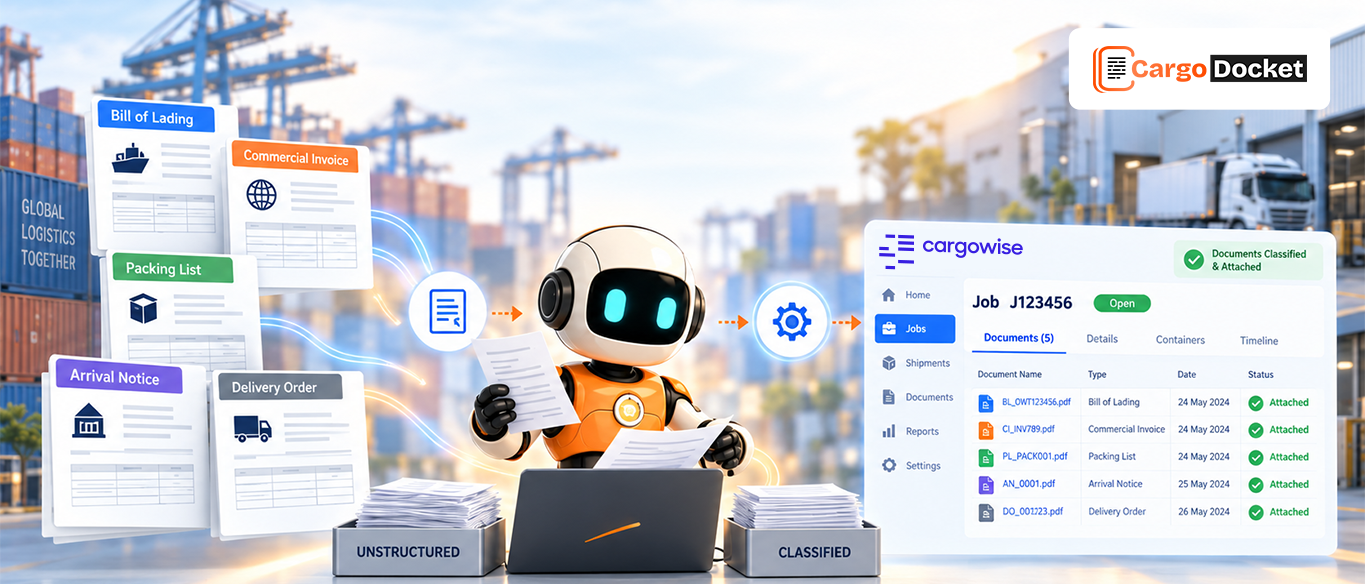
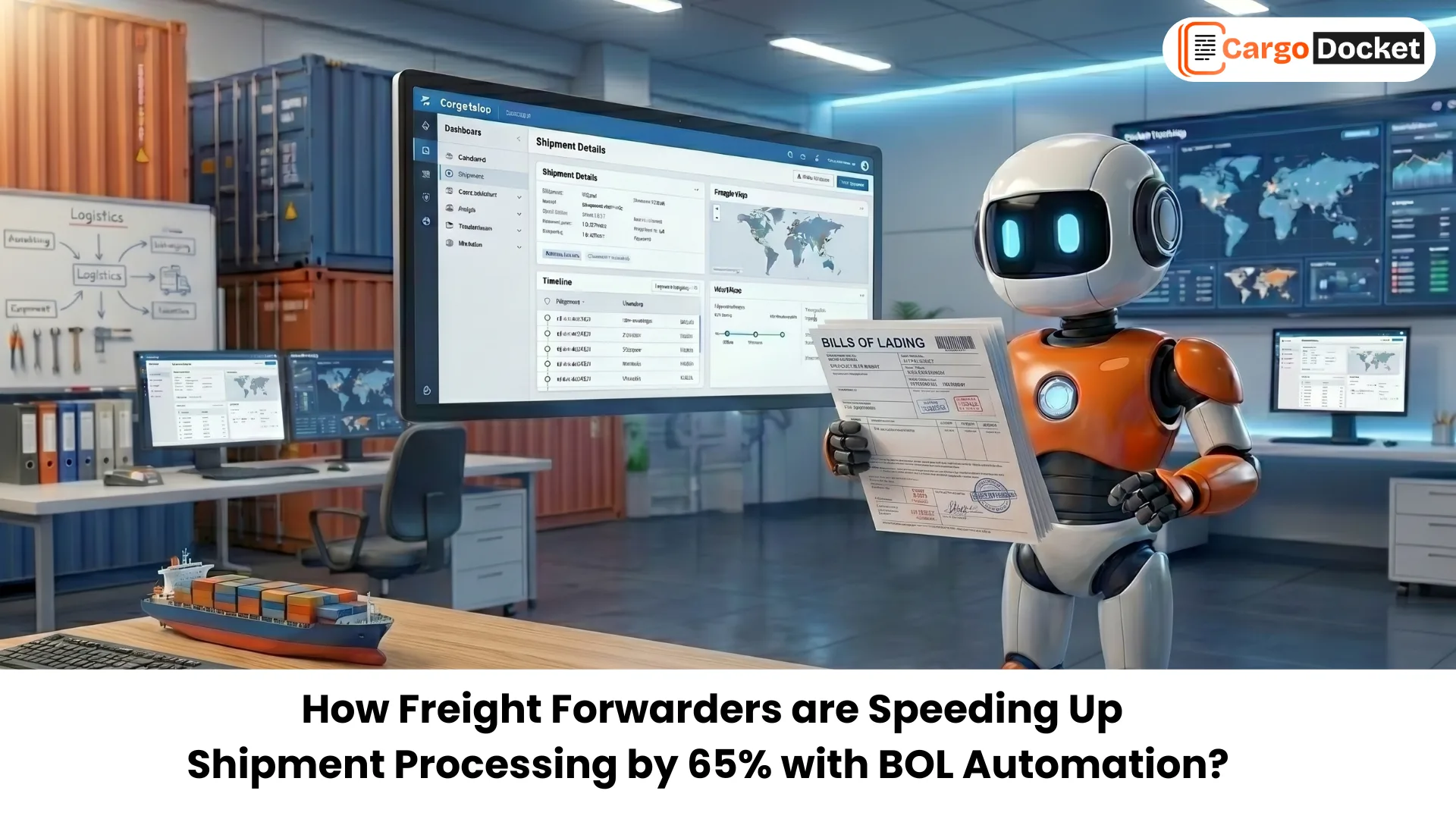
BOL Automation changes this process completely. Instead of manually handling documents, AI automatically reads the Bill of Lading, extracts shipment data, validates details, and transfers information directly into operational systems.
This helps freight forwarders:
- Reduce manual data entry
- Improve shipment accuracy
- Speed up operational workflows
- Minimize delays caused by document errors
In modern freight operations, BOL Automation is becoming essential for handling growing shipment volumes efficiently.
⚠️ The Real Problem with Manual BOL Processing
For many freight forwarders, shipment processing still depends heavily on manual document handling.
Teams spend hours reviewing Bills of Lading, extracting shipment details, and updating systems manually. As shipment volumes grow, this process becomes harder to manage and increases operational pressure on teams.
The biggest issue is not just time, it’s consistency.
Manual workflows often lead to:
- Delays in shipment creation
- Incorrect shipment references or container details
- Duplicate data entry across systems
- Slower invoicing and financial updates
- Increased operational workload
Even small document errors can create delays across the shipment lifecycle.
🔄 How BOL Automation Changes the Workflow?
This is where BOL Automation creates a major operational shift. Instead of manually reviewing documents, AI-powered automation processes Bills of Lading instantly. It extracts shipment data, validates information, and prepares it for operational systems automatically.
The workflow becomes significantly faster because teams no longer need to re-enter the same information repeatedly.
With BOL Automation:
- Shipment details are captured automatically
- Container numbers and references are validated instantly
- Data flows directly into systems like CargoWise
- Shipments can be created faster with fewer manual steps
What previously took several minutes per shipment can now happen in seconds.
📊 Why Freight Forwarders are Seeing Faster Processing?
The speed improvement comes from eliminating repetitive manual work. Instead of spending time opening documents, copying shipment details, and validating entries, teams can focus on managing operations and handling exceptions.
Freight forwarders implementing BOL Automation are improving processing speed because:
- Data extraction happens automatically
- Shipment workflows move faster
- Document validation has been reduced significantly
- Information flows instantly between systems
This creates a more connected workflow where operations, finance, and documentation stay aligned in real time.
📦 Faster Shipment Creation with Better Accuracy
Speed alone is not enough in freight forwarding. Accuracy matters just as much.
One incorrect shipment reference or container number can create delays, billing issues, or customer complaints. Manual processing increases the risk of these errors because the same information is handled multiple times.
BOL Automation improves accuracy by standardizing how shipment data is captured and validated before entering operational systems.
This helps freight forwarders:
- Reduce shipment creation errors
- Improve operational consistency
- Maintain cleaner data across systems
- Minimize delays caused by incorrect documentation
The result is a faster and more reliable shipment workflow.
🔗 Better Connectivity Across Operations and Finance
One of the biggest advantages of BOL Automation is improved system connectivity.
Many freight forwarding businesses have separate operational and financial platforms. Often, shipment information must be manually transferred between teams.
BOL Automation helps bridge this gap by allowing shipment data extracted from Bills of Lading to flow directly into operational and financial systems.
This creates:
- Faster coordination between operations and finance
- Improved invoicing workflows
- Real-time shipment visibility
- Better reporting accuracy
Instead of managing disconnected processes, teams operate within a connected workflow.
🧠 Why Automation is Becoming Essential in 2026?
Shipment volumes are increasing, customer expectations are rising, and freight forwarders are under pressure to process shipments faster while maintaining accuracy.
Manual document handling is becoming harder to sustain at scale. Businesses that continue relying heavily on manual workflows often experience slower processing times, operational obstacles, and higher workload pressure.
BOL Automation allows freight forwarders to scale operations without increasing manual effort. It creates a more efficient environment where information moves faster, and workflows remain consistent.
This is why AI automation is no longer seen as an optional upgrade, it is becoming a core operational requirement.
🚀 Final Thoughts
BOL Automation is helping freight forwarders transform shipment processing by reducing manual document handling, improving accuracy, and accelerating operational workflows, and as shipment volumes continue to grow in 2026, now is the right time to explore how AI Document Automation can smoothly process your Bill of Lading, eliminate repetitive tasks, and help your logistics operations move faster with greater efficiency and control.