
Freight teams manage hundreds of shipment details every day, from customer information and cargo data to creating operational jobs inside CargoWise.
But manually reviewing documents, entering shipment details, and creating jobs can take several minutes per shipment, adding hours of repetitive work every week.
With Shipment Creation Automation in CargoWise, teams can automatically convert shipment data into ready-to-process jobs faster and more accurately.
Less Manual Work | Faster CargoWise Job Creation | Better Shipment Visibility
Automation helps logistics teams reduce repetitive processing and build smarter workflows across brokerage, transport, and warehouse operations.
📦 What is Shipment Creation Automation in CargoWise?
Every shipment starts with information. Before freight teams manage customs clearance, transportation, warehouse movements, or customer updates, shipment records need to be created accurately inside CargoWise.
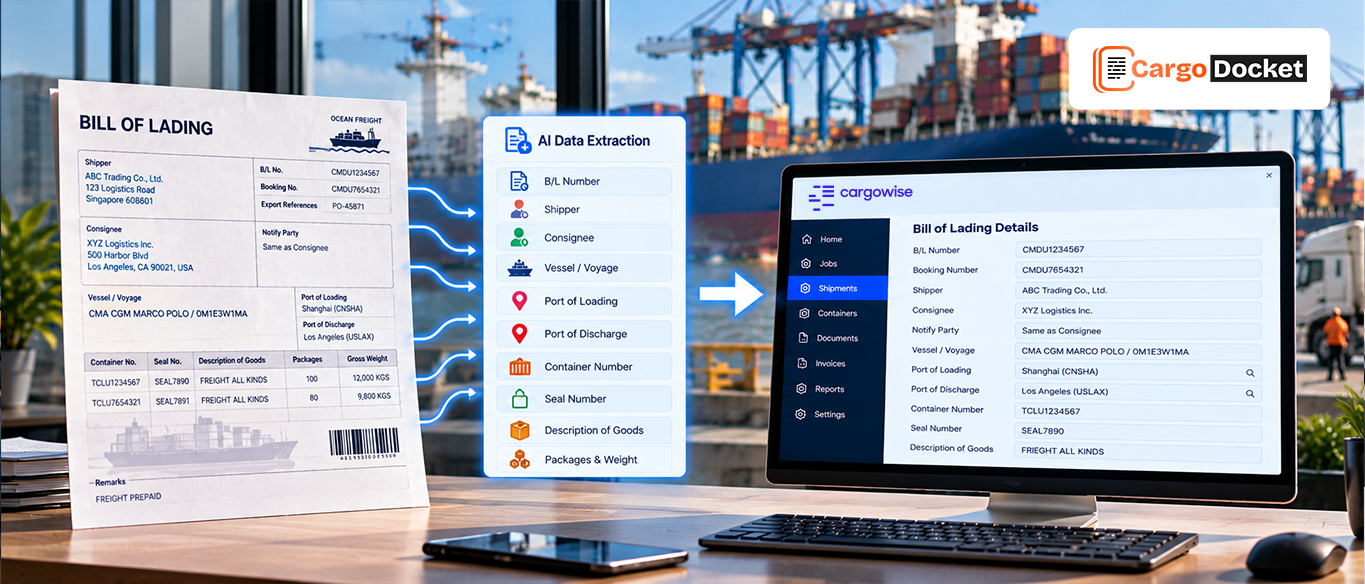
Shipment Creation Automation in CargoWise uses AI to capture shipment information from documents, validate the data, and automatically create operational jobs.
It helps process details such as:
- Customer and consignee information
- Origin and destination details
- Cargo and container information
- Shipment references
- Transport requirements
For high-volume freight teams managing hundreds or thousands of shipments monthly, automation helps remove repetitive data entry and keeps CargoWise workflows updated faster.
Instead of spending time creating records, teams can focus on managing exceptions and moving shipments forward.
⏳ Why Manual Shipment Creation Creates Operational Obstacles?
Creating shipments manually in CargoWise involves more than entering a few fields.
Operations teams receive information from emails, PDFs, booking documents, and customer instructions. Every detail needs to be reviewed, copied, verified, and entered correctly.
Across large shipment volumes, these small activities add up quickly.
Manual processing often creates:
- 5–15 minutes spent creating each shipment record manually
- Higher chances of errors from repeated data entry
- Delays between document receipt and job creation
- More time spent correcting information later
Even small delays during shipment setup can impact customs processing, transport planning, warehouse coordination, and customer communication.
That is why freight forwarders are shifting toward automated CargoWise workflows.
🤖 How AI Automates Shipment Creation in CargoWise?
AI-powered shipment automation connects incoming documents directly with CargoWise workflows. Instead of teams manually transferring information, AI helps move data through a structured process.
📥 Documents Received Automatically
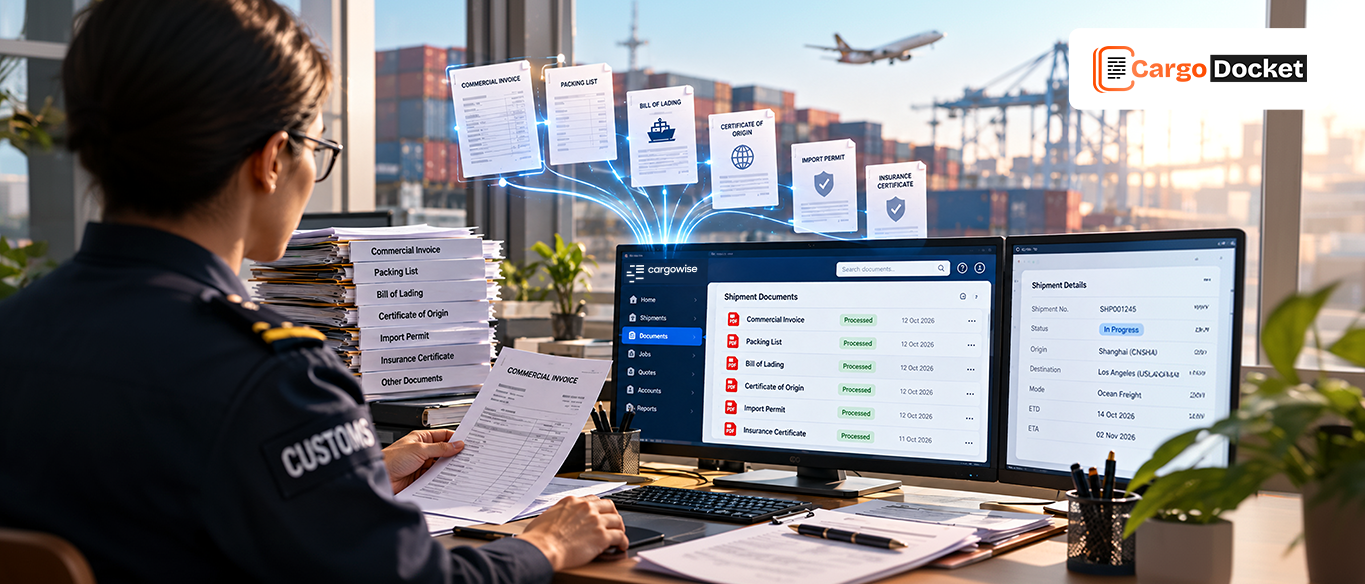
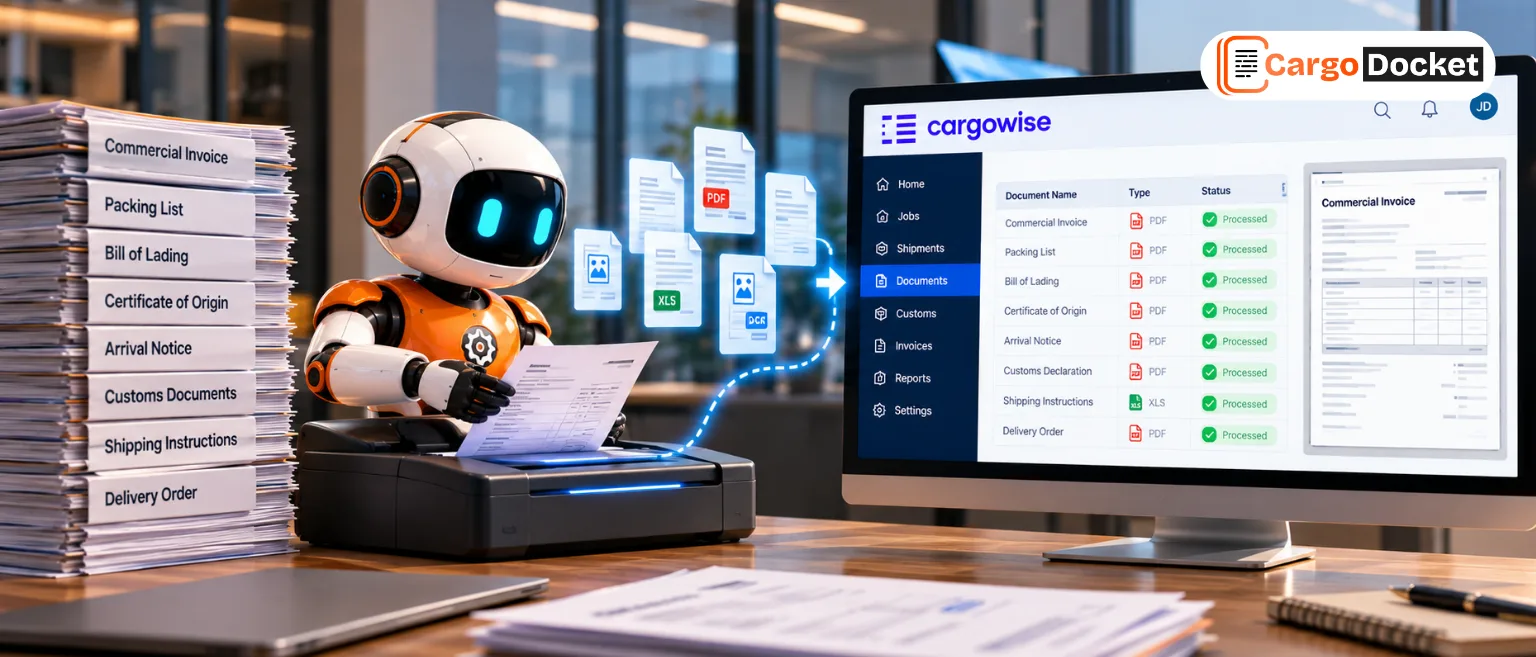
Shipment documents arrive through emails, customer portals, scanners, and shared folders. AI collects and organizes incoming files so teams no longer spend time searching and sorting documents manually.
🧠 AI Extracts Shipment Data
AI reads shipment documents and captures important details, including:
- Customer information
- Shipment references
- Cargo details
- Dates and locations
- Transport information
This helps reduce manual copying and converts documents into structured CargoWise-ready information.
✅ AI Validates and Flags Exceptions
Accuracy is critical in logistics. AI checks extracted information before job creation and identifies:
- Missing details
- Duplicate records
- Incorrect information
- Data mismatches
Instead of reviewing 100% of shipment documents manually, teams can focus on the smaller percentage that actually needs attention.
🔗 CargoWise Jobs Created Automatically
Once data is verified, shipment information moves in CargoWise. Operational jobs are created automatically, helping teams process shipments faster while maintaining accurate records.
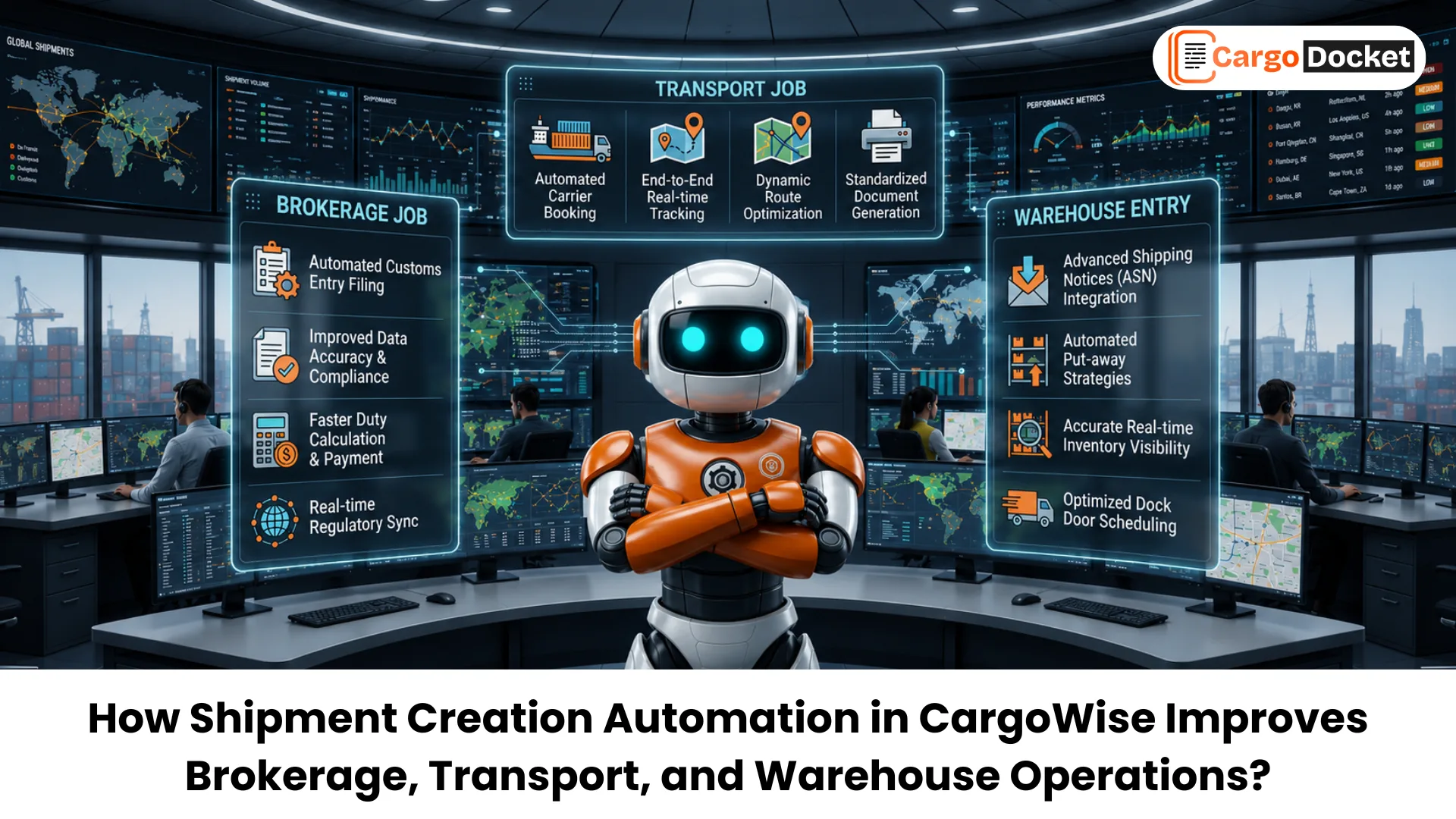
🚢 Automating CargoWise Brokerage, Transport, and Warehouse Job Creation
Different shipments require different workflows. Shipment Creation Automation in CargoWise helps create the right operational job based on shipment requirements.
📄 CargoWise Brokerage Job Creation
Customs teams depend on accurate information. Automation creates brokerage jobs using verified shipment data, helping teams reduce manual preparation work and focus on:
- Customs review
- Compliance requirements
- Exception handling
This supports faster clearance workflows and fewer documentation delays.
🚛 CargoWise Transport Job Creation
Transport operations require quick access to correct shipment information.
Automation creates transport jobs in CargoWise with the required details, helping improve:
- Carrier coordination
- Scheduling accuracy
- Shipment planning
Teams can spend less time entering data and more time managing movements.
🏭 CargoWise Warehouse Entry Creation
Warehouse teams need accurate cargo information before goods arrive.
Automation creates warehouse entries in CargoWise with shipment details, supporting:
- Faster receiving processes
- Better cargo visibility
- Improved warehouse coordination
This keeps operations connected from shipment creation to cargo handling.
📊 Moving from Manual CargoWise Processing to Intelligent Operations
Shipment automation is changing how freight teams manage daily operations.
Traditional workflows depend on:
Manual entry → Document checking → Corrections → Updates
Modern AI-powered workflows move toward:
Document capture → AI extraction → Validation → CargoWise job creation
With automation, logistics teams can achieve:
- Faster shipment processing
- Reduced repetitive work
- Improved data accuracy
- Better operational visibility
The result is a smarter workflow where people manage decisions while automation manages repetitive tasks.
🚀 Final Thoughts
Shipment creation is where every freight operation begins. When this first step becomes faster and more accurate, brokerage, transport, and warehouse workflows operate more efficiently.
With AI Document Automation, logistics teams can capture shipment data, validate information, and automatically create CargoWise jobs without spending hours on repetitive manual entry.
The future of freight operations is about turning shipment information into action faster through smarter automation.