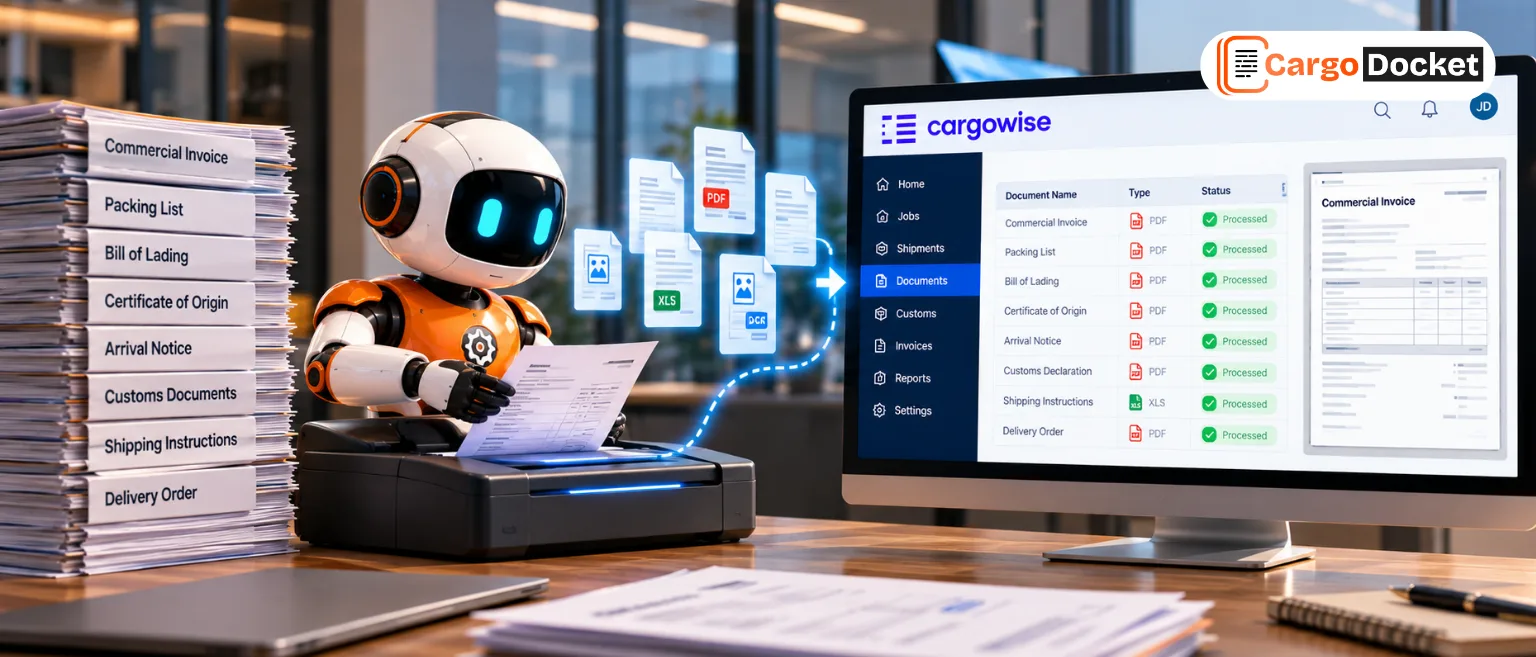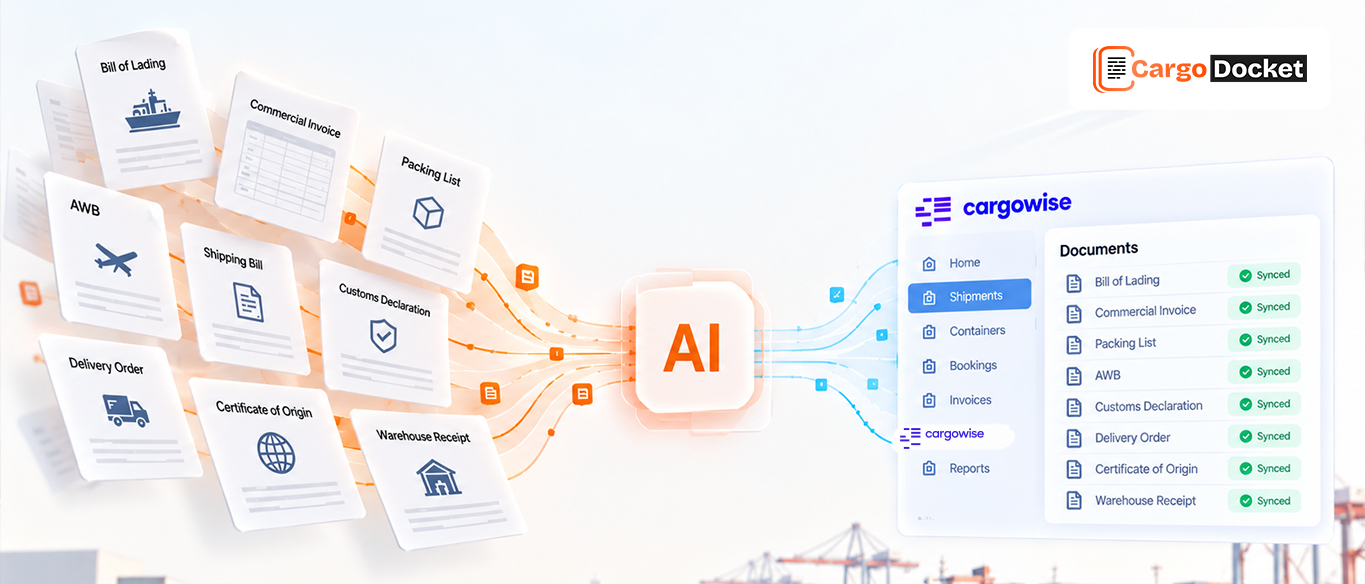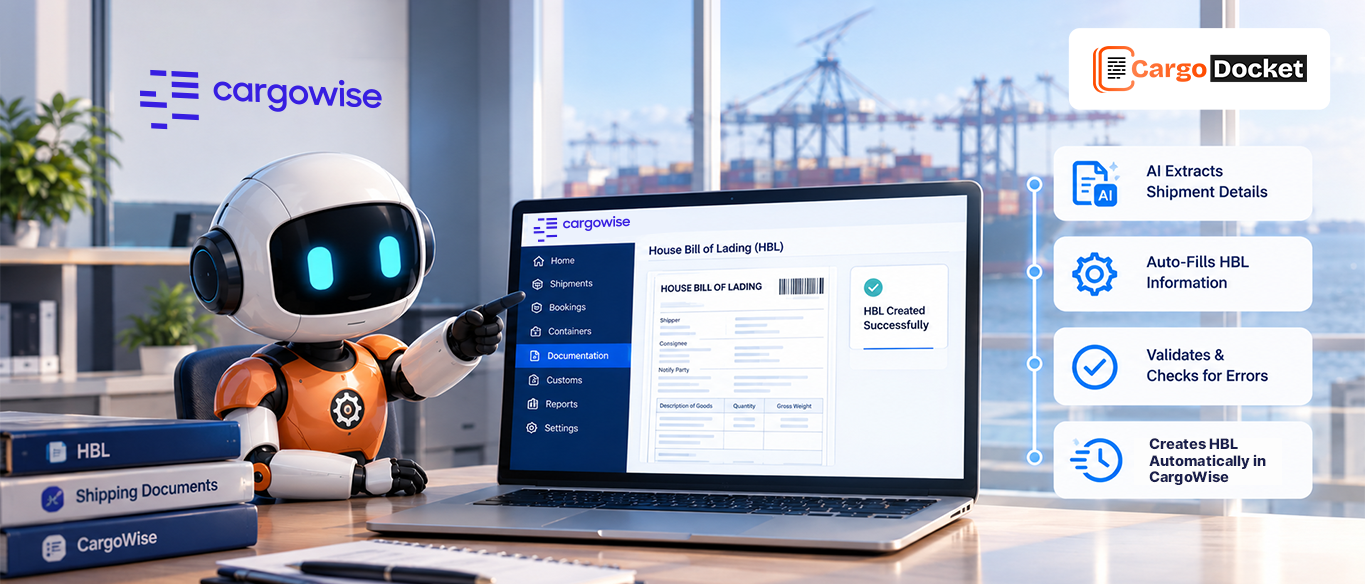

A shipment can move through several documents before anyone notices that something is off. A quantity may not match, a reference number may be missing, or an invoice may show a value that doesn’t line up with the original shipment information.
These may seem like small issues, but in a busy logistics operation, small document discrepancies can quickly turn into emails, follow-ups, rework, and delays.
That is why AI is starting to play a bigger role in document exception management. Instead of stopping at data extraction, AI can help compare information, spot inconsistencies, and bring the right issues to a team’s attention before they move further downstream.
🔎 What Makes Document Exceptions a Bigger Problem than They Seem?
Logistics teams deal with documents that carry connected information across the shipment lifecycle. A change or mistake in one document can affect what happens next.
For example, information may need to stay consistent across:
- Purchase orders
- Commercial invoices
- Packing lists
- Bills of Lading
- Booking documents
- Customs documents
- Delivery documents
The challenge is that checking these details manually takes time. Teams may need to open several documents, compare fields, track down the source of a mismatch, and decide whether it actually needs correction.
That’s where exceptions become a workflow problem, not just a document problem.
🤖 How can AI Identify an Exception?
AI can look at the information captured from a document and compare it with related shipment information or other documents.
Rather than simply asking, “What does this document say? “The process can also ask:
- Does the information match the related document?
- Is anything missing?
- Has a value changed unexpectedly?
- Does the information fall outside the expected range?
- Is this a genuine exception or just a formatting difference?
For instance, if a commercial invoice shows 500 units while the related purchase order shows 450, AI can flag the difference for review rather than allowing the discrepancy to pass unnoticed.
This adds another layer to document automation: understanding whether the information makes sense in context.
⚙️ What Happens After AI Finds the Problem?
Finding an exception is only the beginning.
Once a discrepancy is identified, AI can help organize the next step based on the type and seriousness of the issue.
A typical flow could look like this:
Document Received → Information Extracted → Data Compared → Exception Detected → Issue Categorized → Appropriate Action → Human Review if Needed – CargoWise ERP
A missing reference might require additional information.
A small formatting difference may not require any action.
A significant quantity or value mismatch may need someone from operations or finance to investigate.
This approach helps teams spend less time checking everything manually and more time focusing on the cases that actually need attention.
👤 Where does Human Review Fit in?
AI doesn’t have to make every decision on its own.
In logistics, some exceptions are straightforward, while others can affect customs, billing, compliance, or customer commitments. Those cases may still require experienced people to review the information and make the final call.
A practical approach is to divide the workload:
- Clear and consistent information: Continue through the workflow
- Low-risk exceptions: Follow predefined rules
- Unclear cases: Send for review
- High-impact discrepancies: Require human approval
This creates a balance between automation and control. AI handles the repetitive checking, while people focus on decisions that require context and judgment.
📊 Why is Early Detection So Important?
The earlier an exception is found, the easier it can be to deal with. A discrepancy caught when a document first enters the workflow may take minutes to resolve. The same issue discovered after shipment processing, billing, or customs activity can require several teams to investigate.
That can lead to:
- More manual follow-ups
- Repeated data entry
- Workflow obstacles
- Delayed processing
- Downstream corrections
- More time spent chasing information
AI-based exception detection shifts the focus from fixing problems later to finding them earlier.
🔄 Where is Document Automation Heading?
This is where the role of AI in document processing is changing. Traditional automation has largely focused on getting information from documents and reducing manual data entry. The next step is making that information useful within the wider workflow.
That doesn’t mean every exception will be handled automatically. Instead, AI can help make the workflow more intelligent by identifying what is normal, what needs attention, and where human involvement makes sense.
📌 Conclusion
Document automation is moving beyond simply extracting information. With AI, logistics teams can also identify document exceptions earlier, understand discrepancies, and focus human attention where it matters most.
AI Document Automation is becoming less about reading documents and more about keeping the information behind logistics workflows accurate, connected, and actionable.