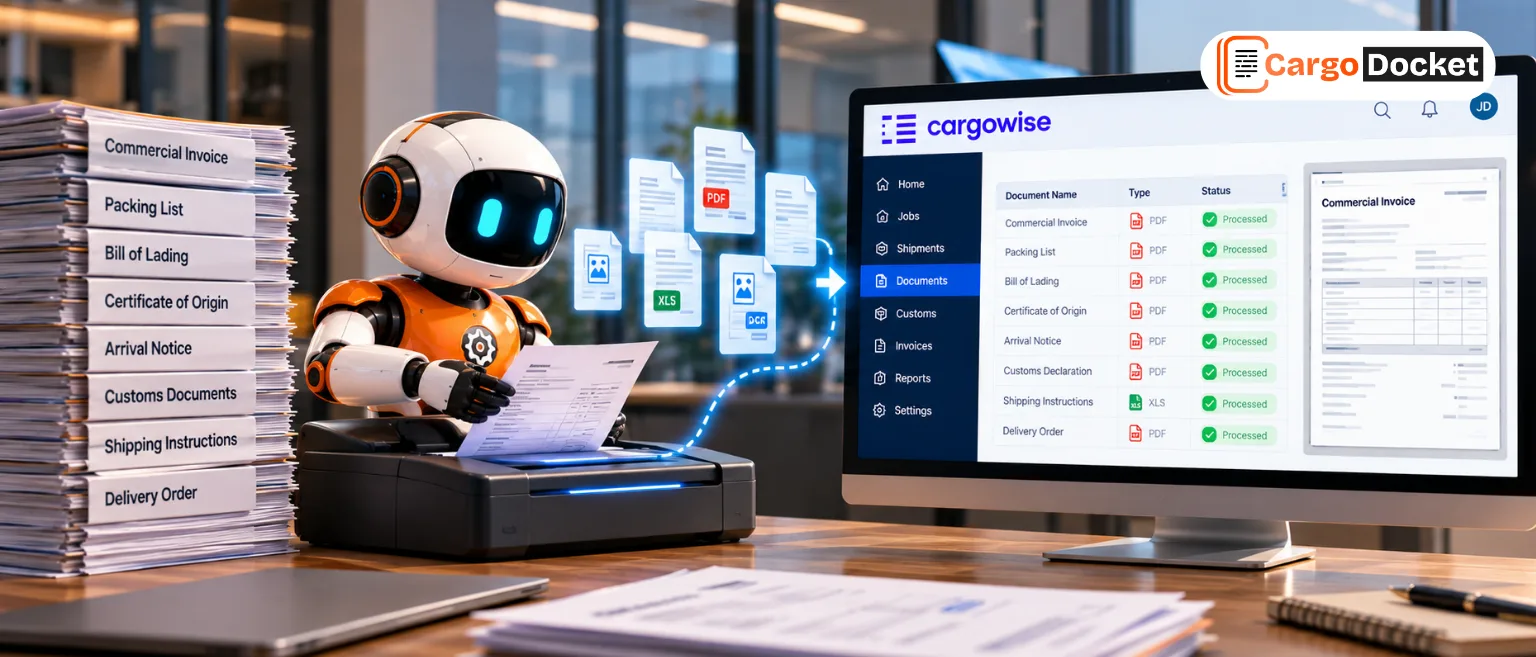

Freight invoicing has quietly become one of the most complex and time-sensitive areas in finance operations. As logistics volumes grow and pricing structures become more dynamic, traditional invoice processing methods are struggling to keep pace.
Today, organizations operating on ERP systems like CargoWise are facing increasing pressure to process invoices faster while maintaining accuracy.
In many cases, finance teams still spend a significant portion of their time verifying invoice data instead of analyzing it. This slows down approvals, delays payments, and limits real-time visibility into cash flow.
That’s why CFOs are now adopting AI document automation within ERP systems to simplify freight invoicing, reduce errors, and gain better financial control.
📊 Why Traditional Freight Invoice Processing is Slowing Finance Teams?
Freight invoices are rarely standardized. Each document includes multiple charge components, varying formats, and dependencies on shipment-level data.
To process an invoice, finance teams must:
- Validate shipment references and job details
- Match charges with rate agreements and contracts
- Cross-check accruals before posting
This creates delays across the workflow.
Key challenges:
- Manual data entry slows down processing cycles
- Different vendor formats increase validation efforts.
- Approval delays impact vendor relationships
- Limited visibility into actual freight spend
As a result, invoice processing often extends beyond a week, affecting both operational efficiency and financial reporting.
🤖 How AI Document Automation Works in ERP Systems?
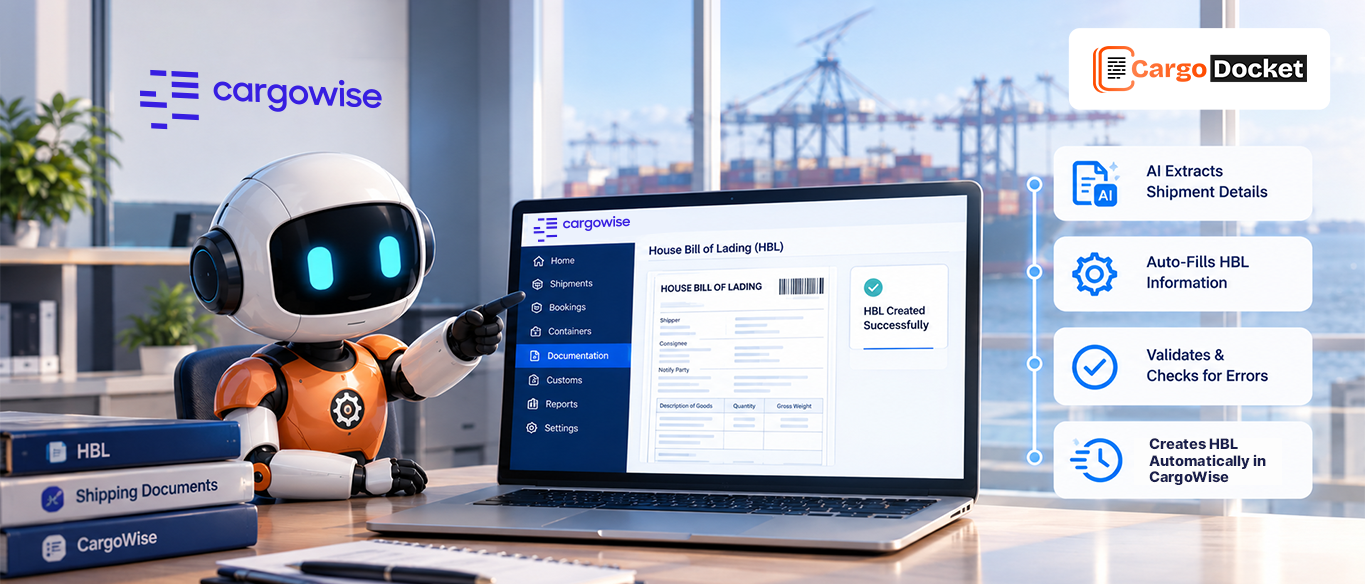
AI document automation introduces a structured, intelligent workflow that aligns with how finance teams already operate but removes the manual burden.
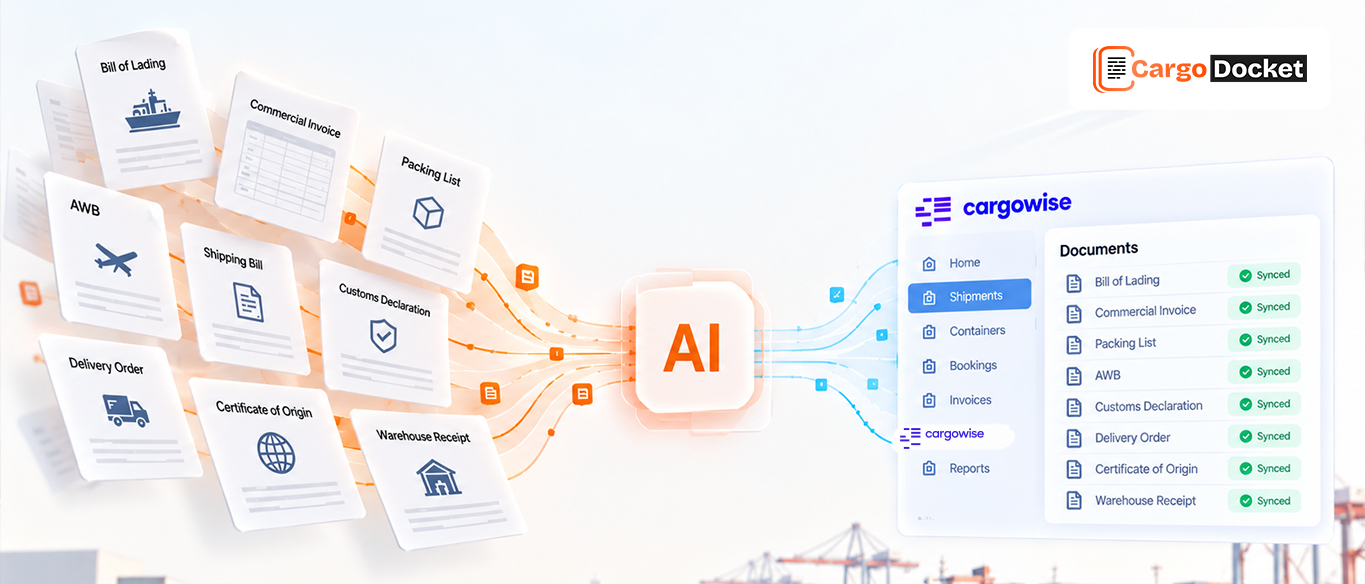
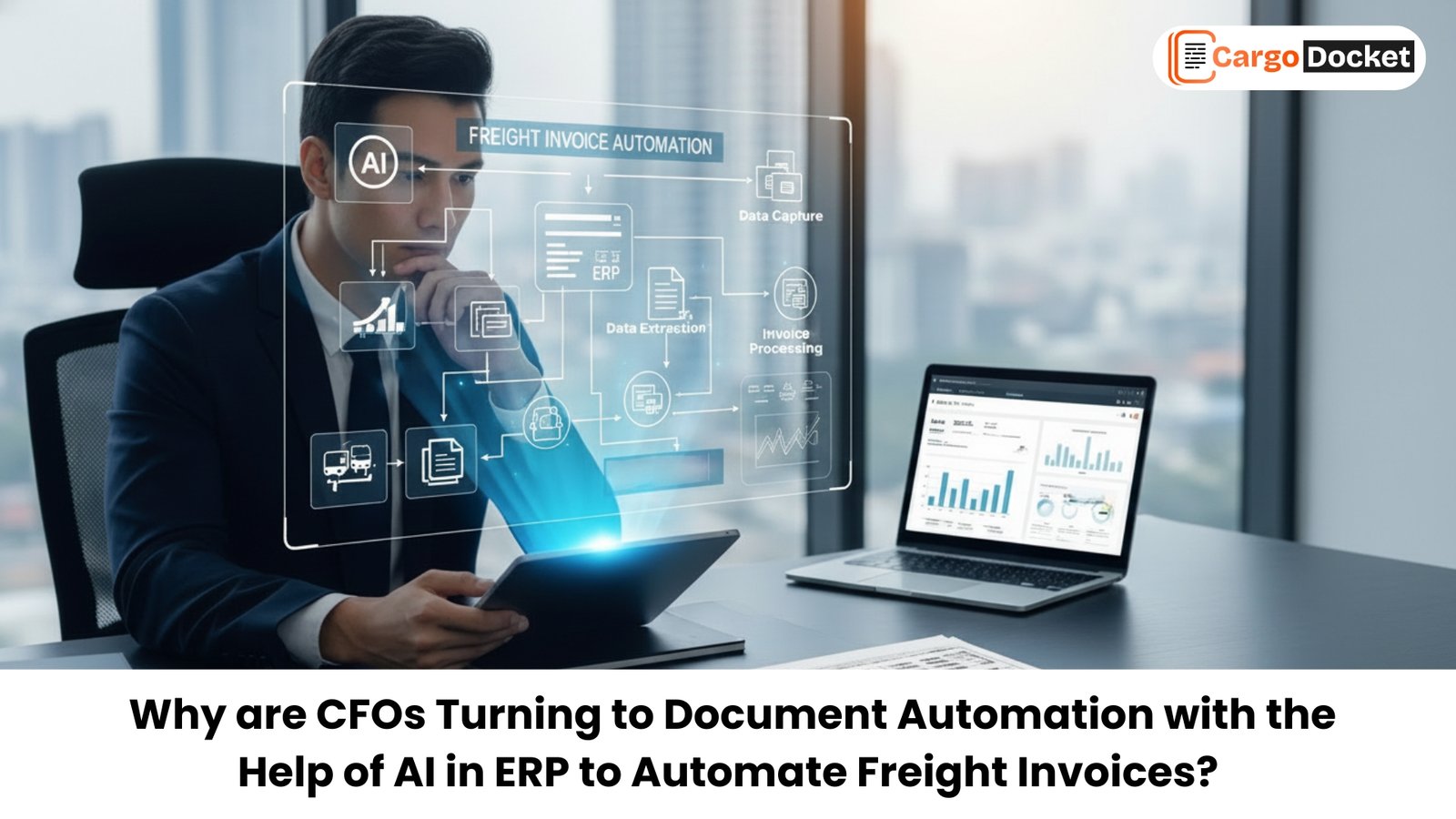
End-to-end automation flow:
- Invoice capture
Collects invoices from emails, PDFs, EDI, and scanned sources - Data extraction
Extracts supplier details, invoice numbers, line items extraction, and charges - Validation and matching
Matches invoice data with ERP records, shipment details, and purchase orders - Exception handling
Flags mismatches instantly and routes them with context - Financial posting
Pushes validated invoices into the general ledger automatically
This ensures that invoices are validated before entering financial systems, reducing downstream corrections.
⚙️ Moving from Manual Processing to Intelligent Workflows
The shift to AI automation improves both speed and control. Instead of fixing issues after processing, finance teams can now detect and resolve discrepancies early in the workflow.
What improves immediately:
- Faster invoice approval cycles
- Reduced dependency on manual validation
- Higher data accuracy across transactions
- Better visibility into liabilities and payments
This enables finance teams to operate more efficiently while maintaining control over financial data.
💡 Why CFOs are Driving this Change?
CFOs are leading this transformation because it directly impacts financial performance and decision-making.
Automation allows finance leaders to focus on outcomes rather than processes.
Key benefits:
- Improved cash flow visibility through real-time data
- Faster processing from invoice receipt to approval
- Reduced risk of duplicate payments and errors
- Stronger compliance with complete audit trails
For CFOs, this means better forecasting, improved reporting, and more confidence in financial data.
📦 Managing Freight Complexity with Automation
Freight invoicing involves multiple cost layers across shipments, vendors, and routes. A single invoice may include transport charges, customs duties, handling fees, storage costs, and additional surcharges.
Common complexities:
- Multiple charge codes requiring accurate mapping
- Variations in invoice formats across vendors
- Dependency on shipment data for validation
- Challenges in aligning accruals with actual costs
AI automation applies consistent validation rules across all invoices, ensuring accuracy at scale.
🔄 How Finance Roles are Evolving?
As automation reduces manual workload, finance teams are shifting toward more strategic responsibilities.
This shift is also closely connected with accounting platforms like Xero, QuickBooks, and Sage 50, which rely on accurate, real-time financial data from ERP systems.
Instead of focusing on data entry, teams now:
- Monitor exceptions and resolve discrepancies
- Analyze freight spend across vendors and trade lanes
- Support forecasting and budgeting activities
- Improve payment strategies and supplier relationships
This evolution allows finance teams to contribute directly to business growth and financial planning.
📈 Measurable Impact on Financial Operations
Organizations implementing AI document automation within ERP systems are seeing measurable improvements across finance functions.
These include:
- Reduced invoice processing time
- Lower operational costs per invoice
- Improved freight accuracy by AI and fewer discrepancies
- Faster month-end closing cycles
A significant percentage of invoices can now be processed without manual intervention, improving overall efficiency and scalability.
🔮 Conclusion
Freight invoicing will always involve complexity, but it doesn’t have to slow down your finance operations.
AI document automation within ERP systems enables faster processing, better accuracy, and real-time financial visibility, helping CFOs stay in control as operations scale.
If your finance team is still managing invoices manually, now is the time to explore a more efficient approach.
Simplify your workflow, reduce errors, and gain the clarity needed to make faster financial decisions.