
A transport order arrives as a PDF. A carrier sends a spreadsheet. Another shipment comes with a scanned document attached to an email. The information is there, but someone still has to read it, understand it, and enter the right details into CargoWise.
That manual step can slow things down as shipment volumes grow.
AI can help bridge that gap by reading freight documents, identifying the information that matters, turning it into structured data, and preparing it for CargoWise TMS workflows. Instead of spending time rekeying information, teams can focus more on managing shipments and handling exceptions.
What Makes Unstructured Freight Data Difficult to Use in CargoWise?
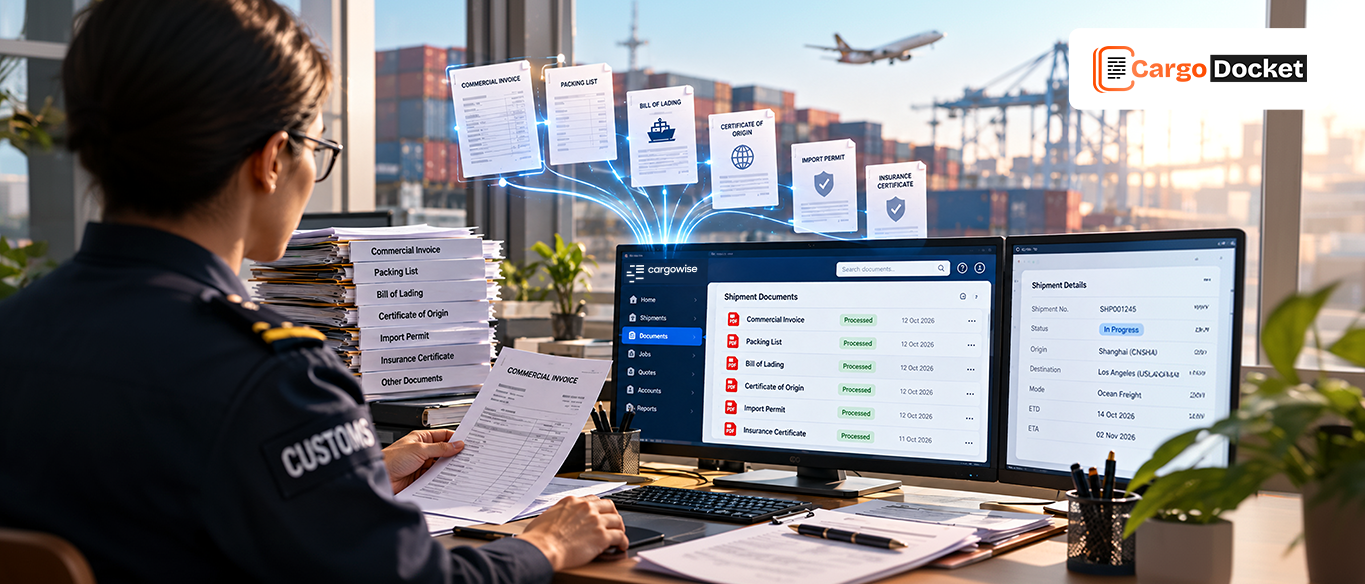
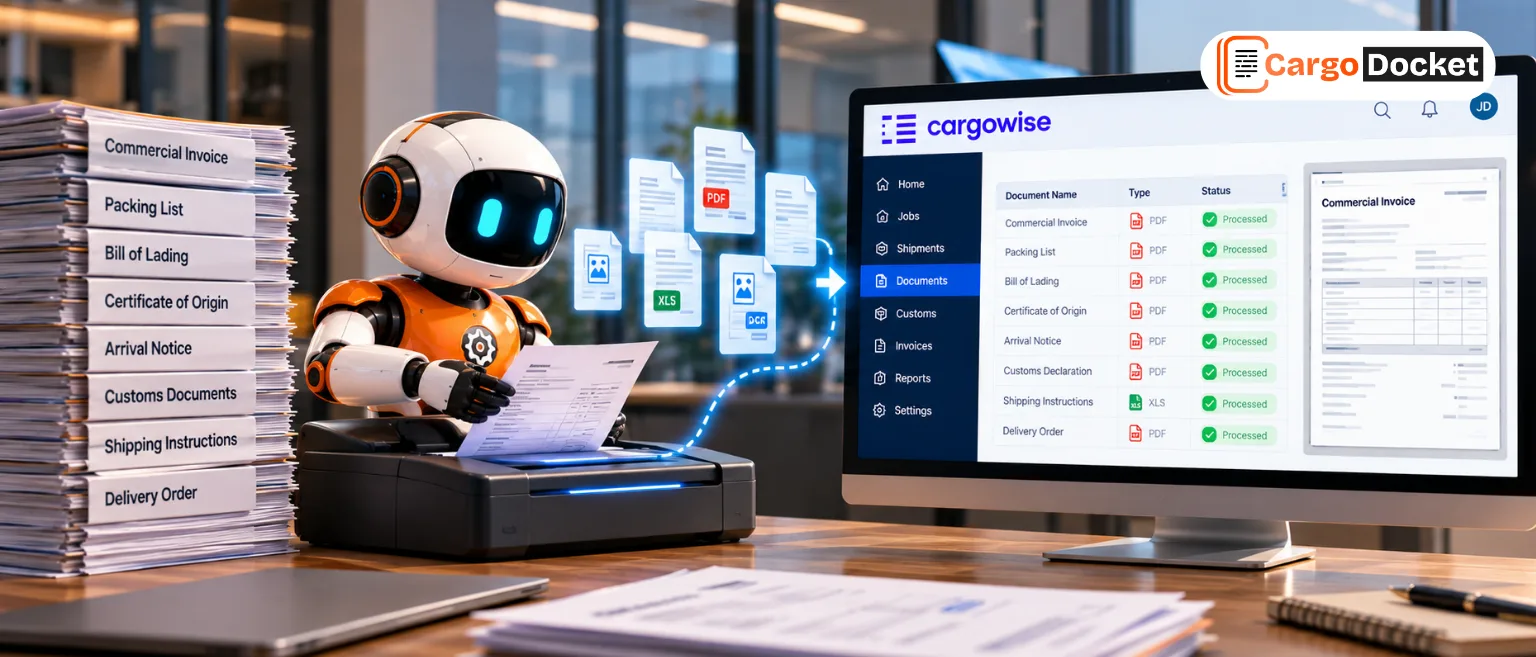
Freight information doesn’t always arrive in a clean, standardized format. One customer may send a transport order as a PDF. Another may use Excel. A carrier might send a booking confirmation by email, while a scanned delivery document arrives as an image.
The format changes, but the information needed by the transportation team often remains similar.
A freight document may contain:
- Shipment order references
- Customer details
- Pickup and delivery locations
- Container or equipment numbers
- Carrier information
- Commodity details
- Package quantity and weight
- Pickup and delivery dates
- Special handling instructions
For a person, finding these details may be fairly straightforward. The challenge is turning them into consistent information that a TMS can work with.
That’s what makes this unstructured freight data.
The information exists, but it is buried inside documents rather than organized into defined fields.
CargoWise supports transportation management and connected logistics workflows, but information arriving from external documents may still require processing before it can become useful within those workflows.
How does AI Extract and Understand Freight Information From Documents?
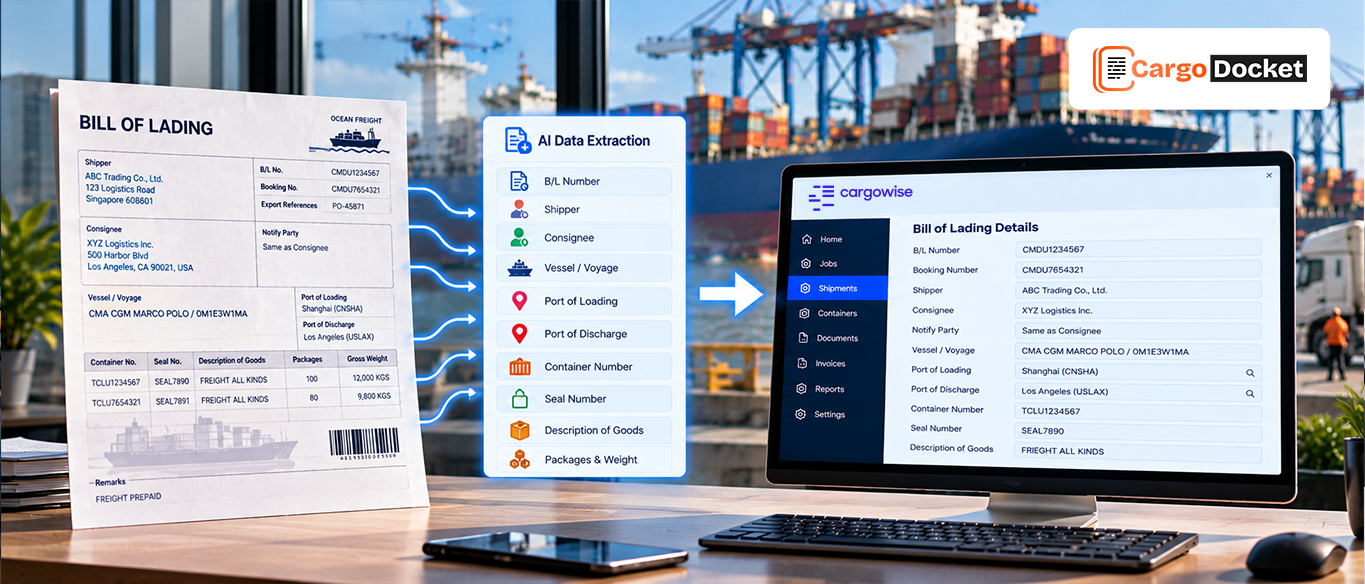
AI can take over much of the initial document-reading work. Instead of asking a freight forwarder to open every file and manually locate each field, AI can analyze the document and identify relevant information based on its content and context.
For example, a transport order might contain:
Container No.: ABCU1234567
Pickup: Dallas, TX
Delivery: Houston, TX
Pickup Date: September 12
Delivery Date: September 15
AI can identify those values as a container number, pickup location, delivery location, pickup date, and delivery date.
The important part is that AI isn’t simply copying words from a page. It is helping determine what those words and values mean in relation to the shipment.
That matters because freight documents don’t always use the same terminology. One carrier might use “Origin,” another might use “Pickup Location,” and another might simply list the address under a transportation section.
The layout can change without changing the underlying meaning.
AI can also work across different document formats, including PDFs, scanned documents, images, spreadsheets, and email attachments, depending on the configured workflow.
How does AI Turn Extracted Information Into Structured TMS Data?
Once AI identifies the relevant information, it can organize it into defined fields.
For example, information from a freight document could be converted into:
| Freight Information | Structured TMS Data |
| Order Reference | ORD-45821 |
| Customer Reference | CUST-7821 |
| Pickup Location | Dallas, TX |
| Delivery Location | Houston, TX |
| Container Number | ABCU1234567 |
| Pickup Date | September 12 |
| Delivery Date | September 15 |
| Package Count | 12 |
| Weight | 8,500 lbs |
Now the information isn’t trapped inside a paragraph, table, or scanned page.
It has become structured data that can be validated, mapped, and used by the appropriate transportation workflow.
That’s the real transformation.
The goal isn’t simply to make a PDF readable. It’s to turn the information inside that PDF into something a system can actually use.
This is especially useful when the same shipment information needs to move through multiple operational steps. Instead of repeatedly copying the details from the original document, structured data provides a more consistent starting point.
How is the Freight Data Validated Before it Enters CargoWise?
Extraction alone isn’t enough. The data needs to be checked before it moves forward.
AI can validate information based on configured rules and identify issues such as:
- Missing required fields
- Incorrect references
- Conflicting dates
- Missing container details
- Duplicate documents
- Customer or carrier mismatches
- Inconsistent quantities
If something doesn’t look right, it can be flagged for human review.
This creates a practical balance: AI handles routine processing, while people handle exceptions and decisions.
How does Structured Data Support CargoWise TMS Workflows?
Once the information has been extracted and validated, it can be mapped to the appropriate CargoWise fields and workflows.
Depending on the company’s setup, this information can support transport orders, pickup and delivery details, shipment references, equipment, carrier information, and dispatch activities.
Instead of starting with a blank record and manually recreating information from a document, teams can work with structured data that is already prepared for the next step.
This creates a stronger connection between incoming freight documents and transportation operations.
How can AI Reduce Manual Work and Improve TMS Visibility?
When shipment information is trapped inside documents, teams may spend time searching through emails and attachments just to find basic details.
Structured data can reduce that effort.
AI can help minimize repetitive data entry, reduce rekeying, improve consistency, and make important shipment information easier to access within the appropriate CargoWise workflow. The benefit isn’t simply processing documents faster. It’s giving operations teams cleaner information with less manual effort.
From Unstructured Documents to Usable CargoWise TMS Data
The journey is straightforward:
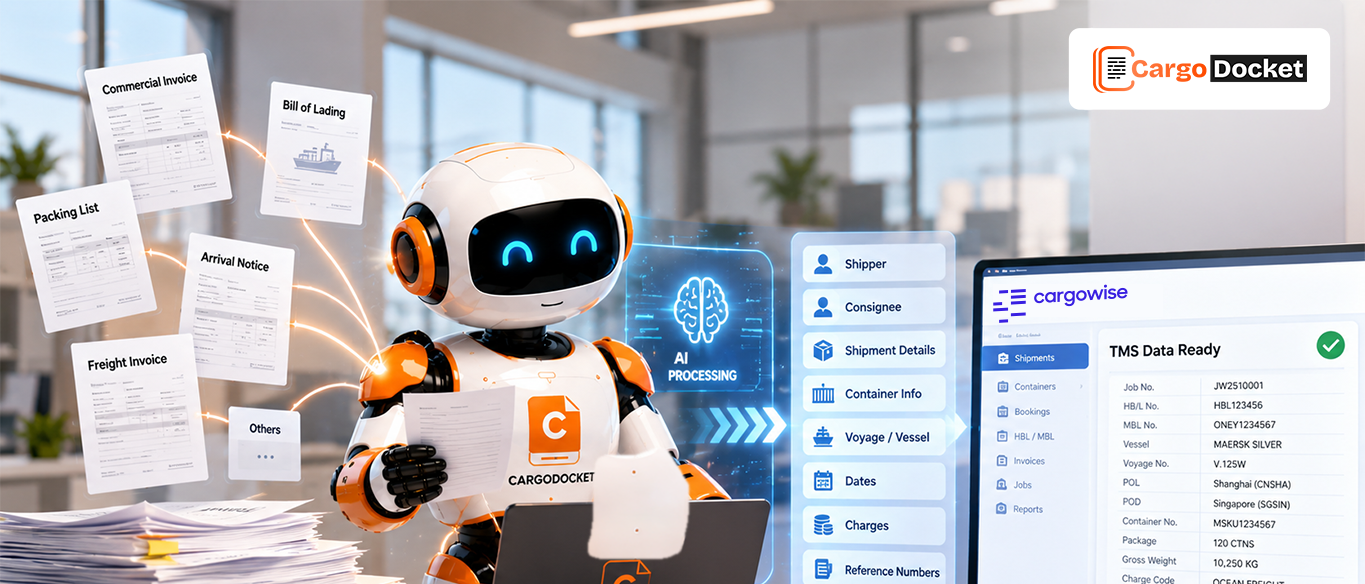
Freight document → AI extraction → Structured data → Validation → CargoWise TMS workflow
A transport order, booking confirmation, or other freight document starts as information designed for people to read. AI helps convert that information into structured fields that systems can process.
When the data is also validated before moving forward, teams can spend less time rekeying documents and more time managing transportation activities.
A PDF is built for people to read. Structured data is built for systems to use.
How can CargoDocket AI Support this Process in CargoWise?
CargoDocket AI can help automate the document-to-data process by reading incoming freight documents, extracting relevant information, validating the results, and preparing structured data for CargoWise workflows.
When information is missing or inconsistent, exceptions can be surfaced for review instead of being pushed forward automatically. This gives teams a simple division of work: AI handles repetitive document processing, while people focus on exceptions and operational decisions.
Conclusion
AI can turn freight information buried in PDFs, scans, spreadsheets, and emails into structured, validated data for CargoWise TMS workflows. By reducing repetitive data entry and improving data consistency, it helps teams spend less time processing documents and more time managing transportation operations.
Ready to turn your freight documents into usable CargoWise TMS data? Contact us to see how CargoDocket AI can help automate document processing and prepare structured data for your CargoWise workflows.