
A customer sends one payment to settle 20 outstanding freight invoices. But the remittance advice lists multiple invoice references, partial payments, and a few deductions that need checking.
Your finance team now has to identify the right invoices, compare amounts, investigate differences, and allocate the payment in CargoWise. Multiply that by dozens of customer receipts, and payment matching can quickly become a time-consuming task.
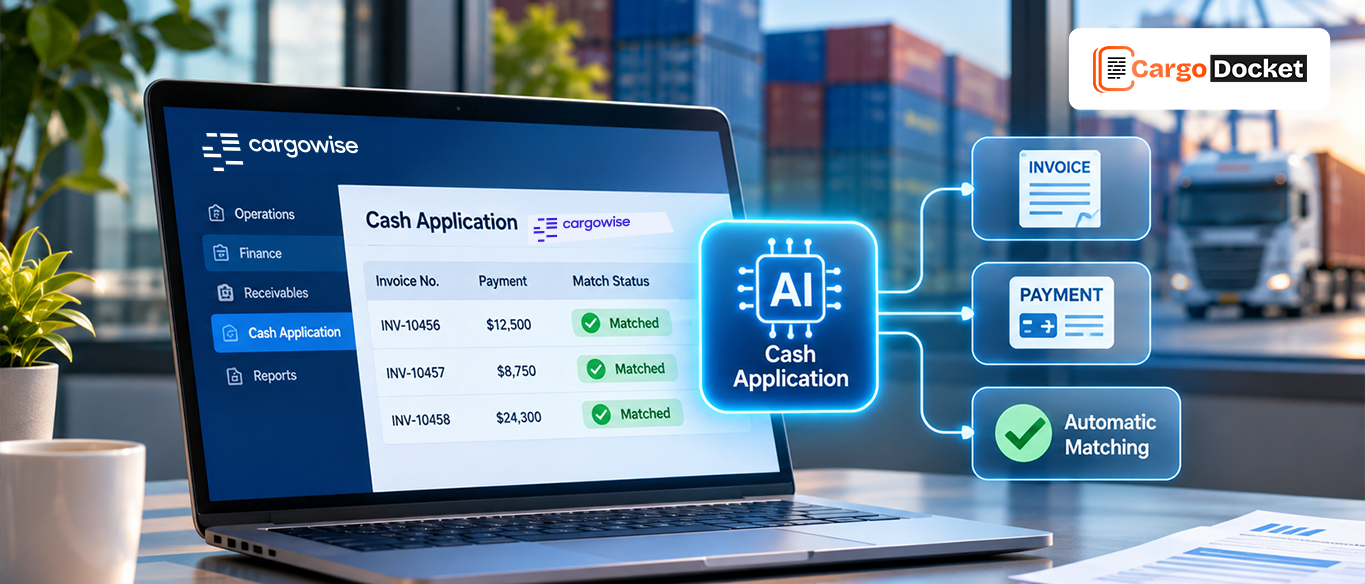
AI-powered cash application helps simplify this process by reading remittance details, identifying matching invoices, and supporting payment allocation in CargoWise. This gives your finance team more time to focus on exceptions and other important financial activities.
What is Cash Application, and Why does it Matter in Your CargoWise Finance Process?
Cash application is the process of matching customer payments with outstanding invoices and recording those payments against the correct customer accounts.
For freight forwarders, this isn’t always a straightforward task. A customer may settle several invoices through one payment, make a partial payment, or deduct agreed amounts before paying the balance.
For example, a customer has five outstanding freight invoices totaling $12,000 but sends only $10,500. Your finance team needs to identify which invoices the payment covers, understand the difference, and update the relevant records in CargoWise.
When you handle these activities manually, even routine payment allocation takes valuable time. AI-powered cash application helps organize payment information and match customer receipts with the right invoices.
Why does Matching One Customer Payment to Multiple Invoices Take so Much Work?
The challenge often begins when one customer payment covers several invoices. Your team may receive a bulk payment with a remittance advice containing multiple invoice numbers, payment references, and deduction details.
Some common situations make this process even harder:
- Bulk payments: One customer receipt needs to be allocated across multiple outstanding invoices.
- Missing remittance details: You receive a payment without enough information to identify the invoices.
- Partial payments: A customer settles only part of an invoice, leaving an outstanding balance.
- Netted deductions: Customers subtract credits, adjustments, or disputed charges from the amount they owe.
- Unclear invoice references: Remittance details contain incomplete or different references that make matching difficult.
Each situation requires your finance team to investigate the details before updating payment records. As payment volumes grow, manual matching can become a bottleneck.
How can AI Help You Find the Right Invoices from Customer Remittance Details?
AI automation reduces the manual work involved in reading remittance advice and identifying the invoices a customer intends to pay.
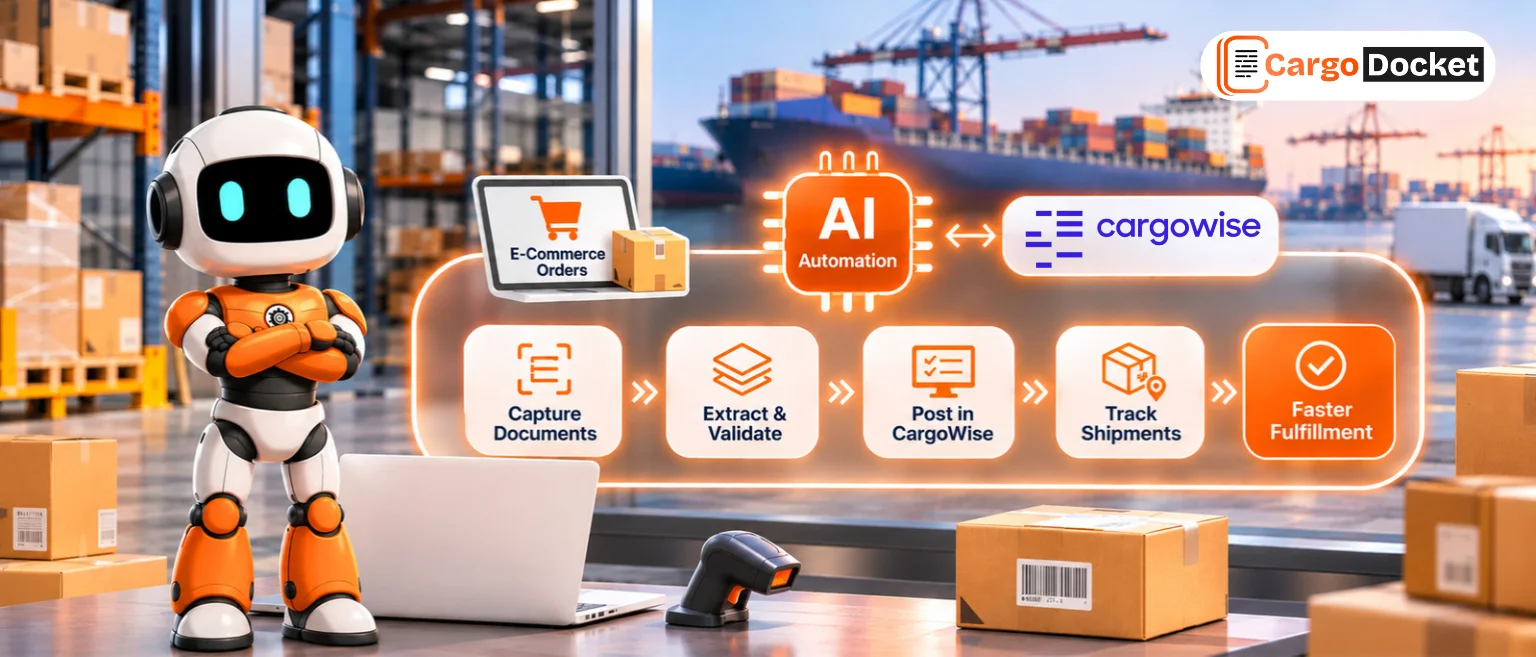
Instead of opening every document and searching for invoice references individually, AI can extract relevant payment information and compare it with outstanding invoice records in CargoWise.
A typical workflow involves:
1. Read customer remittance details.
AI reads supported remittance documents, such as PDFs and spreadsheets, and extracts customer details, invoice numbers, payment amounts, and listed deductions.
2. Identify the corresponding invoices
The extracted invoice references are compared against outstanding customer invoices in CargoWise to identify the records associated with the payment.
3. Match bulk payments across multiple invoices
When one payment covers several invoices, AI can compare individual invoice amounts with the remittance details and identify the appropriate allocation.
4. Check payment differences
If the remittance amount differs from the invoice balance, the workflow can identify partial payments, deductions, and other differences for validation.
5. Allocate matched payments in CargoWise.
Once the matching information meets the configured business rules, the payment can be allocated against the corresponding invoices in CargoWise. Transactions requiring clarification can be sent for review.
This helps your finance team process routine payment matches without manually checking every invoice reference.
What Happens When Customers Make Partial Payments or Deduct Charges from Their Invoices?
Not every customer pays the full invoice amount. Sometimes, they make a partial payment because of a billing dispute, an agreed credit, or an adjustment.
For example, you issue a freight invoice for $4,000, but the customer pays $3,700 and deducts $300. Your finance team needs to understand why the deduction was made before deciding how to record the remaining balance.
AI automation can help identify these differences by comparing remittance information with outstanding invoice details.
It can help identify:
- Partial settlements: The amount received is lower than the invoice balance.
- Netted deductions: The customer has applied a credit or adjustment.
- Unexplained differences: The payment doesn’t match the expected invoice amount.
- Multiple invoice adjustments: One receipt includes different payment amounts or deductions across several invoices.
Identifying a difference doesn’t mean it should automatically be accepted. Your finance team should review unsupported deductions and disputed amounts before finalizing the allocation.
How can You Handle Payments that Don’t Match Your Outstanding Invoices?
Even with AI automation, some payments will need human attention. A missing invoice number, incorrect reference, or unexplained deduction can prevent a reliable match.
Instead of forcing an uncertain transaction through the workflow, AI automation can flag it for review.
Your finance team can then:
- Investigate payments without matching invoices.
- Review missing or incorrect remittance references.
- Check deductions without supporting information.
- Resolve partial payment differences.
- Confirm uncertain allocations before updating CargoWise.
This gives your team a more organized way to handle exceptions. Rather than checking every receipt manually, they can focus on transactions that genuinely need attention.
How does Automated Payment Matching Make Your Daily Finance Work Easier?
When your team spends less time searching for invoice references and comparing payment amounts, they have more time for other financial activities.
AI-powered cash application can help improve your daily workflow through:
Less manual payment allocation: Reduce repetitive work when matching customer receipts with invoices.
Faster bulk payment processing: Review multiple invoice references together instead of handling them individually.
Better outstanding invoice visibility: Maintain more consistent payment allocation records.
Fewer manual matching errors: Reduce mistakes caused by repetitive data entry and manual comparisons.
More focused exception handling: Give your finance team more time to investigate disputed amounts and unmatched payments.
The goal is to make payment allocation easier to manage as your customer and shipment volumes grow.
How can CargoDocket AI Document Automation Help Simplify Your Cash Application Workflow?
Managing customer receipts shouldn’t require your finance team to spend hours reading remittance advice and comparing invoice references.
CargoDocket AI Document Automation helps logistics teams capture information from business documents, validate relevant details, and move that information into the right workflows.
For cash application, AI-powered document processing can support the extraction of customer remittance details, invoice references, payment amounts, and deduction information. These details can then be used in a configured workflow to compare payment information with outstanding CargoWise invoices.
By bringing document extraction, data validation, matching rules, and exception handling together, the objective is to reduce repetitive finance work while keeping your team involved when a payment needs further review.
Make Customer Payment Matching Easier with AI Automation
When one customer payment covers multiple invoices, includes partial settlements, or contains netted deductions, cash application can quickly become a daily challenge for your finance team.
AI-powered automation offers a practical way to reduce that workload by reading remittance details, identifying invoice references, matching payment information, and supporting accurate allocation in CargoWise.
Ready to reduce manual finance work and improve your CargoWise workflows? Explore CargoDocket’s AI Document Automation solutions and connect with our team to discover how AI-powered automation can simplify document processing, improve payment matching, and make your freight forwarding finance operations more efficient.
Contact us today to discuss your requirements and explore the right automation approach for your team.