
What if the biggest delay in your logistics operation isn’t moving cargo, but handling the documents behind it?
Every shipment comes with multiple documents, including Bills of Lading, invoices, packing lists, job creation, and accounts payable. These documents carry the data that drives your operations in CargoWise, but before that data can be used, someone has to read it, extract it, and enter it manually.
At first, it feels manageable. But as volumes grow, this process slows everything down. Workflows get delayed, errors increase, and teams spend more time handling documents than actually managing shipments.
This is where ERP and AI together are making a real difference.
⚠️ The Real Obstacles in ERP Workflows
ERP systems are built to process structured data quickly, but logistics data rarely starts that way. Most of it comes through documents that are unstructured and inconsistent in format. This creates a delay even before the ERP system begins processing.
In a typical workflow, a team member needs to open documents, identify key details, and manually enter them into the system. This step is repeated across shipments, invoices, and supporting files. While it may seem like a routine task, it creates a dependency on manual effort that slows down the entire operation.
Over time, this results in:
- Shipment creation is being delayed because data entry takes longer than expected
- Increased risk of incorrect container numbers, shipment references, or charges
- Financial workflows are slowing down due to late or inaccurate invoice data
- Teams relying on multiple checks to ensure data consistency
The ERP system itself is capable of handling operations efficiently, but the way data is fed into it limits its performance.
🔄 Why ERP Systems Alone are Not Enough?
CargoWise bring structure to logistics operations by organizing shipments, financials, and reporting in one place. They are designed to manage processes once the data is available.
However, they do not solve the challenge of converting documents into usable data.
They rely on structured input, which means:
- Documents must be manually interpreted before entry
- Data needs to be entered consistently across multiple fields
- Errors can occur if information is missed or incorrectly typed
As the number of shipments increases, this process becomes harder to manage. Teams spend more time entering and validating data and less time focusing on operational efficiency.
This creates a gap between the capability of the system and the reality of how it is used.
🤖 How ERP and AI Work Together?
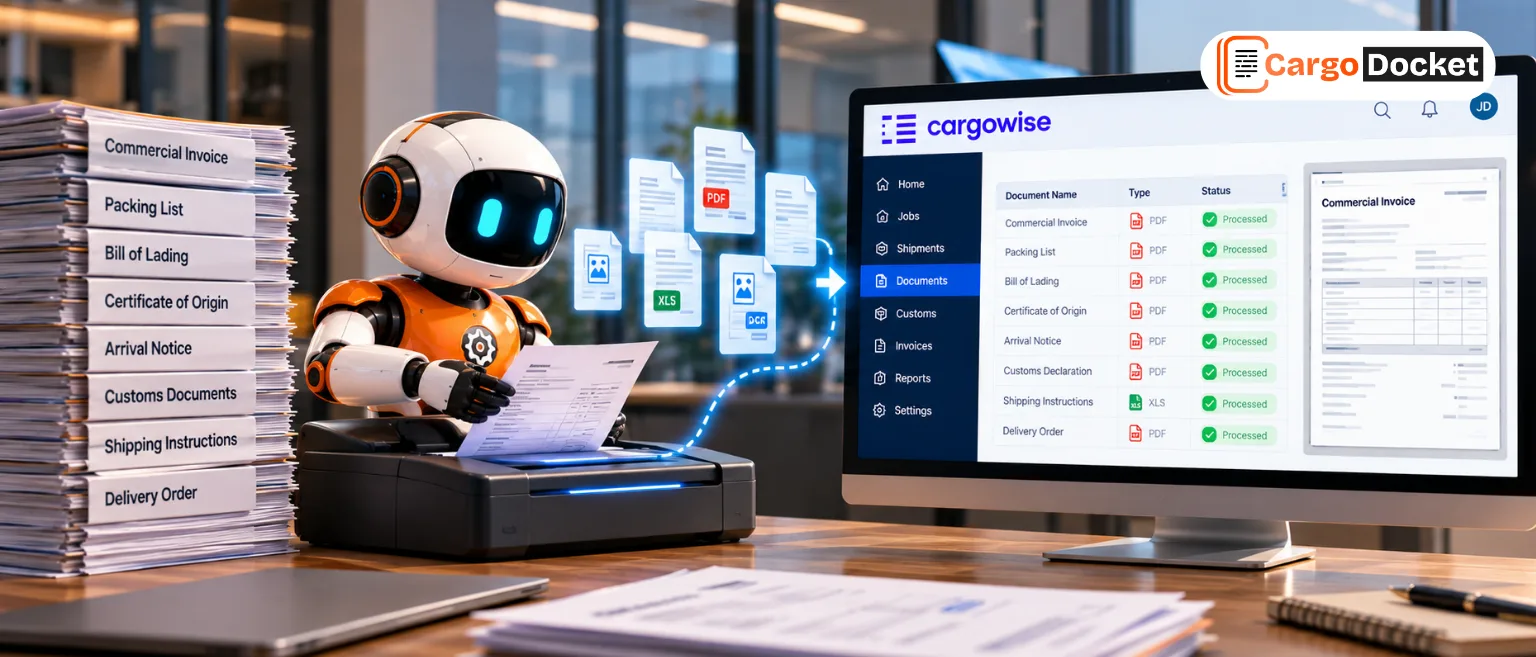
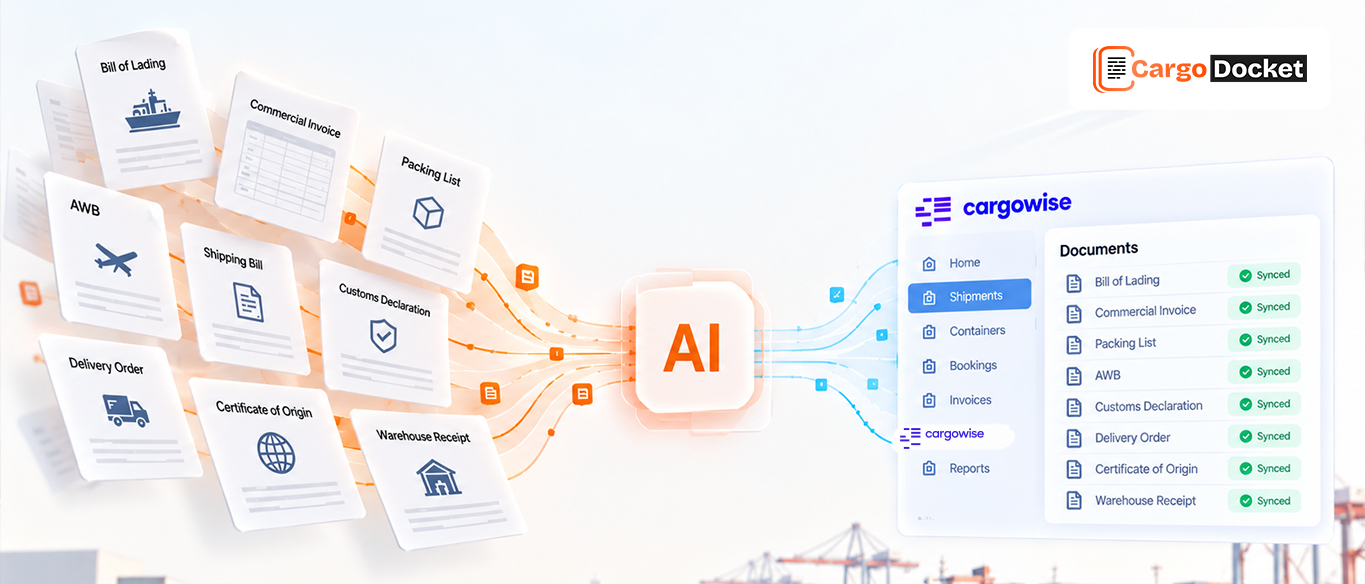
AI addresses the exact gap that ERP systems cannot handle, document processing. Instead of relying on manual interpretation, AI reads and understands documents, extracting key information automatically. This creates a direct connection between unstructured documents and structured ERP systems.
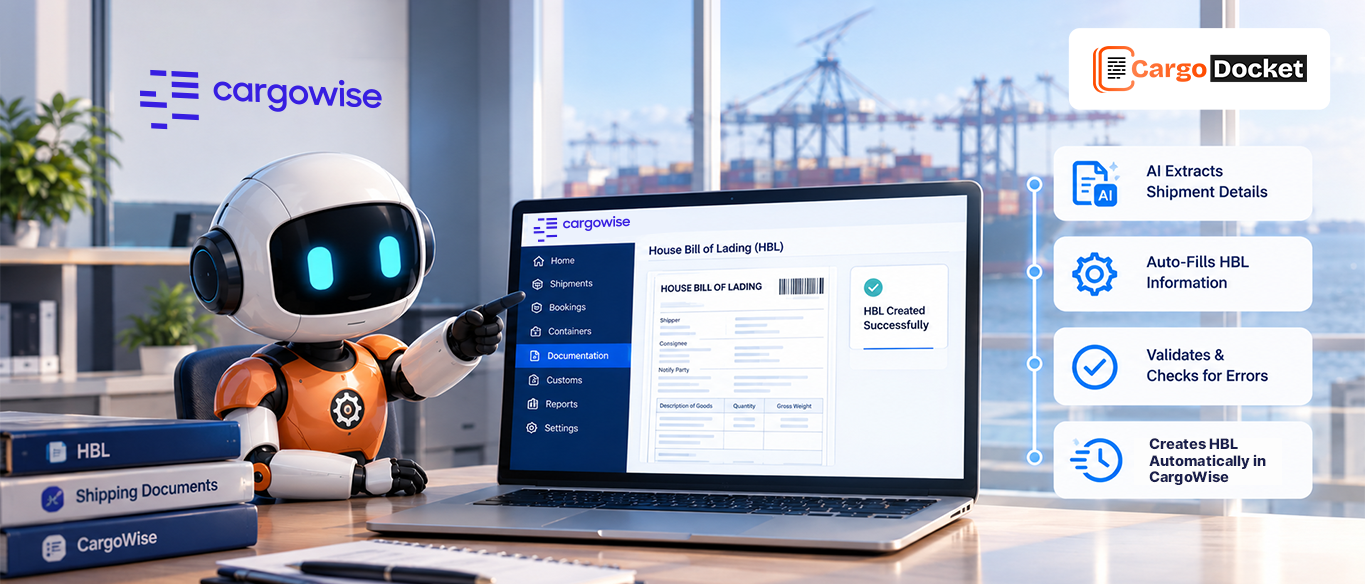
In real workflows, this means that when a document is received, AI processes it instantly. It identifies shipment details, container numbers, and financial values and prepares that data in a format that ERP systems can use.
Once integrated:
- Data from documents flows directly in CargoWise
- Shipment records can be created faster without manual entry
- Financial data is captured accurately at the source
- Errors are reduced because the same data is not handled multiple times
ERP continues to manage operations, but AI ensures that the data entering the system is reliable and immediate.
📄 From Manual Processing to Automated Workflow
When AI is introduced into document workflows, the biggest change is how information moves through the system.
Instead of being handled step by step, documents become part of an automated process. Data is extracted, validated, and transferred without repeated effort.
This means that shipment creation is no longer dependent on how quickly someone can enter data. Financial processes no longer wait for manual validation. Supporting documents are automatically linked to records, improving traceability.
The workflow becomes continuous rather than fragmented, reducing delays and improving consistency.
📊 What Changes in Daily Operations?
The integration of ERP and AI has a direct impact on how teams work every day. Instead of spending time on repetitive tasks, they begin to focus on managing operations and improving performance.
Some of the key changes include:
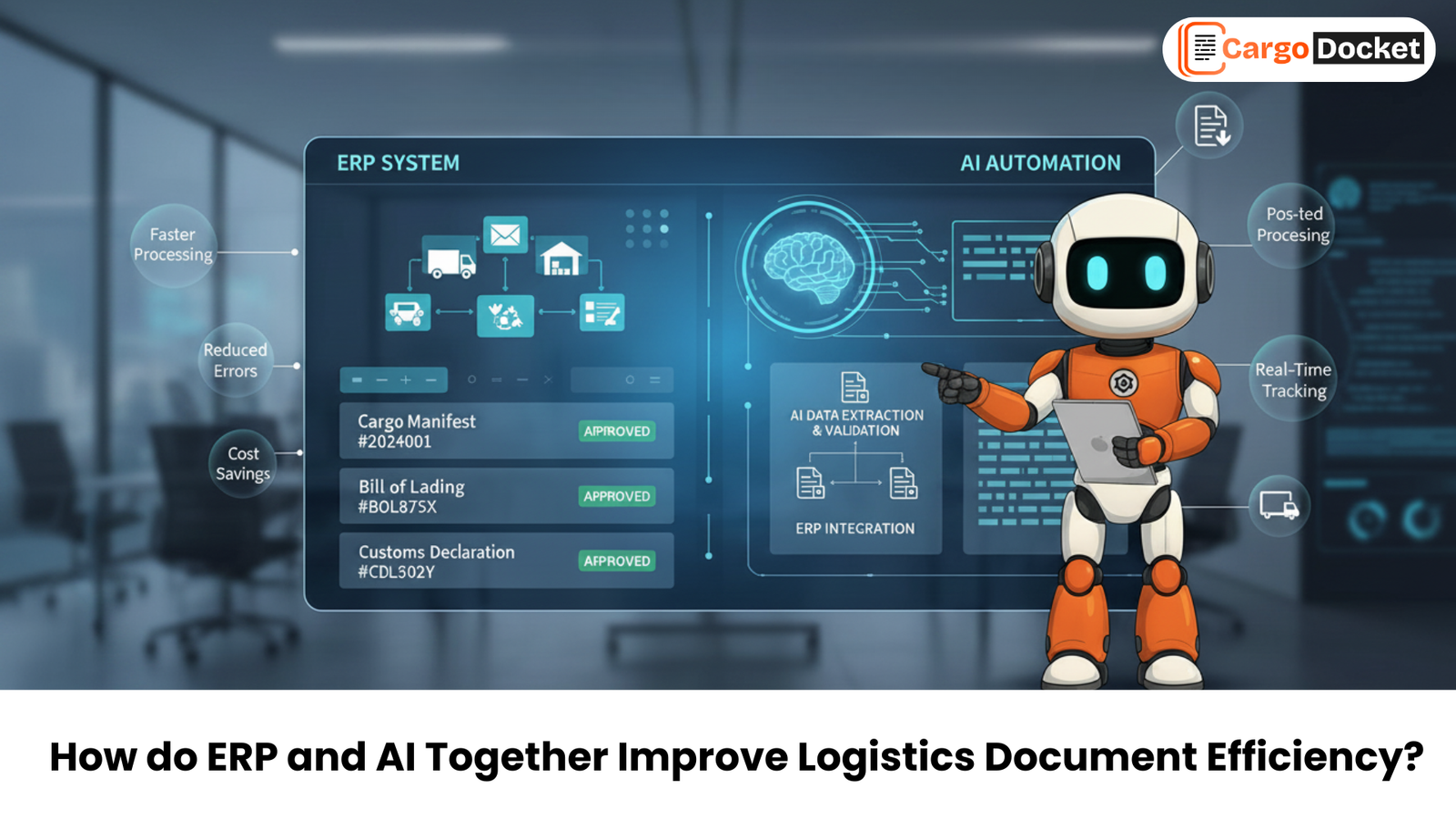
- Faster processing of shipments and documents
- Improved accuracy across operational and financial data
- Better coordination between teams due to consistent information
- Real-time updates within ERP systems
- Reduced need for manual validation and correction
These improvements create a smoother and more efficient workflow across the organization.
🧠 Why this Matters for Growing Logistics Businesses?
As logistics businesses grow, the volume of documents increases significantly. Each additional shipment brings more data to process, which increases the workload on teams.
Without automation, scaling operations requires increasing manual effort. This leads to higher costs, slower processes, and a greater risk of errors.
With ERP and AI working together, this challenge is reduced. The system can handle increasing volumes without increasing workload. Data flows consistently regardless of shipment complexity, allowing businesses to scale without operational friction.
🔮 The Future of ERP in Logistics
ERP systems are evolving from systems that store data to systems that actively process and use data in real time. With AI integrated into document workflows, ERP platforms become more responsive and efficient.
Instead of waiting for manual input, systems receive structured data instantly. Operations, finance, and reporting stay aligned automatically, improving overall efficiency.
This creates a more connected logistics environment where processes move faster and decisions are based on accurate, real-time information.
🚀 Final Thoughts
ERP systems provide the structure for logistics operations. AI brings the speed and intelligence needed to handle document processing. When both work together, they create a seamless flow of data across operations and finance, reduce manual effort, improve accuracy, and enable faster workflows, making it the right time to start exploring how AI Document Automation can simplify your document processes, eliminate repetitive work, and help your logistics operations run more efficiently.