
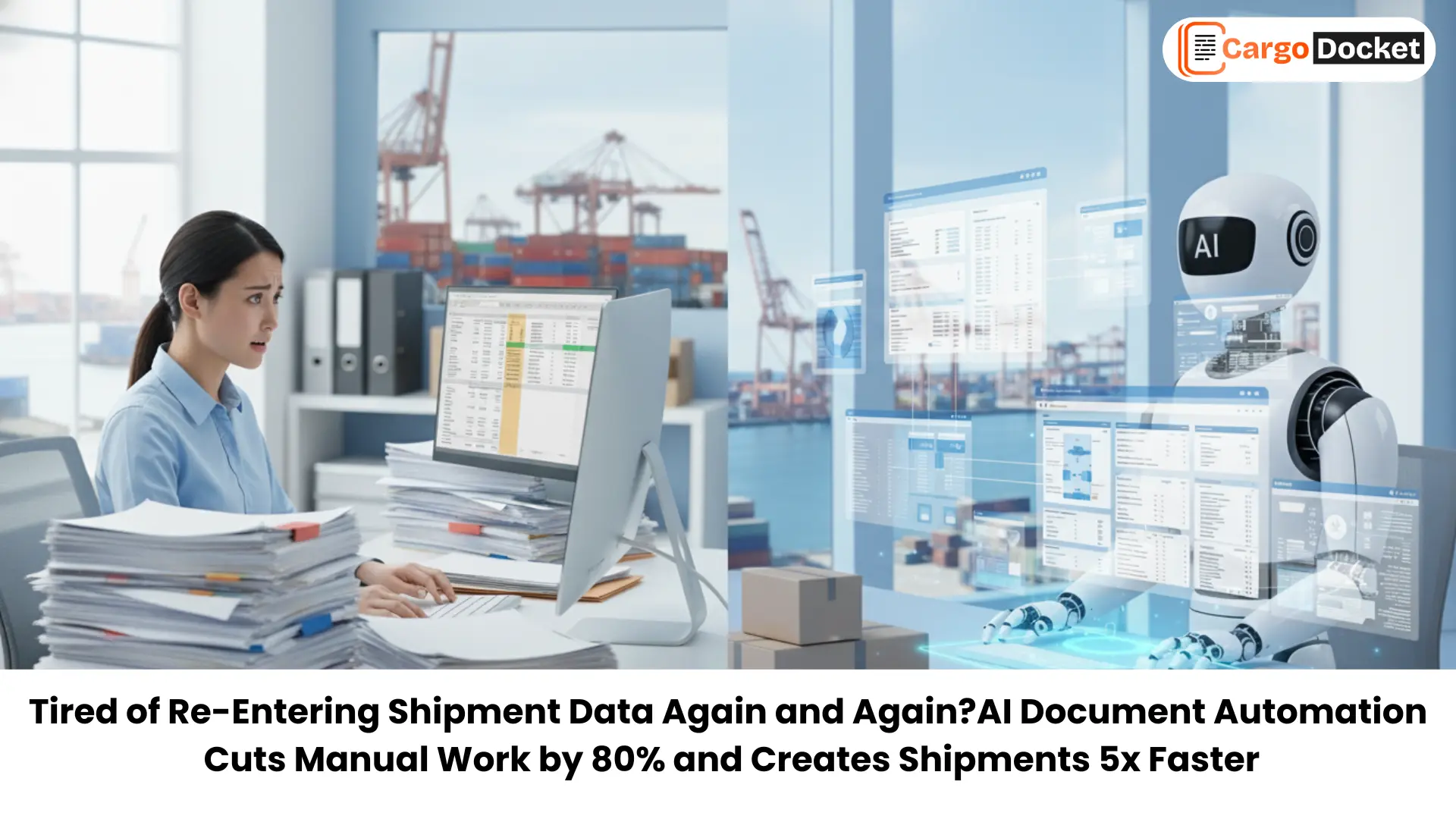
How many times today did your team re-enter shipment details from a Bill of Lading into your system?
It may feel routine, but this repetitive process is one of the biggest hidden slowdowns in logistics operations. Every manual entry increases workload, delays shipment creation, and introduces errors.
In 2026, this is exactly where AI automation in shipment creation is changing the game. Instead of manually reading and entering data, systems now extract, validate, and create shipment records instantly, turning documents into operational data.
⚠️ The Hidden Problem of Manual Shipment Creation
Behind every shipment is a workflow that relies heavily on manual effort. Teams open documents, extract shipment data line by line, enter container details, and match references across systems. When something doesn’t align, the process repeats.
This may seem manageable at a small scale, but as shipment volumes increase, the impact becomes significant.
Operations teams typically spend time:
- Re-entering data from HBL and MBL documents
- Typing container numbers and shipment references manually
- Validating and correcting mismatched information
- Coordinating across multiple systems and documents
Over time, this creates delays, increases error rates, and slows down the entire logistics process.
🤖 How AI Automation Transforms Shipment Creation?
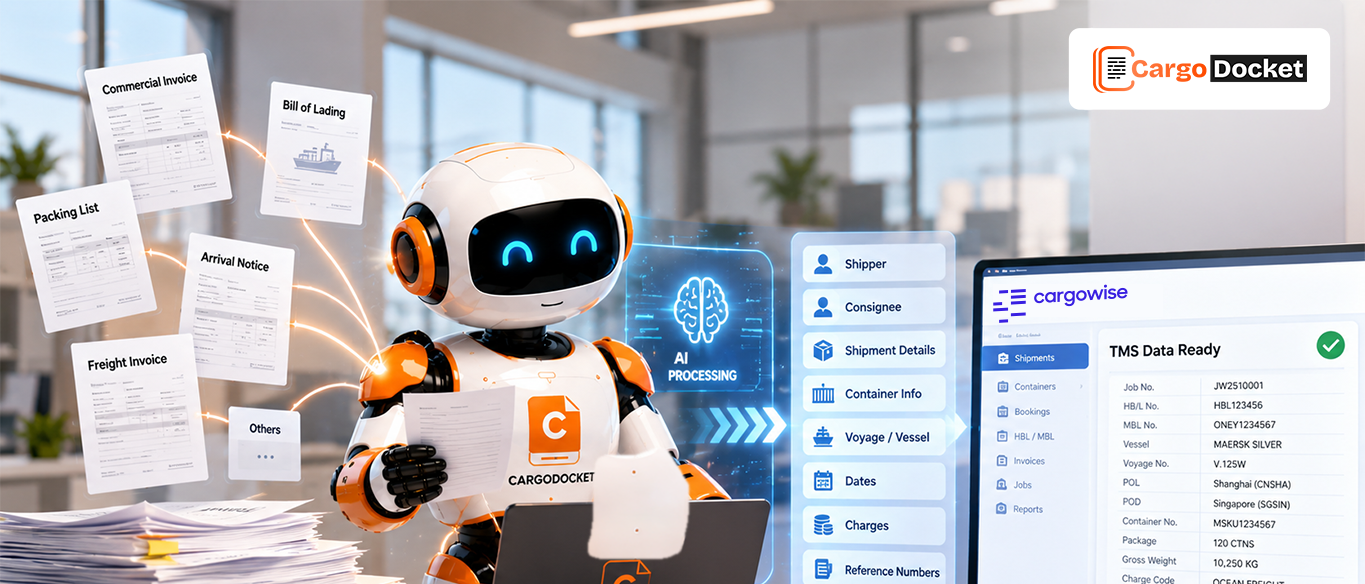
AI automation in shipment creation removes the need for manual data entry by converting documents directly into structured system data.
Instead of reading documents and typing information, the system processes everything automatically.
This includes:
- Extracting shipment data from Bills of Lading and shipping documents
- Identifying container details, cargo information, and shipment references
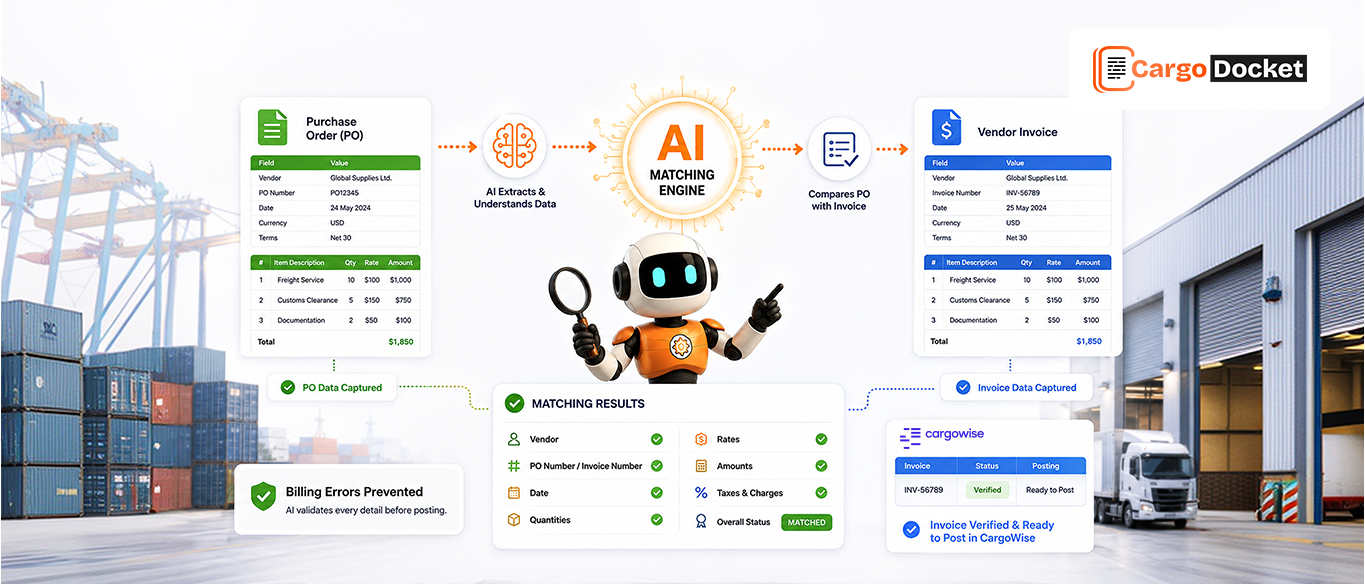
- Validating data before it enters the system
- Creating shipment jobs instantly
- Linking documents directly to shipment records
What once took 20–30 minutes can now be completed in minutes, with higher accuracy and consistency.
📦 From Documents to Shipments Instantly
Shipping documents already contain everything needed to create a shipment. The challenge has always been converting that information into usable system data.
AI solves this by reading documents such as BOL, HBL, and MBL and transforming them into structured shipment records.
As a result:
- Shipment jobs are created immediately
- Data is accurate from the start
- Manual document handling is eliminated
This shifts operations from document-based workflows to data-driven execution.
🔗 Managing HBL, MBL, and Consolidations Efficiently
Freight forwarding often involves complex relationships between shipments, especially when consolidations are involved.
AI automation simplifies this process by:
- Linking HBL shipments to the correct MBL automatically
- Creating consolidation (console) records
- Assigning containers across multiple shipments
- Maintaining accurate shipment relationships
This ensures that even complex shipment structures are handled correctly without manual intervention.
📦 Accurate Container and Cargo Data Without Manual Errors
Container and cargo data are critical for execution, planning, and billing. Manual entry increases the risk of errors, especially with high shipment volumes.
AI automation captures:
- Container numbers and types (20GP, 40HC, etc.)
- Container count and allocation
- Cargo weight, volume, and packaging details
- Shipment dates and operational references
Because this data is extracted directly from documents, accuracy improves, and rework is reduced.
⚙️ Smooth Flow into Logistics Systems
Once data is extracted and validated, it flows directly into logistics systems, enabling faster operations.
This allows:
- Instant shipment and job creation
- Real-time operational visibility
- Faster coordination between teams
- Reduced need for manual corrections
Teams no longer need to fix data after entry, they start with accurate information.
📈 The Real Impact on Logistics Operations
When AI automation is applied to shipment creation, the results are immediate and measurable.
Logistics teams typically experience:
- Up to 80% reduction in manual data entry
- Shipment creation up to 5x faster
- Fewer errors in shipment and container data
- Faster billing and improved financial workflows
- Reduced operational workload
Instead of focusing on repetitive tasks, teams can focus on managing shipments and improving service.
🚀 Final Thoughts
Manual shipment creation may feel like a normal part of logistics operations, but it creates hidden inefficiencies that limit speed, accuracy, and scalability.
AI automation in shipment creation changes that by turning documents into structured data and automating the entire process from start to finish. It reduces effort, improves accuracy, and enables faster, more reliable operations.
👉 The next step forward is adopting AI Document Automation to simplify shipment creation, eliminate repetitive data entry, and build a faster, more efficient logistics workflow.