
Logistics teams handle a constant flow of Bills of Lading, Commercial Invoices, Air Waybills, Packing Lists, Delivery Orders, and other documents. The challenge is getting the important information out of those files and into the right workflow without adding more manual work.
AI-powered document automation can help bridge that gap by reading logistics documents, extracting relevant information, and connecting validated data with CargoWise workflows. Instead of treating documents as files that need to be processed one by one, businesses can turn them into useful inputs for their shipment operations.
🔄 How does Document Data Move from Processing to the Next Shipment Action?
Once the document has been read, extracted, and validated, the information can become part of the operational workflow.
A simple process can look like:
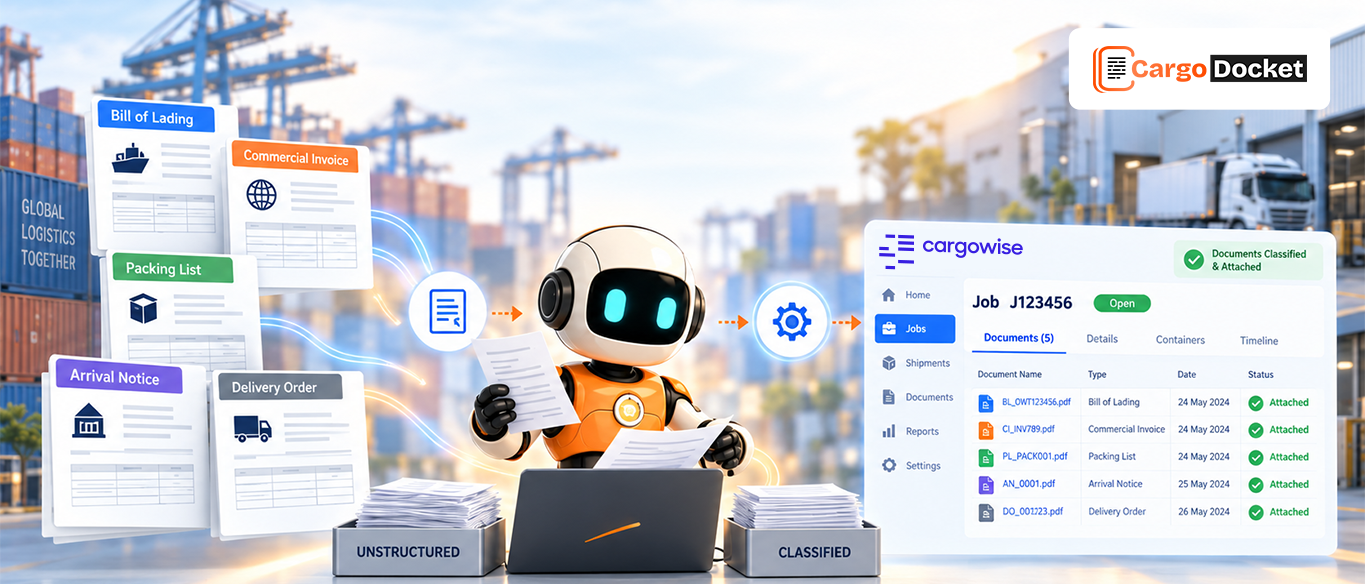
Document received → AI reads it → Data extracted → Information validated → Shipment identified → CargoWise updated → Next action triggered
The next action depends on the business process. It could update shipment information, complete a task, request missing documentation, notify an employee, or send the process to an exception queue.
This is where document automation becomes more than data extraction. The information from the document can help move the shipment workflow forward.
And when something doesn’t look right, the system can pause the process and bring the exception to a person instead of automatically pushing questionable information through.
📑 Which Logistics Documents can AI Process Across the Shipment Lifecycle?
AI-powered document processing can support many of the documents logistics teams work with throughout a shipment.
Some common examples include:
- Bills of Lading for shipment, container, vessel, and port details
- Commercial invoices for values, currencies, suppliers, and product information
- Air waybills for flight, origin, destination, and cargo details
- Packing Lists for packages, quantities, weights, and dimensions
- Delivery Orders for release and delivery information
- Certificates of Origin for origin and trade-related information
- Shipping Instructions for shipment and documentation requirements
- Proof of Delivery for confirming completed delivery
The goal isn’t simply to automate more documents. It’s to connect the information that matters to the shipment process that depends on it.
🛡️ How can AI Catch Document Errors Before They Affect CargoWise Workflows?
Automation needs a safety net. A document might be missing a shipment reference, contain conflicting information, or include data that doesn’t match an existing record.
Rather than automatically accepting everything, AI-powered workflows can apply validation rules and identify information that needs a closer look.
If the data meets the required checks, it can continue through the workflow. If something doesn’t match, the document can be routed for human review.
That creates a practical balance: AI handles the repetitive processing, while people focus on information that requires judgment.
📈 What Changes When Logistics Documents and CargoWise Workflows Work Together?
When document processing and shipment workflows are connected, teams can spend less time moving information manually and more time acting on it.
The benefits can show up across the operation:
- Faster document processing
- Less repetitive data entry
- More consistent shipment information
- Quicker identification of missing data
- Better visibility across workflows
- More time for teams to handle exceptions and customers
It also gives businesses a better way to manage growing document volumes. Instead of adding the same amount of administrative work every time shipment volume increases, automation can handle more routine processing in the background.
The bigger change is that documents become part of the workflow rather than a separate administrative task.
🚀 Why is AI-Powered Document Automation Becoming Important for CargoWise Operations?
Logistics businesses are dealing with more documents, more shipment activity, and higher expectations for speed and visibility. Manual processing can make it difficult to keep up without placing additional pressure on operations teams.
AI-powered document automation helps shorten the distance between receiving a document and using its information.
When that information connects with CargoWise workflows, businesses can create a more responsive operation where routine document processing happens faster, exceptions receive attention sooner, and employees focus on work that requires human expertise.
That’s the real opportunity, not simply automating a document but creating a connected flow of information across the shipment lifecycle.
📌 Conclusion
Logistics documents contain information that can directly influence shipment operations. When teams have to manually read, extract, and enter that information, valuable time can be lost between receiving the document and acting on it.
AI automation can help close that gap by reading logistics documents, extracting and validating relevant information, and connecting it with CargoWise workflows.
Ready to make your document workflows more connected? Explore AI Document Automation and see how your logistics team can reduce repetitive work while keeping CargoWise operations moving.