
Every shipment creates a flow of information. Before cargo reaches its destination, logistics teams manage documents, verify details, update systems, and keep operations moving.
But as shipment volumes continue increasing, teams are spending more time reading documents, entering data, and checking information manually.
That’s why AI is becoming a powerful support system in freight operations by reducing repetitive documentation work and helping teams focus on decisions that matter.
📑 The Documentation Pressure Behind Every Shipment
Every successful shipment depends on accurate documentation.
From the moment a booking is created until final delivery and payment, logistics teams manage a continuous flow of information between customers, carriers, suppliers, customs teams, and internal systems.
Behind every shipment is a collection of documents that keeps freight moving, ensures compliance, supports billing, and provides visibility across the supply chain.
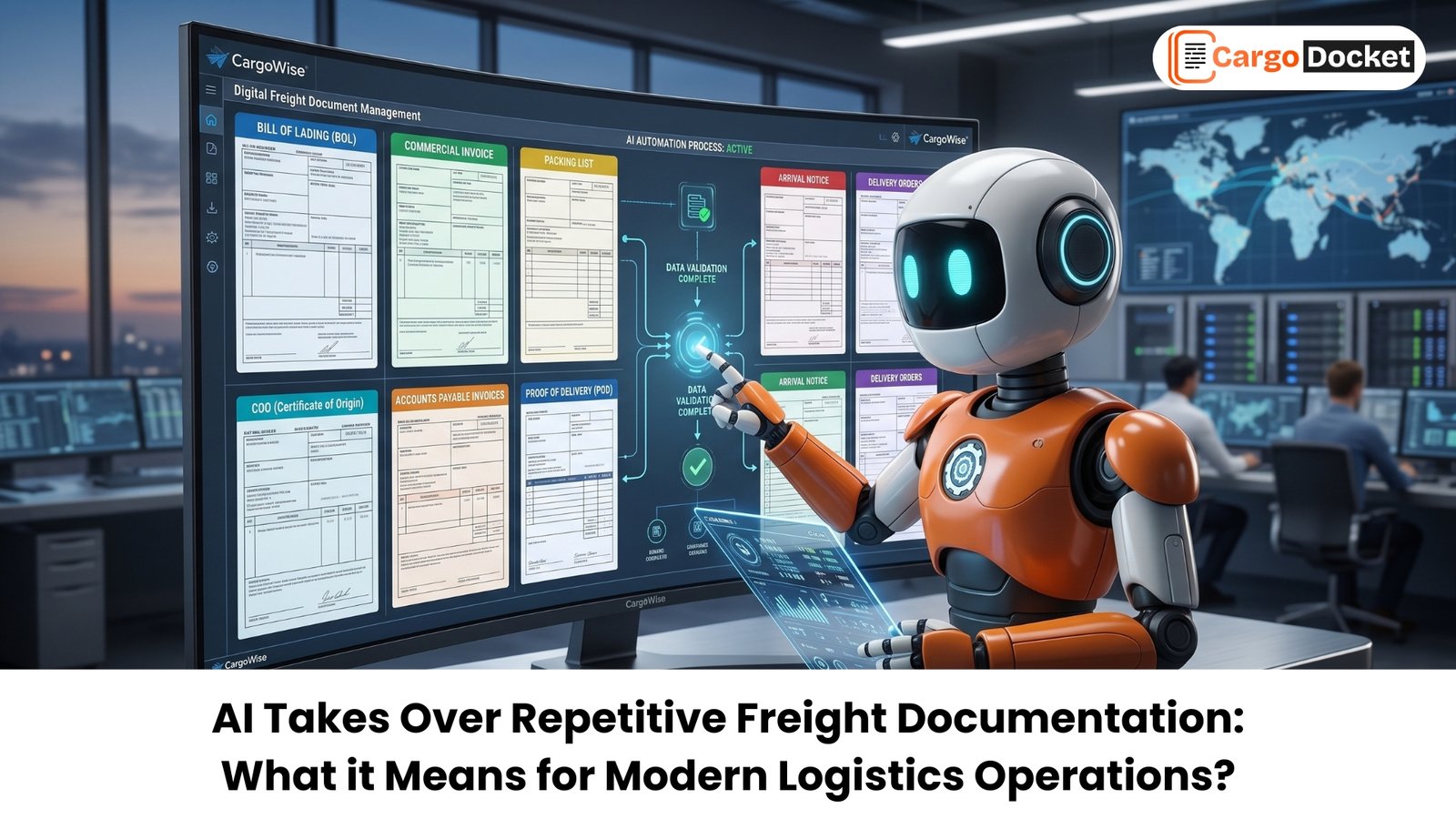
A single shipment may involve multiple documents, including:
- Bill of Lading (BOL)
- Commercial Invoice
- Packing List
- Arrival Notice
- Delivery Orders
- COO
- Accounts Payable Invoices
- Proof of Delivery (POD)
Each document carries important shipment data such as customer details, cargo descriptions, container information, charges, dates, shipment references, and regulatory details.
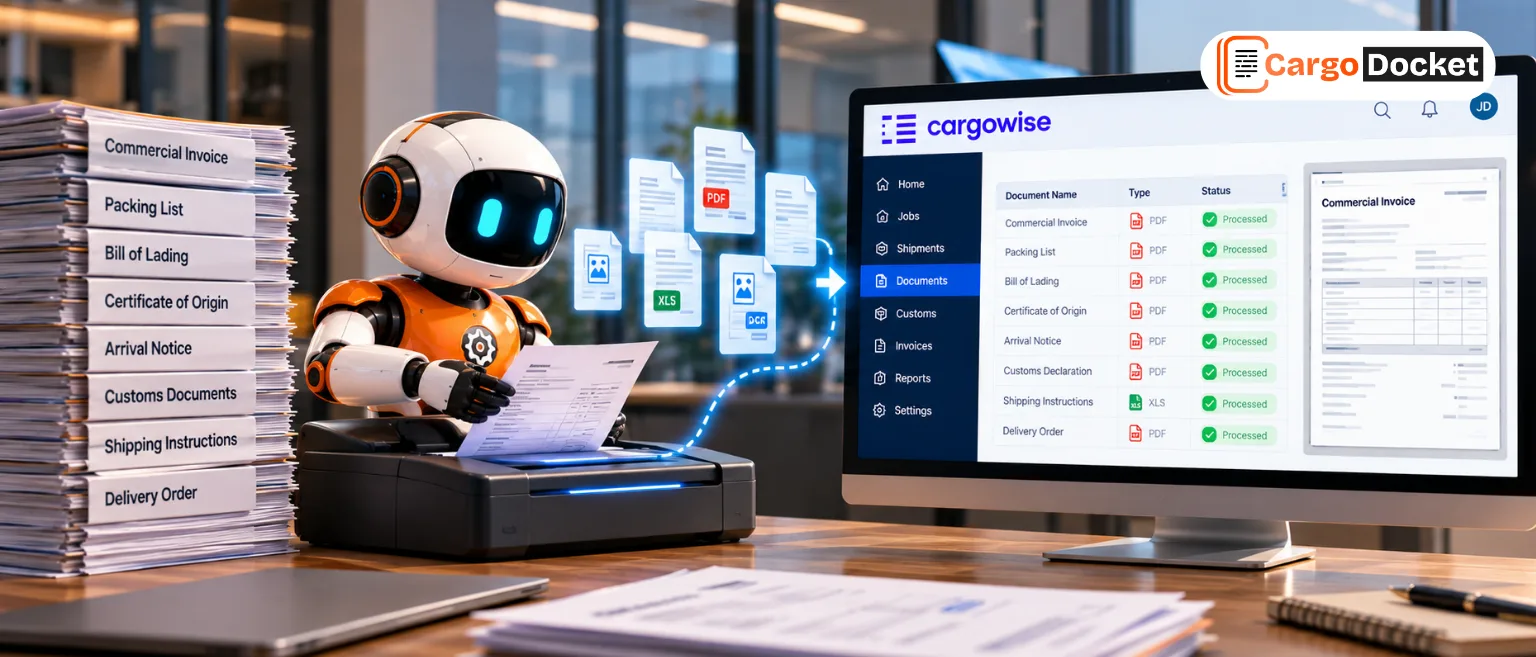
But before this information can support operations, teams usually need to manually open files, review document content, extract information, verify accuracy, and enter details into logistics platforms like CargoWise.
The challenge grows when every customer, carrier, or supplier sends documents in different formats.
When hundreds or thousands of documents arrive every month, these small manual activities quickly turn into a major workload that affects productivity and operational speed.
⏳ Why is Repetitive Documentation Work Slowing Logistics Teams Down?
Manual documentation work may look simple from the outside.
Copy a shipment number.
Enter customer details.
Check invoice information.
Update a system field.
But behind the scenes, logistics teams repeat these same actions across multiple shipments every single day.
Teams often spend valuable hours on:
- Copying information from documents
- Updating CargoWise shipment fields manually
- Checking missing or incorrect details
- Matching documents with shipment records
- Correcting data entry mistakes
The bigger challenge is that manual processing not only consumes time.
It creates a chain reaction across operations.
A delayed document update can affect shipment visibility. Incorrect information can create invoice mismatches. Missing details can increase customer follow-ups and slow down decision-making.
As logistics operations become faster and more connected, businesses need smarter ways to manage growing document volumes.
🤖 AI is Becoming the Digital Assistant for Freight Operations
AI in logistics is not replacing experienced professionals.
It is helping teams remove repetitive activities from their daily workflow.
Think of AI as a digital assistant that works alongside operations teams by handling document-heavy tasks and preparing accurate information for review.
AI helps logistics teams:
- Read multiple freight document formats
- Extract shipment information automatically
- Understand different layouts and structures
- Validate important data fields
- Reduce repetitive manual entry
Unlike traditional tools that depend on fixed templates, modern AI can understand different document variations and support faster processing.
The goal is simple:
Let AI manage repetitive documentation while logistics professionals focus on customers, exceptions, and important operational decisions.
🔄 How AI Turns Freight Documents Into Connected Workflows?
AI document automation is not only about reading documents faster.
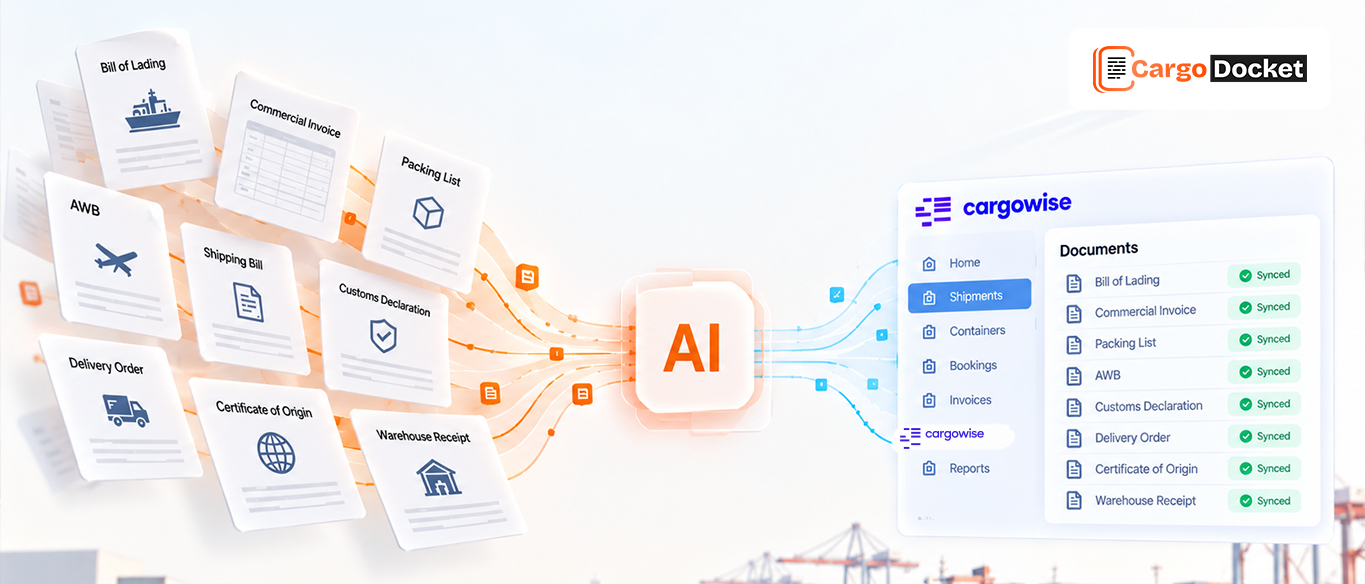
The real value comes from transforming unstructured information into connected workflows where data moves from documents into logistics systems with less manual effort.
📥 Documents Enter Automatically
Freight documents arrive from different channels every day.
They may come through:
- Customer emails
- Carrier portals
- Shared folders
- Scanned documents
- Digital platforms
Instead of teams spending time downloading, organizing, and forwarding documents manually, AI workflows collect incoming files and prepare them for processing.
This creates a faster starting point for logistics operations.
🧠 AI Extracts Important Shipment Information
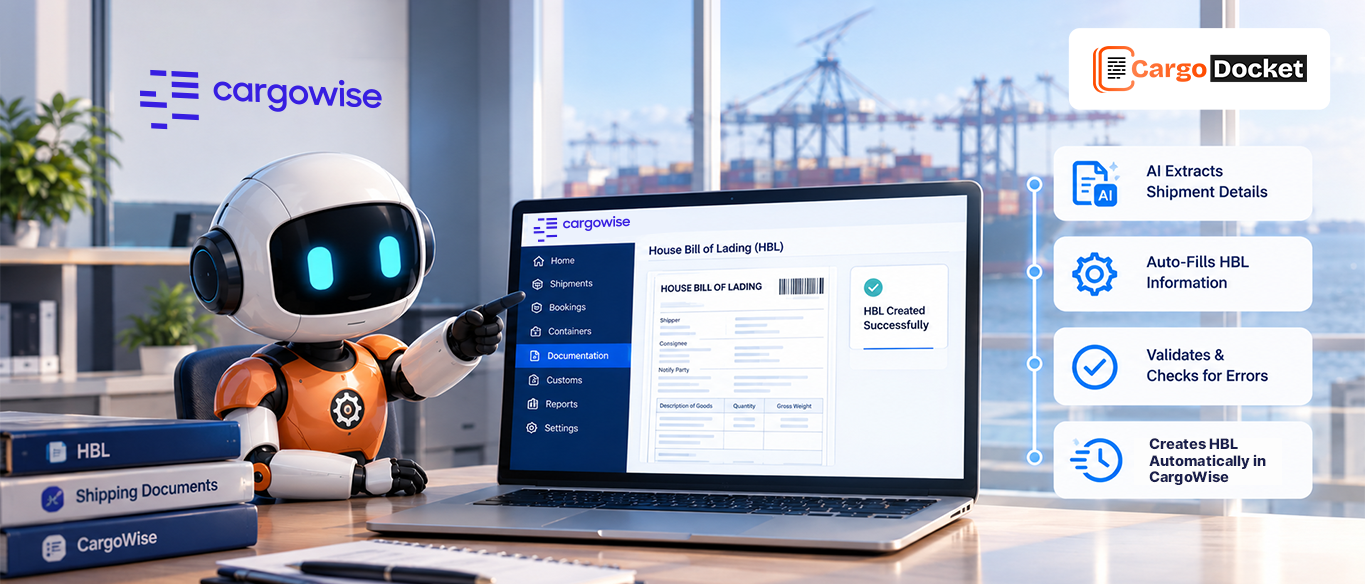
Once documents enter the workflow, AI reads and captures important information automatically.
This includes:
- Shipment references
- Customer and supplier details
- Cargo information
- Charges and invoice values
- Dates and locations
- Product details
AI converts document information into structured data that can be used across logistics workflows.
This reduces dependency on manual entry and helps teams access information faster.
✅ AI Validates Data and Flags Exceptions
Processing speed is important.
But in logistics, accuracy is everything.
After extraction, AI validates information against shipment records and business rules before it moves forward.
It detects:
- Missing information
- Incorrect values
- Duplicate documents
- Data mismatches
Instead of reviewing every document manually, teams only handle the exceptions that need attention.
This helps businesses move from manual checking to smarter exception management.
🔗 CargoWise Updates Automatically with Verified Data
Once information is extracted and validated, verified data can automatically flow into CargoWise.
This helps keep shipment, finance, and operational information updated without repeated manual work.
Automated CargoWise updates support:
- Faster shipment processing
- Better data accuracy
- Improved operational visibility
- Reduced administrative workload
By connecting documents directly with logistics systems, teams can work with reliable information exactly when they need it.
👥 Why Human Expertise Still Matters in AI-Driven Logistics?
Even as automation grows, logistics still depends on people.
Every shipment is different.
Unexpected delays happen. Customer requirements change. Compliance questions appear. Special handling situations need attention.
These moments require experience, communication, and decision-making.
With AI automation:
- AI handles repetitive document processing
- AI identifies issues that require attention
- Teams review exceptions instead of every file
- People make final decisions when expertise is needed
The future is not AI replacing logistics professionals.
It is AI helping them spend less time on repetitive work and more time solving meaningful challenges.
📊 From Manual Processing to Intelligent Logistics Operations
The way logistics teams manage information is changing.
Traditional operations depend heavily on:
- Manual Data Entry
- Manual document checking
- Repeated corrections
- Reactive problem-solving
Modern AI-driven operations focus on:
- Exception management
- Faster document processing
- Improved accuracy
- Real-time visibility
- Smarter decision-making
AI helps logistics businesses move from simply processing information to using information strategically.
🚀 Final Thoughts
The future of logistics is not about removing people from operations. It is about removing repetitive work from their day. As shipment volumes grow and documentation becomes more complex, businesses are adopting AI Document Automation to improve accuracy, accelerate workflows, and help logistics teams focus on the decisions that truly move operations forward.