
Every shipment tells a story through documents. Before cargo reaches its destination, important information moves between customers, carriers, customs teams, finance departments, and logistics operations.
But here’s the challenge.
Many logistics teams are still depending on manual document processing to keep these workflows running.
As shipment volumes increase, reviewing every document, entering every detail, and checking every field manually becomes harder to manage.
That’s why E-Document Automation is becoming a smarter approach for logistics businesses that want faster processing, better accuracy, and more control over their operations.
📑 Why does Every Shipment Depend So Much on Accurate Documents?
Think about a normal day inside a freight operation. A shipment is not only managed through containers, trucks, or vessels. It is managed through information.
Before a shipment moves forward, teams depend on documents such as:
- Bill of Lading
- Commercial Invoice
- Packing List
- Arrival Notice
- Delivery Order
- Customs Documents
- Proof of Delivery
- AP Invoices
Each document answers an important question.
What is being shipped?
Where is it going?
Who is responsible?
What charges need to be processed?
Has the delivery been completed?
When the information inside these documents is correct, operations continue smoothly.
But when details are missing or entered incorrectly, it can create delays across customs clearance, invoicing, shipment updates, and customer communication.
⏳ Are Manual Document Processes Quietly Slowing Down Logistics Teams?
Most document delays do not happen because teams are not working hard. They happen because teams spend too much time on repetitive tasks.
A freight operator may open a PDF invoice, check shipment numbers, copy values, enter information into CargoWise, validate details, and repeat the same process hundreds of times.
The process works, but the question is:
Is it the best use of your team’s time?
Manual processing often creates challenges like:
- More time spent entering data
- Higher chances of typing errors
- Slower document approvals
- Limited visibility into document status
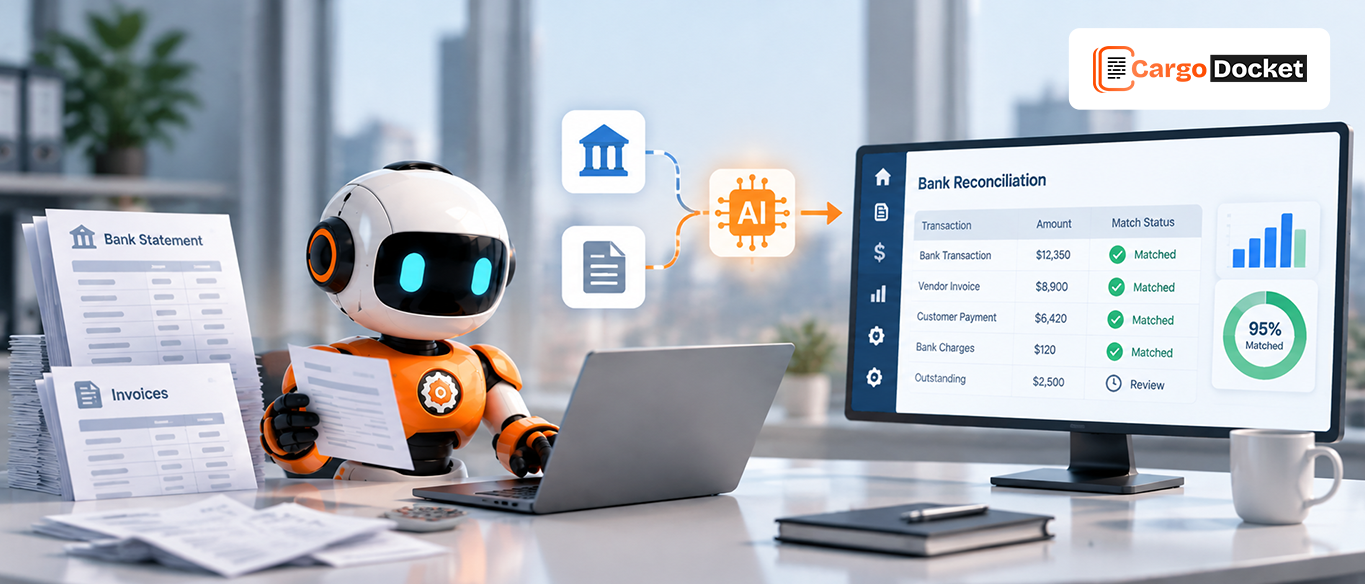
- More effort during audits and reconciliation
For growing logistics businesses, the goal is not just processing more documents. The goal is to process information smarter.
🤖 How is AI Changing the Way Logistics Teams Handle Documents?
AI is becoming a digital assistant for freight operations.
But does that mean AI replaces logistics professionals?
Not at all.
Logistics still needs human knowledge for decision-making, customer requirements, exceptions, and complex shipment situations.
AI simply handles the repetitive work happening in the background. Instead of asking teams to read every line of every document, AI helps identify information, understand document patterns, and prepare accurate data for review.
This allows people to focus on what matters most:
Managing exceptions, improving operations, and supporting customers.
🔄 How Does E-Document Automation Turn Documents into Connected Data?
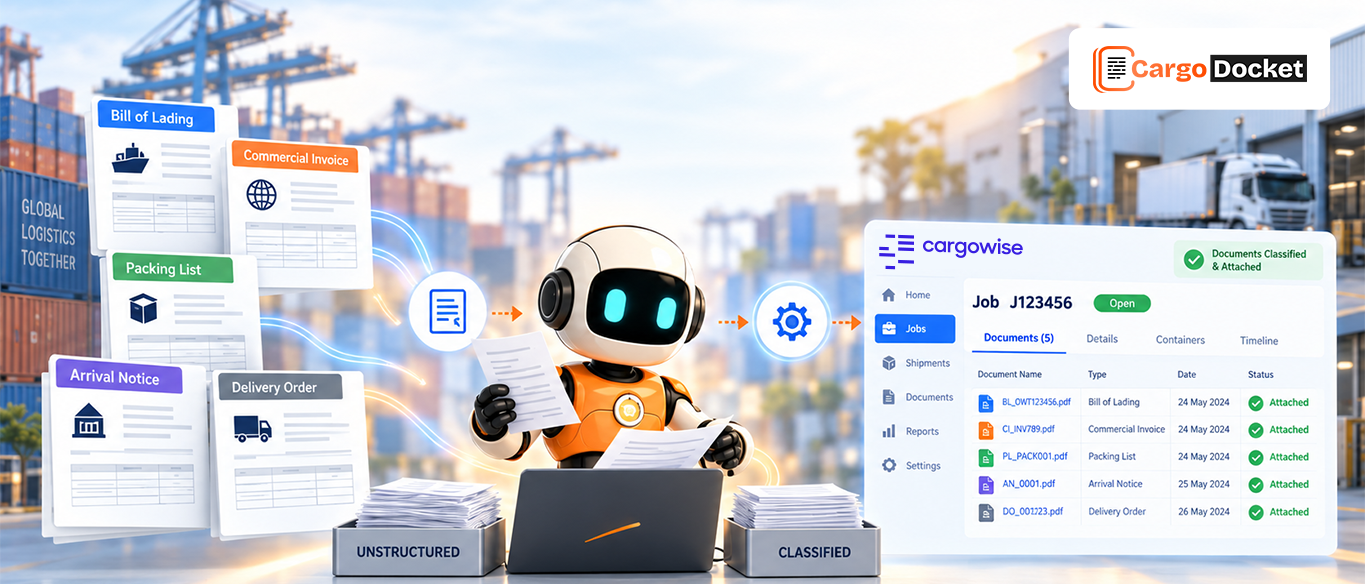
E-Document Automation creates a smarter document journey from the moment information enters the business until it reaches CargoWise.
Here’s how the workflow happens.
📥 Documents Received Automatically
Logistics teams receive documents from multiple places every day. Some arrive through emails. Others come from customer portals, scanners, shared folders, or partner systems.
Instead of employees spending time collecting and organizing files manually, AI helps capture incoming documents and prepares them for processing.
This creates a cleaner starting point before information enters operations.
🧠 AI Extracts Important Shipment Information
Once documents are received, AI reads and understands the content.
It captures important shipment information such as:
- Shipment references
- Customer details
- Container information
- Invoice values
- Dates and locations
- Product details
Different customers may send documents in different layouts, but AI helps convert that information into a structured format.
The result is data that teams can actually use.
✅ AI Validates Data and Flags Exceptions
Extracting information is helpful, but accuracy is what creates real value.
AI reviews captured information before it moves forward.
It identifies issues such as:
- Missing fields
- Incorrect details
- Duplicate documents
- Data mismatches
So instead of checking every document manually, teams focus only on the areas that need attention.
This changes the team’s role from data entry to exception management.
🔗 Verified Data Moves into CargoWise
After information is validated, accurate data can move directly into CargoWise workflows. This helps logistics teams reduce repeated data entry and keep shipment information consistent across operations.
From shipment documents to financial records, teams can work with cleaner information and faster processes.
📊 Why are Logistics Leaders Moving Toward Digital Document Accuracy?
For leadership teams, document automation is not only about saving a few minutes.
It impacts the entire operation.
When information flows faster and more accurately, businesses can improve:
- Shipment processing speed
- Team productivity
- Customer response times
- Data quality
- Compliance readiness
- Operational visibility
The biggest advantage is giving teams more time to focus on decisions instead of documents.
🚀 Is the Future of Logistics Completely Paperless?
Not exactly.
The future is not just about removing paper.
It is about removing the delays created by disconnected and manual processes.
Documents will always be part of logistics, but the way teams manage those documents is changing.
The next generation of freight operations will depend on faster access to accurate information, smarter workflows, and better collaboration between people and technology.
🚀 Final Thoughts
Every shipment depends on accurate information. But managing that information should not slow down the people responsible for moving freight.
As logistics operations continue to grow, teams need smarter ways to handle increasing document volumes without increasing manual workload.
With AI Document Automation, businesses can automatically capture shipment data, validate important information, reduce repetitive processing, and move accurate data directly into logistics workflows.
The future of logistics belongs to teams that spend less time correcting documents and more time creating better customer experiences.